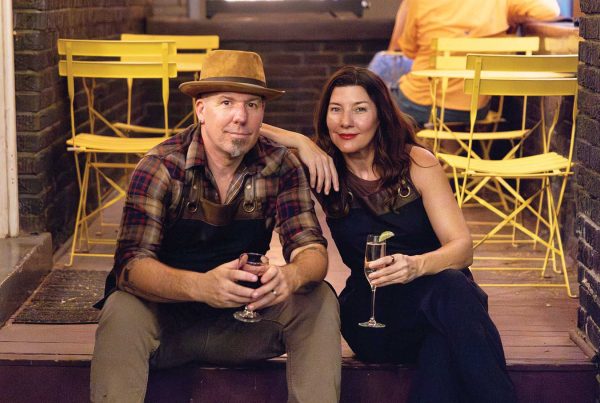

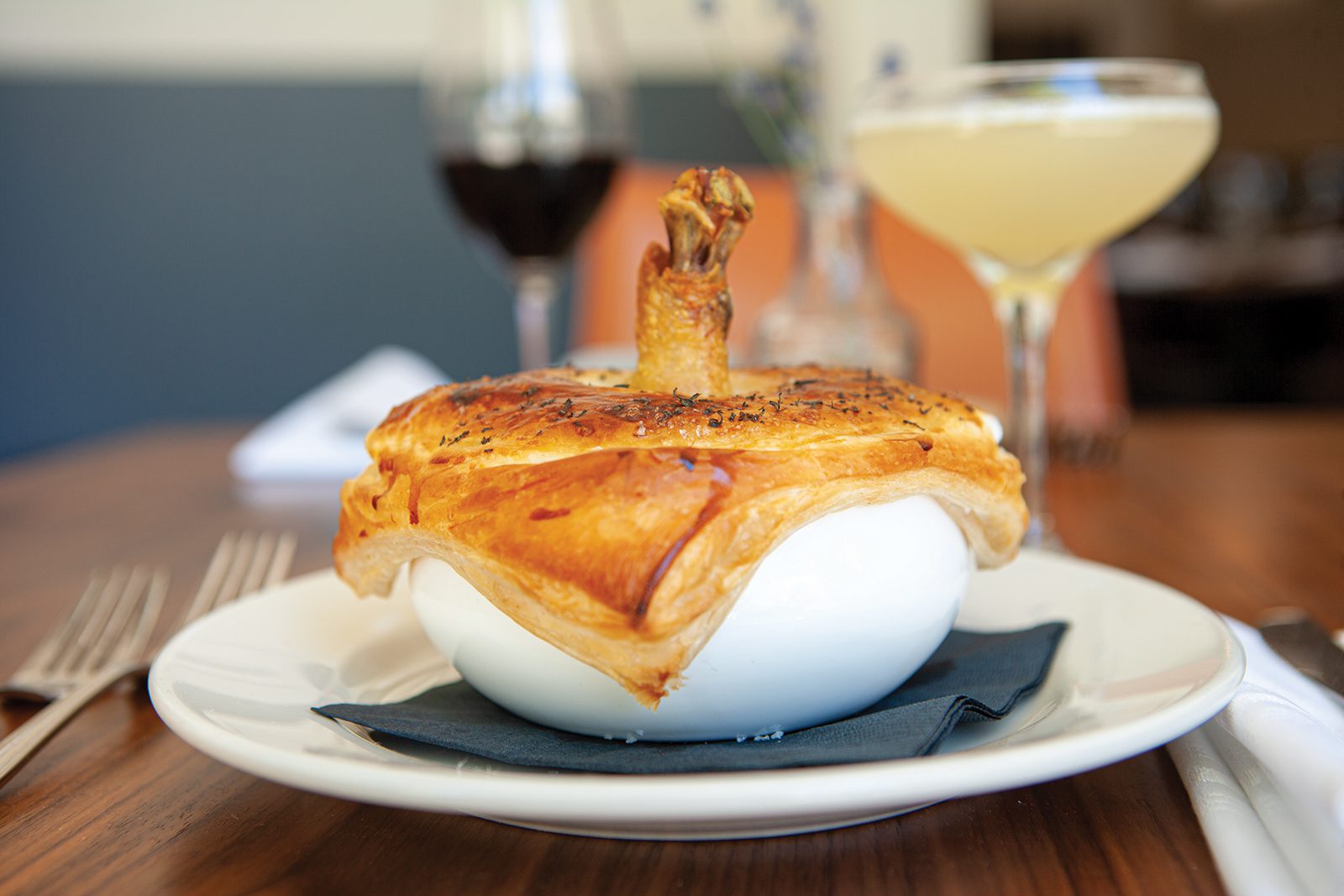
After working in some of the best restaurants in town (The Copper Onion, HSL, Pago) Andrew and Angelena Fuller opened their dream restaurant, Oquirrh, in downtown Salt Lake City, in February 2019.
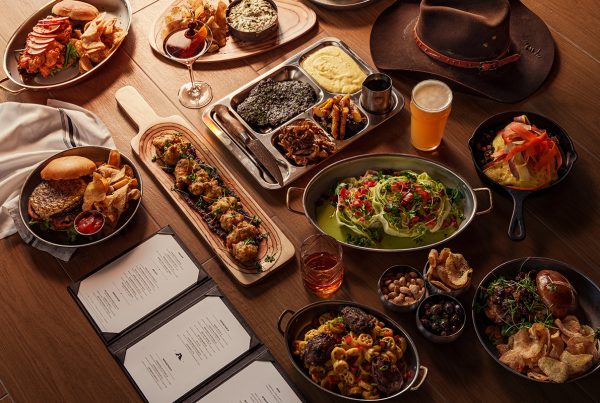
Salt Lake diners were thrilled—the small menu included dishes that immediately became local legends: the milk-braised potatoes, the chicken confit pot pie, the whole leg of lamb with Indian spices. The steak came with fermented cabbage, the gnocchi was made from sourdough breadcrumbs. Everything was familiar but original, served with grace and gusto and even humor—the asparagus spears were standing at attention on the plate, little soldiers with their feet stuck in a sheep’s milk fondue. Local art could be purchased right off the wall. This is the kind of restaurant Salt Lake was slowly becoming famous for—chef-dreamed, chef-run, definitively local, deserving of awards and stars. Oquirrh intended from the start to be an artisanal community experience, an expression of love, not a quest for cash.
But even a labor of love has to have some cash. And when COVID-19 hit Salt Lake City, the Fullers’ dream was seriously damaged.
“When we opened, we swore to each other we’d never serve a burger,” Angie told me several months ago. “Now we serve a burger.”
The Fullers downsized, according to government mandates, first closing except for curbside pickups, then cutting the capacity of the restaurant. And downsized again.

Angelena and Andrew Fuller; Photo by Adam Finkle
“The rules keep changing,” says Angie.
But the Fullers keep trying to follow the rules. The restaurant staff is down to Angie and Drew, a dishwasher and a cook. There are no days off and haven’t been for months. Any slight downtime is spent planning things like takeaway Thanksgiving dinners or filling orders for food they never planned to serve, like a recently requested charcuterie platter.
“Basically, we’ll do anything,” says Angie. Worked to exhaustion, Drew woke up one day feeling so bad he went to the hospital. But he went back to work the next day. The few government aid programs weren’t usable for Oquirrh; they’re relying on wits, work and a small group of die-hard regulars to keep the restaurant’s doors open.
Oquirrh is an excellent, awardworthy restaurant that deserves to be packed all the time. But it’s not.

Photo by Adam Finkle
And Oquirrh is not the only one.
“They’re dying,” says Michele Corigliano. Corigliano is president of Salt Lake Area Restaurant Association, an industry organization that lobbies, informs and provides support for independently owned restaurants in and around Salt Lake City. “No one is being shut down like restaurants and bars. The government mandates tend to focus more specifically on these businesses.”
Right now, in bars and restaurants, at least six feet of physical distance is required between parties. Guests must wear masks unless actively eating or drinking. All employees must wear masks. Most restaurants do much, much more. Some have put in air filtration systems that remove bacteria from the air. Everywhere, every item used is sanitized and surfaces wiped down with a killer spray. “It’s probably safer to eat in well-rated restaurants these days than it is to eat in your own home,” says Melva Sine, president of the Utah Restaurant Association. “There’s no data to show that restaurants are a major spreader.”
Outdoor patios helped keep some restaurants limping along, but now that it’s winter, restaurants are effectively reduced in size by 40 to 70% of capacity. We can expect many closures—a significant blow to the culture of the city and to its economic outlook. Tourism is a $9.7 billion industry in Utah, bringing up to $26 million per day into Utah’s economy, and hospitality, food and dining is the core of tourism. Hospitality workers account for 10% of Utah jobs. (For comparison, mining accounts for 0.6% of the economy, manufacturing and construction make up 8.8 and 7%, respectively.)
But honestly, the rise of fine independent restaurants (like Oquirrh) is fairly recent in Utah. Food was merely functional here long after it became fashionable elsewhere. Like all Americans, Utahns eat out often, but fast food and franchises filled the need for decades. And those places have the support of their parent businesses, in many cases. Entrepreneur-owned restaurants have a harder time succeeding and few options, besides take-out and delivered dining, to make up for revenue lost to downsizing. Lawmakers seem wary of solutions used in other places, like Plexiglass barriers between tables.

Photo by Adam Finkle
“SLC food and beverage is a tale of two worlds,” says Derek Kitchen, co-owner of Laziz.
And the people in power seem nervous to do anything about the survival of the hospitality business. There’s a fear of a culture that they don’t really know or use. “Independent restaurants and bars have more on the line than anyone else,” says Kitchen. “And there’s very little flexibility.”
dSome states, Texas and California for example, allow customers to pick up mixed beverages, wine or beer with their curbside food order. “Here, I can’t even open a canned pre-mixed cocktail,” says Kitchen. “You’d think that would be safer than anything. Milk, eggs and prescriptions can be ordered online. Why not alcohol?”
According to both Kitchen and Corigliano, the hospitality business needs help in the form of cash to see them through the pandemic. “PPP was only temporary. Programs like Shop in Utah are fantastic, but nothing is being done specifically for restaurants and bars right now,” says Corigliano. “Yet there are lots of mandates about limiting their business and the government has changed rules with only 12 hours notice.” Sine adds, “Aid needs to be prioritized based on impact. We’ve lost 450 restaurants in this state.”
Consumers and chefs are confused. “We need the Feds to step in with a CARES package,” says Kitchen. “There’s a recession going on in the food and beverage sector.”
And, says Corigliano, the fear factor is overcoming us.
Want to do a good deed? One that, if everyone did it, would help thousands of people and help preserve the culture of the city we love most of the time? Eat in or order to-go from a local restaurant three times a week. That’s all.
For more ON THE TABLE, click here.