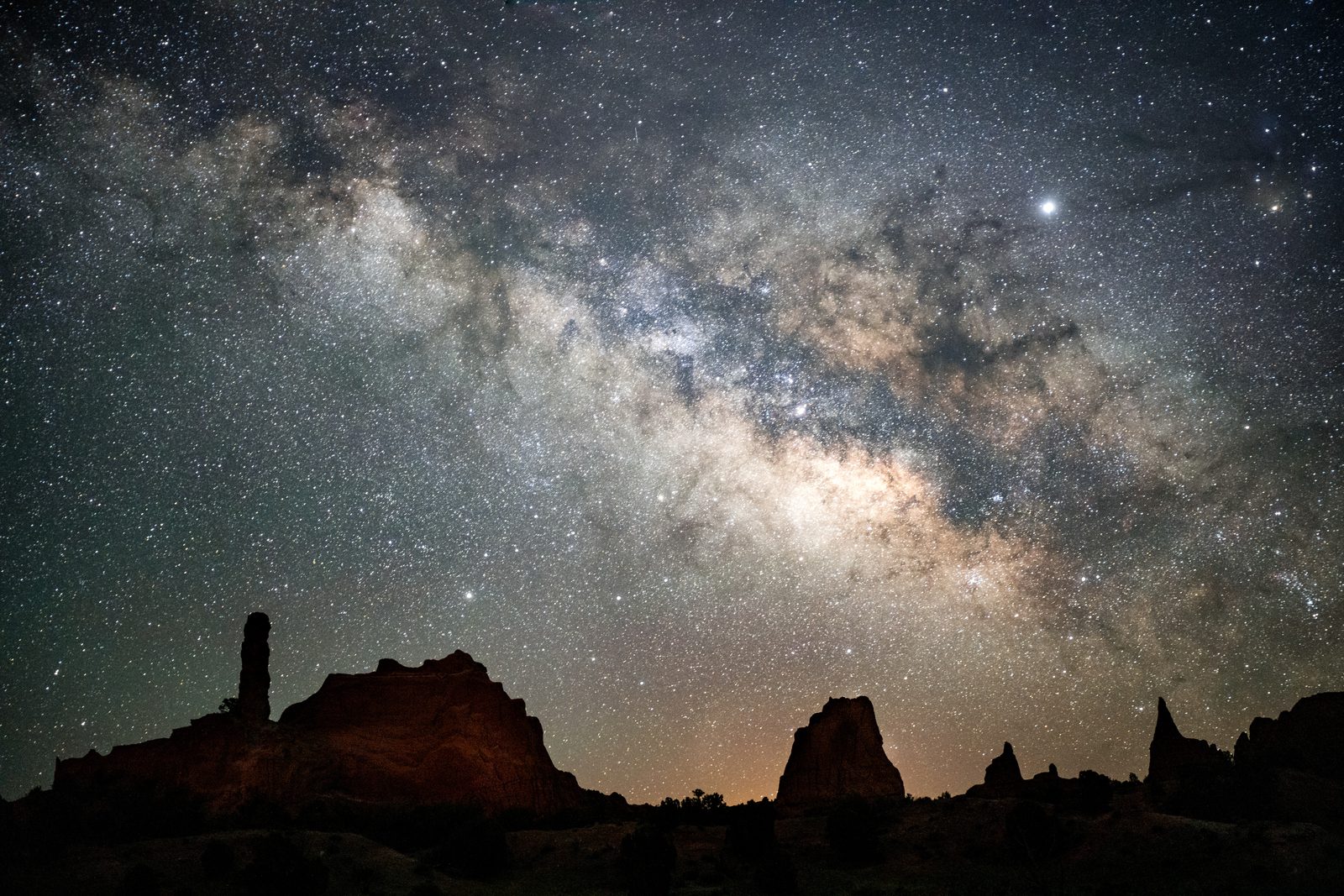
On April 5, Gov. Spencer Cox declared April Dark Sky Month in Utah. Though you wouldn’t know it from the light-polluted urban centers, Utah is actually one of the best places in the world to observe the night sky, no telescope required. The state’s declaration committed to preserving dark sky places—plus the health benefits and tourist dollars they bring.
Utah has 23 locations accredited by the International Dark Sky Association. The sheer number of dark sky parks in Utah—the highest concentration in the world—makes Utah an unofficial stargazing capital. Recognition from the IDA isn’t a simple task. Officials go through a lengthy application process to earn the distinction, which, according to the association, goes to “land possessing an exceptional or distinguished quality of starry nights and a nocturnal environment that is specifically protected for its scientific, natural, educational, cultural heritage and/or public enjoyment.”
If you are part of the public who wants to take part in that enjoyment, there are plenty of options for dark sky stargazing throughout the state.

New Kids on the Block
In March, two new Utah parks joined the prestigious International Dark Sky club, making them the newest Utah spots to earn the title. Goosenecks State Park (Mexican Hat) offers spectacular views of the San Juan River 1,000 feet below, and Fremont Indian State Park (Sevier) holds centuries-old artifacts, petroglyphs and pictographs from the Fremont tribe who inhabited the land. They join three other parks awarded by the IDA earlier this year. Jordanelle State Park (Heber City) and Rockport State Park (Peoa) are scenic reservoirs near Park City—paddleboard during the day and stargaze after the sun goes down. Further south, Kodachrome Basin State Park (Cannonville) offers sweeping views surrounded by Grand Staircase-Escalante National Monument.
Near the City
Luckily for us, the mountains surrounding the Salt Lake Valley helpfully block urban light pollution, which means several dark sky parks are just short drives from major cities. If you want to take in the Milky Way a little closer to home, try Antelope Island State Park (Syracuse), East Canyon (Morgan), North Fork Park (Eden) or Timpanogos Cave (American Fork).

National Parks
As if we need another excuse to visit one of Utah’s five national parks, four of them pair jaw-dropping landscapes with nighttime sky views. Take in the desert mesas of Canyonlands (Monticello), sandstone formations of Arches (Moab) and the colorful cliffs of Capitol Reef (Torrey) against a backdrop of endless constellations. Bryce Canyon (Bryce) has been a longstanding stargazing favorite, and the park even holds a yearly Astronomy Festival.
Head South
It’s no surprise that southern Utah is a particularly great area for dark sky parks—the more sparsely populated area boasts both breathtaking views and quiet landscapes. In the southeast is Utah’s first IDA-designated park, Dead Horse Point State Park (Moab). Continue stargazing at Goblin Valley State Park (Green River), Hovenweep National Monument (Bluff) and a pair of Lake Powell favorites: Natural Bridges National Monument and Rainbow Bridge National Monument. In the southwest, Cedar Breaks National Monument (Brian Head) offers summer stargazing programs led by park rangers.
Dark Sky Communities
The IDA also names International Dark Sky Communities, which are “cities and towns that adopt quality outdoor lighting ordinances and undertake efforts to educate residents about the importance of dark skies.” Two Utah cities hold the title: the former mining town Helper and Torrey, which used city ordinances to reduce light pollution.
C’mon. They’re Dinosaurs.
Do you really need anyone to tell you what’s cool about a place called Dinosaur National Monument (Jensen)? (On the way stop at Vernal’s Steinaker State Park.)
Get more information on astro tourism at visitutah.com. Our newest print issue is available on newsstands May 1.