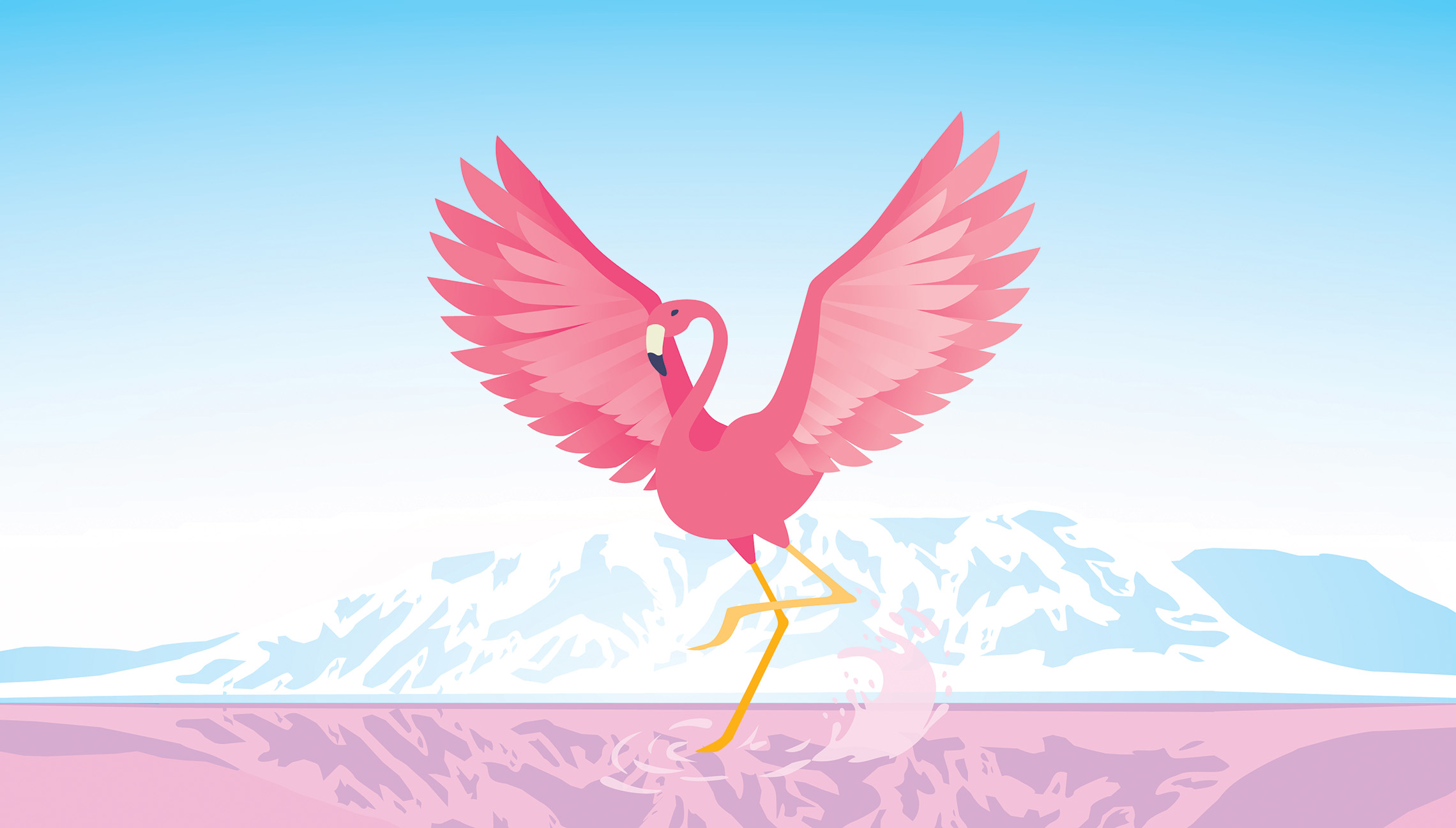
Each spring, nearly 12 million birds migrate to Great Salt Lake to rest, refuel and breed. Spanning 339 species, these avian tourists include American Avocets, Sandhill Cranes, American White Pelicans and even Tundra Swans—all enmeshed in a feathered kaleidoscope of color and form. And, for a span of 18 years, birdwatchers and ornithologists marveled at a single proud bird who stood above them all: A Chilean flamingo named Pink Floyd.
Originally a member of the Tracy Aviary’s flock, Floyd managed to evade a routine wing clipping and subsequently discovered a love for the sky. He fled his Liberty Park home in 1988 to follow his own Manifest Destiny west until settling at Great Salt Lake. Coincidentally, the lake’s high salinity content and plentiful brine shrimp population created ideal conditions for Floyd, as wild Chilean Flamingos hail from high-altitude Andes lakes with shallow waters and cold winters. News of the lake’s latest fluorescent resident spread through the community; birdwatchers hunted the horizon for the pink anomaly balancing on one leg, and Aviary keepers scratched their heads at failed attempts to recapture the gloriously free bird.
Life seemed pretty sweet for the feathered fugitive, whose rosy comportment became even more pronounced with the help of a steady supply of brine shrimp. But Floyd’s admirers began to suspect that life in separation from his flamboyance (yes, a flock of flamingos is called a flamboyance) was a lonely one. What is the companionship of gulls and ducks to a regal bird like Floyd?
Public sentiment over the Flamingo’s isolated existence became so worried that a group called “Friends for Floyd” began petitioning to bring even more flamingos to Utah’s shores in 2003. Led by Dancing Cranes Imports owner Jim Platt, the campaign appealed to state officials, took out ads in Utah’s largest newspapers, and even implored every state in the nation to donate one flamingo to the nascent sanctuary.
When the demands were met with little more than eyerolls, Friends for Floyd offered to pony up $50,000 to bring 25 South American flamingos to Utah. The Utah Division of Wildlife Resources finally shut down the futile effort, citing disruption of the lake’s ecology. In a last-ditch effort to raise awareness, the group parked 10 plastic lawn flamingos along the shores in April of 2004. It wasn’t the lifelong bond that Floyd longed for, but maybe the flamingo appreciated the sentiment.
Eventually, Floyd’s migrations back to the Great Salt Lake became less and less frequent. The last known sighting of him was in 2005. His impression on our city lives on, however, in legends and lore, and a public mural on the southern side of a co-working space downtown called The Shop.
Discover more Utah Lore, and find all our Community coverage. And while you’re here, why not subscribe and get six annual issues of Salt Lake magazine’s curated guide to the best of life in Utah?