Last year marked two uniquely Utah occasions: First, the 50th anniversary of Edward Abbey’s The Monkey Wrench Gang (1975) and, second, the 40th anniversary of Utah rare bookseller Ken Sanders’ publication of the iconic illustrated edition of the novel (1985). Now, if you aren’t someone who has floated a Utah river, scaled a sandstone tower or wandered across the desert, these events may have gone unnoticed. But for any dirtbag hippie eco-warrior, river rat or red rock crawling die-hard, it was a big deal.
The fictional tale details the exploits of a gang of eco-activists fighting the construction of the Glen Canyon Dam, which created Lake Powell and submerged the now-lost Glen Canyon behind the dam. The gang, which is inspired by real-life friends that Abbey knew, sets out to gum up the works of the construction by “monkey-wrenching” the bulldozers, trucks and earthmovers.
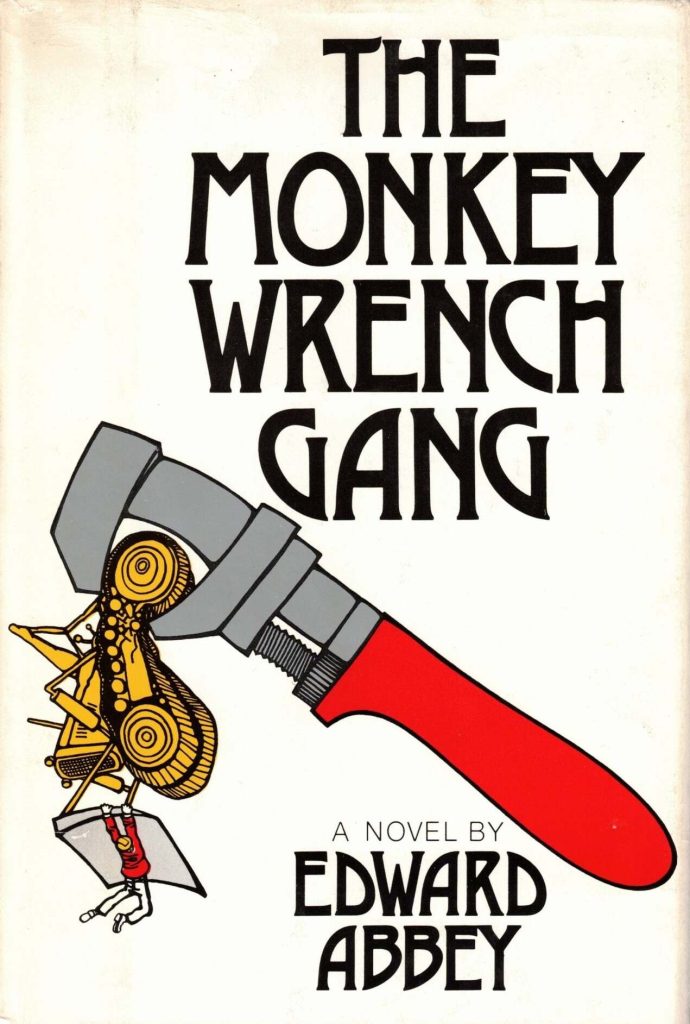
The Monkey Wrench Gang was not a national sensation. But it resonated with people who love the Spartan wildness of southern Utah and became required reading. (Abbey’s Desert Solitaire is also on that list.) Sanders was of a like mind and heard that message loud and clear. And then one day, in 1976, Abbey blew into Cosmic Aeroplane like a tumbleweed. “We knew his book and knew who he was,” Sanders recalls. “We became good friends.”
The friends became business partners. Sanders set out to shine more attention on Abbey’s work and wanted to print The Monkey Wrench Gang through his small publishing company, Dream Garden Press. During that effort, he and Abbey spent many days floating the Green and Colorado Rivers in a hard-sided dory boat. Together they navigated some of the West’s wildest whitewater.
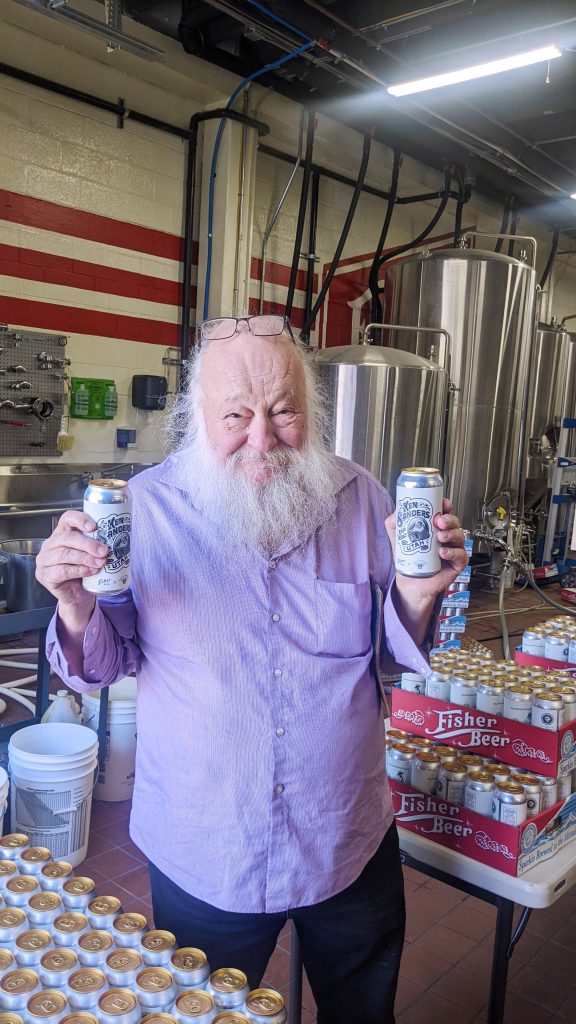
Sanders’ worked with Fisher Brewing company to create a limited edition brew with The Monkey Wrench Gang illustrations by R. Crumb. Photo Courtesy Paul Bacon/Wikimedia/Ken Sanders

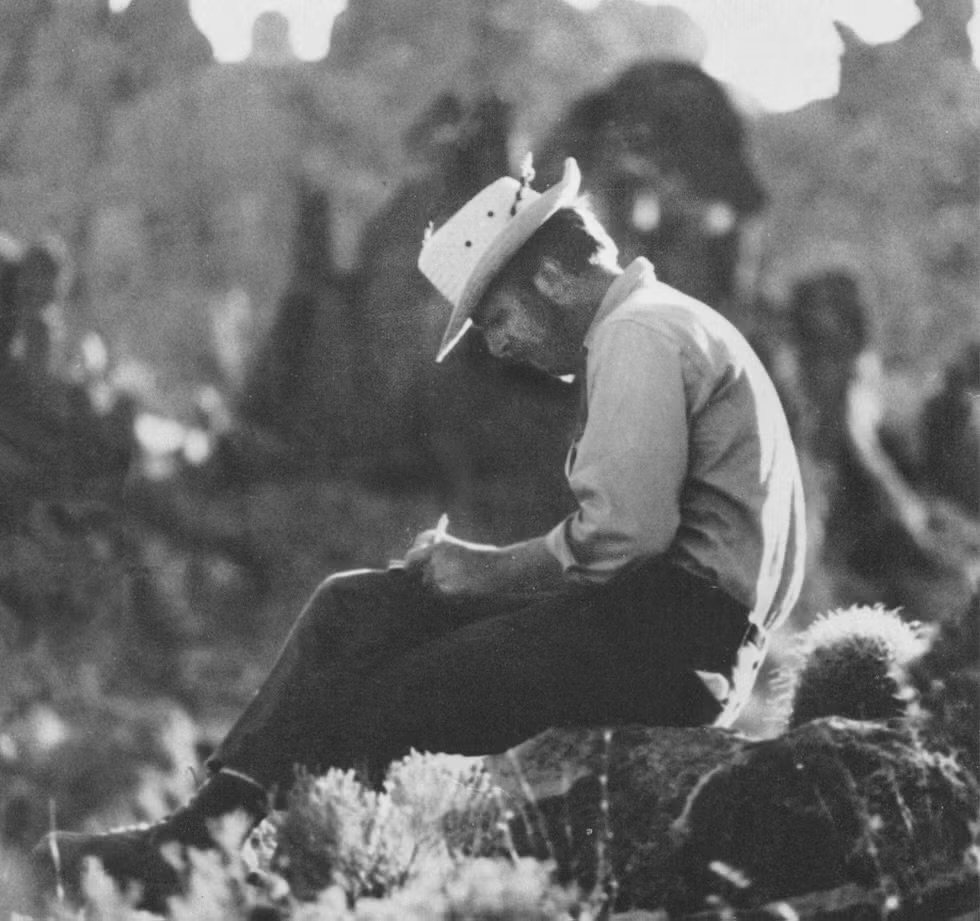
“On the river, you leave the outside world,” Sanders says. “You become a part of the wilderness. Abbey knew that.” The Monkey Wrench Gang inspired a national resistance movement that embraced Abbey’s ideas about the value of wild places. Sanders was there when the activist organization, Earth First!, unfurled a banner with a black crack from the top of the dam, with Abbey’s blessing. “That action lit a spark,” Sanders says and quotes Abbey, “wilderness is not a luxury but a necessity of the human spirit, and as vital to our lives as water and good bread.” Abbey believed that the idea of wilderness needed no defense. It needed defenders, Sanders says. “It’s more true now, than then.”
Courting R. Crumb
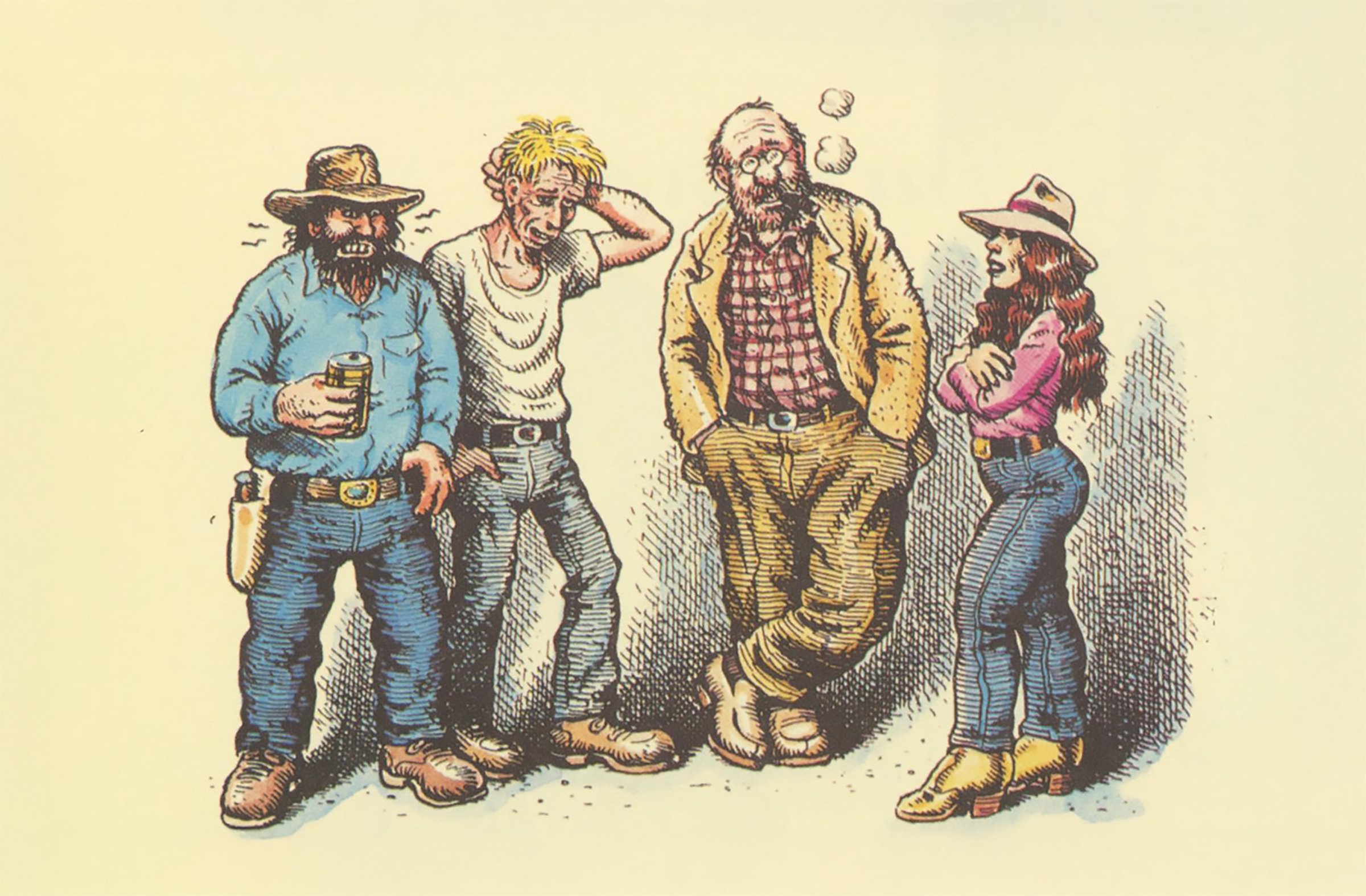
If you’ve ever seen a bumper sticker with the Grateful Dead’s lyric from “Trucking” on it, you know Robert Crumb, who signed his work “R. Crumb.” Crumb was a generationally significant illustrator, underground comic artist and instigator. He poked fun at, well, everything, exploring sexual fantasy, rage and social satire. His unique crosshatched drawings became icons of the counter-culture of the ’60s and ’70s and Sanders convinced him to illustrate his edition of The Monkey Wrench Gang. But it took a while.
Sanders knew Crumb, kind of. They had met at book fairs and events. In the early ’80s, the artist was living outside of Davis, Calif. and was famously reclusive and grouchy. At first, he “flat-out” turned Sanders down. He finally got Crumb to read the book and “he fell in love with it.” Crumbs’ illustrations brought Abbey’s characters to life.
Recently, Sanders celebrated the book and his friend, Ed Abbey, in a series of 50th anniversary parties and events. He reprinted the 1985 version and created special edition box sets that include rare photos, writing and an illustration by Sophie Crumb of her father. The iconic illustrations were used for a series of limitededition beer cans produced by Fisher Brewing Company. kensandersbooks.com
Discover more Utah Lore, and find all our Community coverage. And while you’re here, why not subscribe and get six annual issues of Salt Lake magazine’s curated guide to the best of life in Utah?