

The sea gently rises and falls as we paddle toward the cluster of moored sailboats. The tension I didn’t even realize I was holding drains out of my body with each paddle stroke. Once we reach the boats, we sit back on our surfboards and lazily chat as we watch a flock of gulls bob in the surf closer to shore. It’s the first week of April, or the traditional final week of spring break in the U.S. but on the white sand, shell-littered shoreline where we launched the SUPs, except for a lone swimmer, the beach is blissfully empty.
Earlier that day, following a direct flight from Salt Lake, my husband and I made the 45-minute drive from the Puerto Vallarta Airport to Punta de Mita in search of a much-needed respite from Utah’s slow-to-come spring. This sleepy coastal village (interchangeably referred to as Punta Mita) is located on the tip of a squarish Punta de Mita peninsula, reaching west into Banderas Bay between Puerto Vallarta to the south and Sayulita to the north. While Puerto Vallarta and Sayulita bustle with sun-seeking visitors, who pack each town’s pools and beaches and fuel an all-hours nightlife, the vibe in Punta de Mita is definitely more low-key, with a firm focus on water-borne adventures. In other words, just the kind of laid-back, low-stress beach vacation we were after.
The Gates
The Four Seasons Resort Punta Mita opened in 1999, establishing a luxury destination ecosystem on the peninsula that attracted several other elite hotel brands, including the St. Regis, Montage, W and, coming soon, Pendry—all of which are private and located inside gated complexes. As such, separating the peninsula’s luxe resorts and private beaches from the town, public beaches and local residential areas is referred to as “The Gates.” While separated physically, the influence of the gated resort communities is apparent in the town of Punta de Mita, but not overwhelmingly so. There, curated boutiques, refined dining and espresso bars mingle with locally run bodegas, surf shops and seats-on-the-beach taquerias. Street vendors line Punta de Mita’s very safe main drag, Av. El Anciote, which parallels the ocean and ends at a jetty lined with fishing boats and boats for hire (or pangas). Extra-long golf carts are a common sight along the town’s quiet streets, used in equal measure by families, groups of guys on a golf getaway, bachelorette parties and gaggles of teens, to shuttle themselves from inside the gates into Punta de Mita proper to sample the town’s creative commercial mix … and perhaps be reminded they are in Mexico.
A Luxuriant Peek Inside “The Gates”
Get an indulgent taste for life inside “the gates” by paying a visit to the mind-blowing spa at Conrad Punta de Mita. This leafy and serene indoor-outdoor oasis infuses each treatment with elements of the local Huichol culture. While this spa is known for its spiritual ceremonies, it would be hard to resist booking a massage in one of the spa’s outdoor, palapa nests. Best yet, each treatment comes with day-long access to the spa’s adult pool and the resort’s private beach.
What to Do
White-sand beaches and surf breaks are Punta de Mita’s headliner draw. Get a fun intro to surfing or ocean SUP basics at Playa Punta Mita or down the beach to La Lancha, a consistent break popular with locals, with a lesson from Mictlan Surf (Av. El Anclote 200, Nuevo, mictlansurf.com). More advanced wave riders can hire a panga to gain access to offshore breaks through Mictlan or from the fisherman’s co-op based at the jetty at the end of Av. El Anciote but water adventure is not limited to surfing in Punta de Mita. Sailing, snorkeling and sightseeing tours to Isla Marietas National Park, a UNESCO World Heritage Site and Biosphere Reserve located just a few miles off the coast, also launch daily from Punta de Mita. And Banderas Bay is a well-established humpback whale mating and calving ground. Whales are known to visit the bay from December through March, though the best times to spot humpbacks is in January and February.
What to Eat
After a day on the water, head to Zicatela (Av. Anclote 14, Punta de Mita), a seafood-forward eatery with a chic, open-air dining room that also offers an afternoon tequila tasting (reservations required). Or head up to the second-level, open-air Tora Izakaya (Pez Vela 136 A, Corral del Risco), a sake bar and “motorcycle studio” where you can sit along the restaurant’s exterior bar and watch the world go by while you sip an expertly made cocktail and dine on sushi made with fish pulled out of the bay earlier that day. For a casual, yet still upscale, seat on the beach, pay a visit to Mauka (Rinconada Careyeros L10). Be sure to begin at least one morning at El Cafecito de Mita (Av. El Anciote 15) for a strong coffee, fresh smoothie, mouthwatering pastry or one of their stick-to-your-ribs breakfast burritos, big enough to share.
Where to Stay
While the options for laying down your head inside the gates of Punta de Mita are many, we chose instead to stay in town at one of the peninsula’s newest hotels, Alma Surf Lodge (Corral Del Risco, Punta de Mi, rates begin at $150 per night). There, co-owner Matt Lambert and his wife, Alex Harris, have crafted an undeniably inviting lodging experience centered around modern south-of-the-border hospitality and 1970s longboarder surf culture. The hotel’s entrance is framed on one side by the palapa-topped bar, outfitted with a bocce court, and, on the other, a rainbow-like rack of surfboards. Indoors, the lobby lounge is finished with dark-stained wood ceilings and accent walls hung with colorful local art. Clusters of books and plants are placed artistically along shelves and Midcentury modern furniture is arranged in conversation areas over layered rugs. “When people walk in here, I want them to feel like they are coming home,” Lambert says.
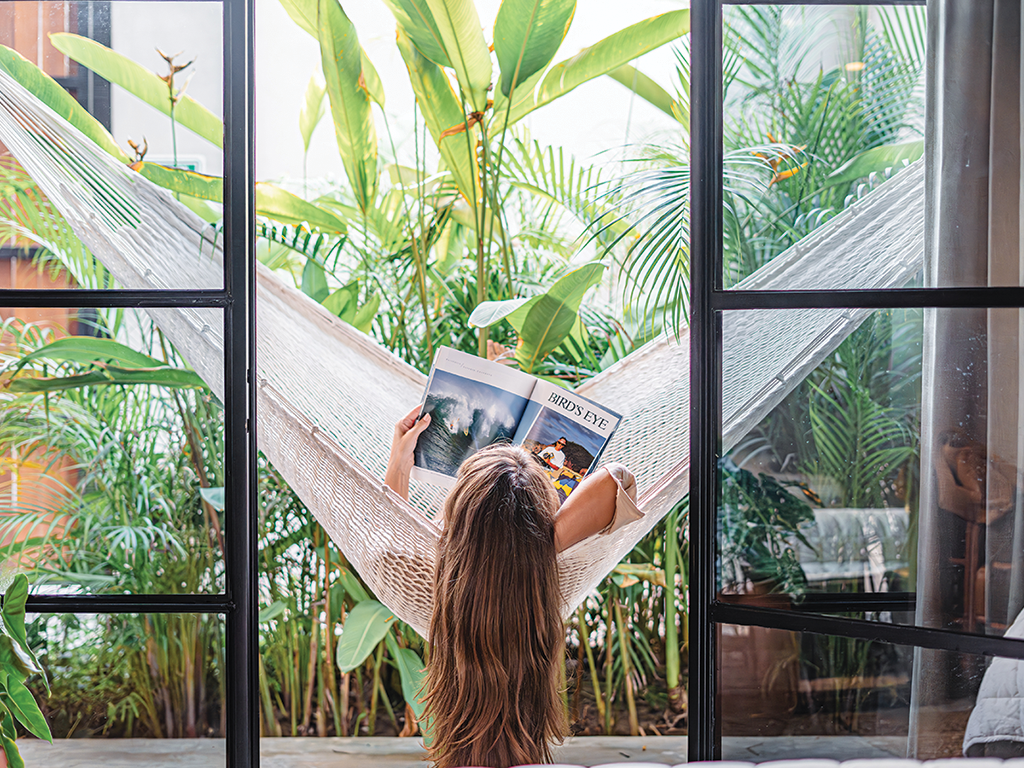
In our guest room, a bright yellow surfboard, handmade by local surfer Miguel Sinclair, hung on the wood-paneled wall over the bed. Our generously sized bathroom was tiled from floor to ceiling in mossy green, reflecting the tropical trees and shrubs on the room’s private patio, where I spent more than a little time swaying in its macrame hammock. Alma’s piece de resistance, however, is its rooftop pool and hangout area, where views from the town to the ocean frame comfy patio furniture and a saltwater pool.
Alma leans heavily into thoughtful details like daily delivery of coffee and the morning surf report outside of each guestroom door; terrycloth surf ponchos in lieu of robes; and complimentary use of the house’s foam surfboards. Two cold beers await guests upon check-in and the onsite store sells beach essentials and Alma merch. The lodge’s open-air restaurant serves housemade biscuit sandwiches and granola bowls for breakfast, and chicken sandwiches or smash burgers for lunch, dinner and late night.
Lambert and Harris, both native Midwesterners, discovered Punta de Mita while on a 2021 sailing trip. Though they’d planned just a brief stop, their itinerary to sail on to French Polynesia was thwarted by COVID’s second wave. They fell in love with Punta de Mita anyway and decided to stay. “I have a problem with dreaming,” Lambert says, “and when we weren’t able to continue on sailing, we came up with another dream.”
Lambert invited Ryan Carlson, a Salt Lake City-based real estate developer who’s completed other projects along the Banderas Bay coast, to partner with him in what would become Alma Surf Lodge. “Alma truly rivals any boutique hotel,” Carlson says. “It feels like staying in a guesthouse in Austria—warm, personal, and welcoming—where you get to know the family and the staff,” he says. “It’s eclectic, thoughtfully designed and incredibly comfortable.”
After paddling back to shore that first day in Punta de Mita, my husband and I sat in plastic chairs at a beach bar, sipping what was possibly the best Hugo spritz I’ve ever had. What makes this place special, I thought, is not its stunning natural beauty, ample recreation, great restaurants or thoughtful lodging—it’s how Punta de Mita has managed to hold onto its soul.
See more stories like this and all our Travel coverage. And while you’re here, why not subscribe and get six annual issues of Salt Lake magazine’s curated guide to the best life in Utah?