
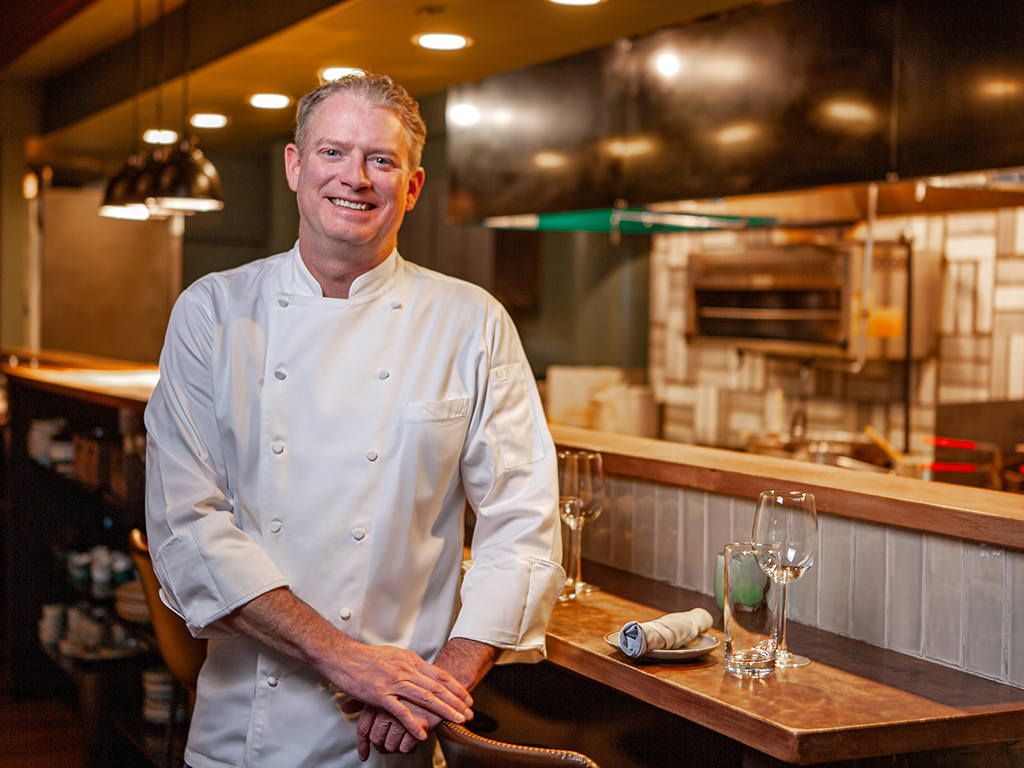
Tupelo in Park City is a standout in the Utah dining landscape. It is both fine dining and unpretentious, earthy and sophisticated, a mom-and-pop operation and a culinary destination. The restaurant, Tupelo, is named after a rare and sought-after honey produced from the White Tupelo tree, a native species found in the southeastern United States. It is distinct in flavor and doesn’t crystallize. Thus, the honey bee in the restaurant logo (also a subtle nod to its Utah roots).
Chef Matt Harris, who has headed up Tupelo since its inception in 2015, is a rare and sought-after culinary talent. He brings a distinct flavor to his menu and is constantly innovating rather than crystallizing. “Tupelo means something rare, something pure,” Chef Matt says. “Not commodity—it’s what we aim for in every dish.” He could be describing himself, although with his humble Southern roots, he would never say so. Recently, he received a James Beard nod as a semi-finalist in the Mountain Region for Best Chef.
A Southern Start: From Biscuits to the Utah Backcountry
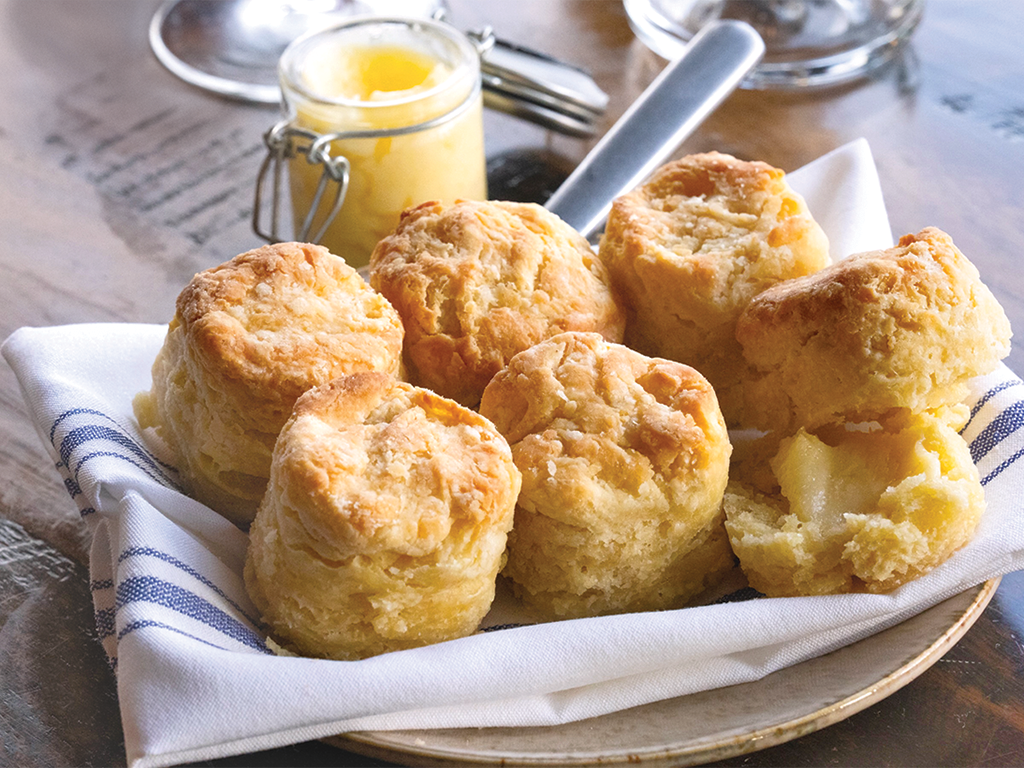
Before he was a Chef, Matt learned to appreciate great food and great ingredients in his mother’s kitchen. A riff on mom’s biscuit recipe is on the menu today at Tupelo. At 21, Chef Matt was living in Atlanta, working as a sous chef for several prominent restaurants and realized that he wanted to expand his horizons and see more of the world. “I packed up my Tacoma and hit the road—Utah was one of my first stops and I fell in love,” he said. After a stint cooking in Utah and then in California, he moved back to Atlanta to work with Jean-Georges Vongerichten. Who, on a pivotal day, asked Chef Matt, “What do you think about moving to Utah and opening a restaurant?”
Matt’s answer? “Hell yeah!” Back in Utah, he oversaw the J&G Grill at the St. Regis, which is where he met his other half, Maggie and fell in love again. “I spent a couple more years kind of floating around the country, finding myself culinarily.” Then came the chance to move back to Utah for a third time to open Tupelo. “When I first came to Utah, I was like, ‘Wow! There’s something special about this place. Every time I left, I just thought, ‘I want to be in Utah.’”
More Than Local: A Philosophy of Purveyor Collaboration at Tupelo
Since returning, Matt has been putting down roots and building relationships with local purveyors. From farmers, ranchers and regional producers, the approach at Tupelo differs from that of most restaurateurs who work with small vendors. He changes the menu based on what a small farm is harvesting that week. “We change 75-80% of the menu regularly. It keeps us fresh—and our guests curious.”
He’ll call up a rancher and ask, “What do you need to sell? I’ll take the odd bits, the underloved cuts.” He’ll take these random bits and bobs and give them love. It also means that his rancher friends love him. They know that he is there to help keep them in business, too.
Matt and Maggie even have their own farm operation out of Midway to supply the restaurant. They grow summer vegetables, including collards (like a good Southern boy), tomatoes and cucumbers. In the fall, the harvest switches over to winter squash. He laughs, “I found wild hops on the property and I pulled them out and I put them on an actual trellis where they grow up. Maggie was super happy because they hid my snowmobiles so she didn’t have to see them.” Chef Matt uses the wild hops from his farm. “We harvest them at the end of the summer in September. In September or October, depending on the year, Copper River Salmon is coming on. We make a bunch of cured salmon. We buy as much salmon as we have hops and we do hop-cured salmon. It goes on the menu until it sells out.” It is a perfect illustration of how Chef Matt’s culinary brain works.
Community and Culture Reign
Chef Matt passionately dislikes the question, ‘What sets you apart?’ Instead, he says, “I don’t want Tupelo to be set apart. I want it to be part of a culinary community. I want to be with other people. I want to do what we are doing culinarily with like-minded people. I want to be a community.”
Click here to read more from Lydia Martinez
See more stories like this and all of our Food and Drink coverage. And while you’re here, why not subscribe and get six annual issues of Salt Lake magazine’s curated guide to the best life in Utah?