

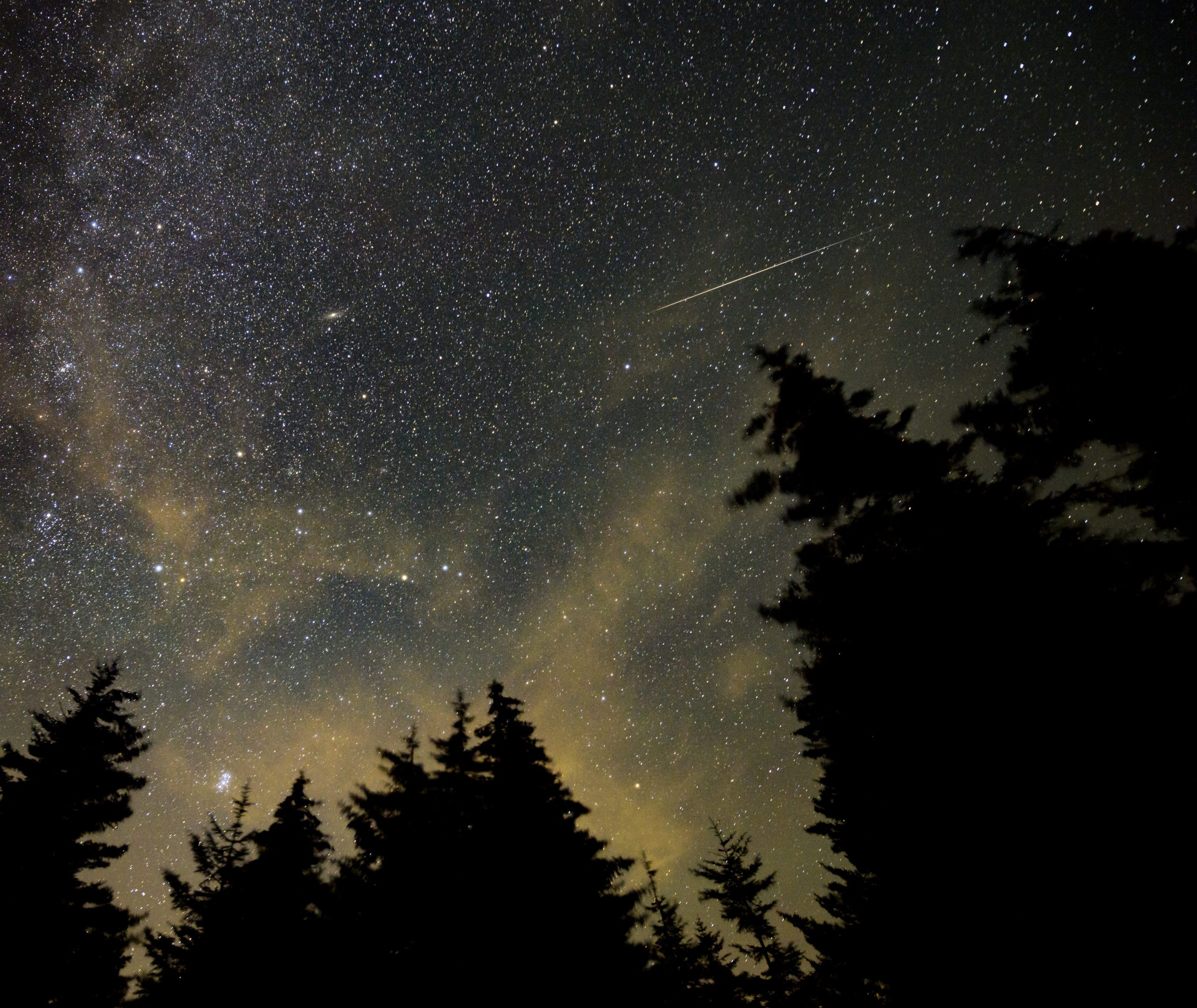
From our vantage point at Dinosaur National Monument, lying on the ground and staring up at a sky crowded with stars—seriously, an overwhelming number of stars—streaks of green, white, gold and blue flashed across the sky, courtesy of the Perseid meteor shower. We let out audible gasps and cries of “that was a good one!” and “look over there!” like kids at a fireworks show, simultaneously filled with wonder and confronted with the insignificance of our existence. So, if you’re wondering if it’s worth the trip to a certified Dark Sky Park to view the Perseids, the short answer is “yes.” The long answer is “heck yes.”
While stargazing is a rewarding endeavor in and of itself, the Perseids are something special, returning every year and lighting up the sky from mid- to late-August. The Perseids occur with such regularity because every year Earth passes through the path of Comet Swift-Tuttle, on its 133-year orbit around the sun, from mid-July to late-August. The Perseid meteor shower peaks when Earth passes through the densest area of the comet trail, usually around Aug. 11-13, but the meteor shower remains visible until Aug. 24 or so.

The streaks of light during the Perseids sometimes appear green or other colors, which, according to experts at NASA, is due to the way the meteoroids “excite” oxygen molecules during impact with the atmosphere. That’s the bright light we’re seeing, the meteroid (debris from the comet’s trail) vaporizing upon contact with Earth’s upper atmosphere.
At its peak, and if conditions are right, NASA estimates you’ll be able to see about 40 Perseids each hour. That’s not accounting for the dozens and dozens we can’t see. But the number of meteoroids you see is greatly dependent on the brightness of your sky. According to the NASA blog, the brighter skies of the suburbs greatly cut down the rates of visible meteoroids, going from a Perseid every couple of minutes to one every 6-7 minutes. And if you’re trying to see the Perseids in a city? You might as well stay inside. City dwellers might see a single Perseid or two during the whole hour.
That’s why you haven’t seen a meteor shower, let alone the Perseid meteor shower, until you’ve seen it in a Dark Sky Park, and Utah is perhaps the best place in the world to do it. For reference, viewing the Perseids in Dinosaur National Monument (a Dark Sky Park), it was so dark at night that I could barely see the people lying shoulder-to-shoulder on the ground next to me. We stayed the night at Split Mountain Campground, but any of Dinosaur’s campgrounds, or camping areas at other Dark Sky Parks, will do because your best views are going to be in the early morning hours.

Regardless from where you view the Perseids, allow some time—as long as 45 minutes— for your eyes to adjust to the dark. On our meteor-viewing trip to Dinosaur National Monument, we brought along binoculars, but they were seldom used. The best viewing experience is with the naked eye, allowing yourself to take in as much as the sky as you can with your field of vision.
Salt Lake has written before about how Utah’s Dark Sky Parks makes it the unofficial world capital of stargazing. The International Dark-Sky Association (IDA) certifies Dark Sky Parks across the world and, with more than 20, Utah has the highest concentration of just about anywhere. You can find them wherever you are by using the finder on the IDA website.
The latest issue of Salt Lake magazine is on newsstands now. Subscribe to get every issue delivered straight to your house.