
No doubt, the miners who built Park City would barely recognize it today. Since the silver boom that fueled the town’s economy from the 1880s until World War II, Park City has grown from a gritty mining camp into an internationally known resort community. But for those who have skied, pedaled, or hiked the hills there, it’s clear that the town’s mining past is still very much present.
A few of the more visible relics from Park City’s mining era include the spindly Silver King Aerial Tram towers, standing in a stalwart line along the route of the Town Lift; the distinctive conveyor and huge mine tailing pile that make up the Thaynes Shaft, located next to the base of Park City Mountain’s Thaynes lift; and the 85-foot-tall Daly West Mine headframe that towers above the Montage resort hotel at Deer Valley Resort, a structure that was righted in 2022 after collapsing to the ground in 2015.
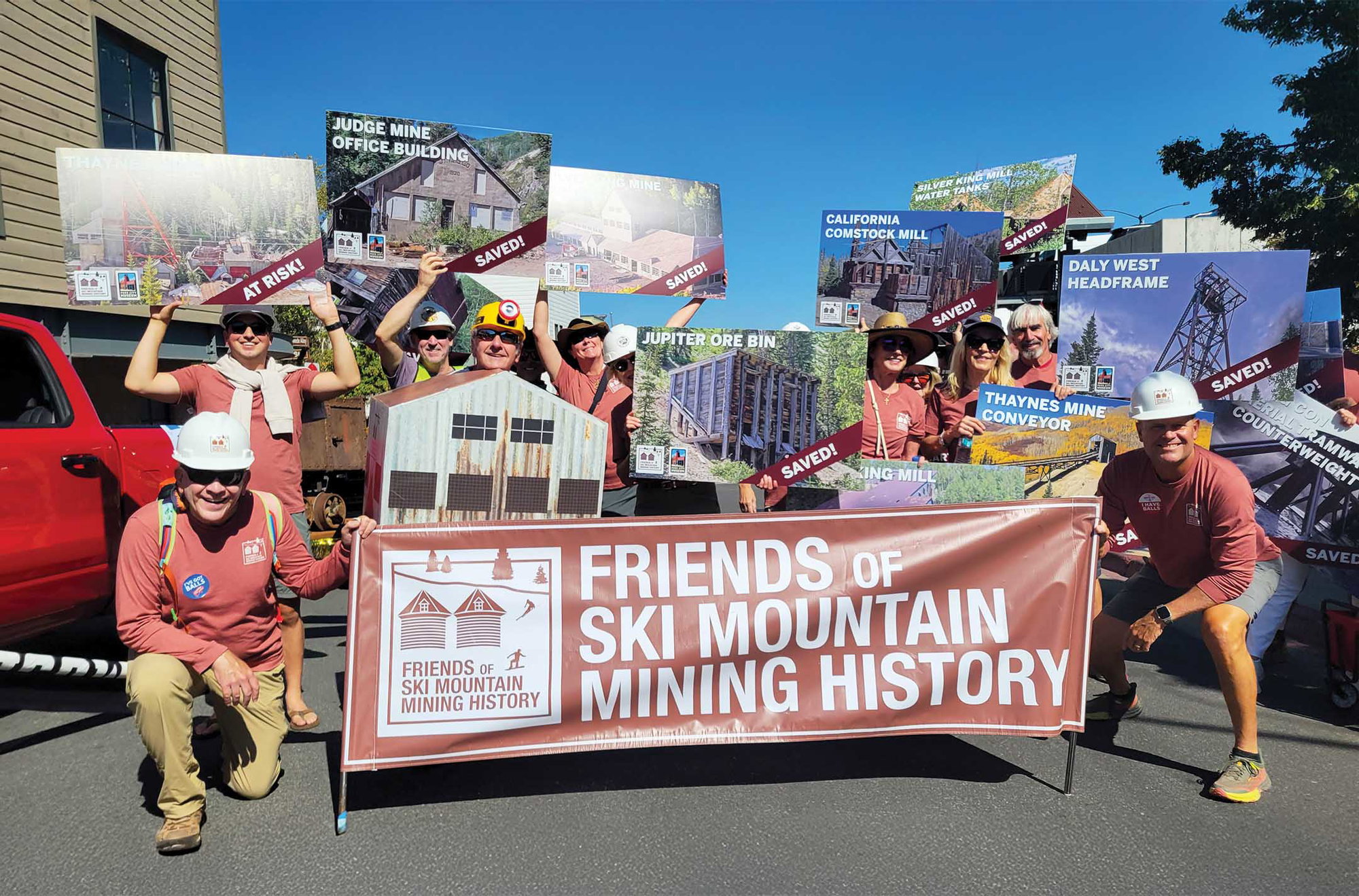
So it seems only natural that the Friends of Ski Mountain Mining History (FSMMH), an all-volunteer nonprofit responsible for stabilizing and restoring mining-era structures throughout Park City, would hatch a plan to highlight vestiges of the town’s first boom in a way that outdoorsy residents and visitors would embrace.
“Many of our members are what you’d call ‘sporty historians,’” says FSMMH marketing and media manager Colleen Logan, “and we thought, wouldn’t it be cool to create a storytelling trail to link several of the town’s mining structures and sites?”
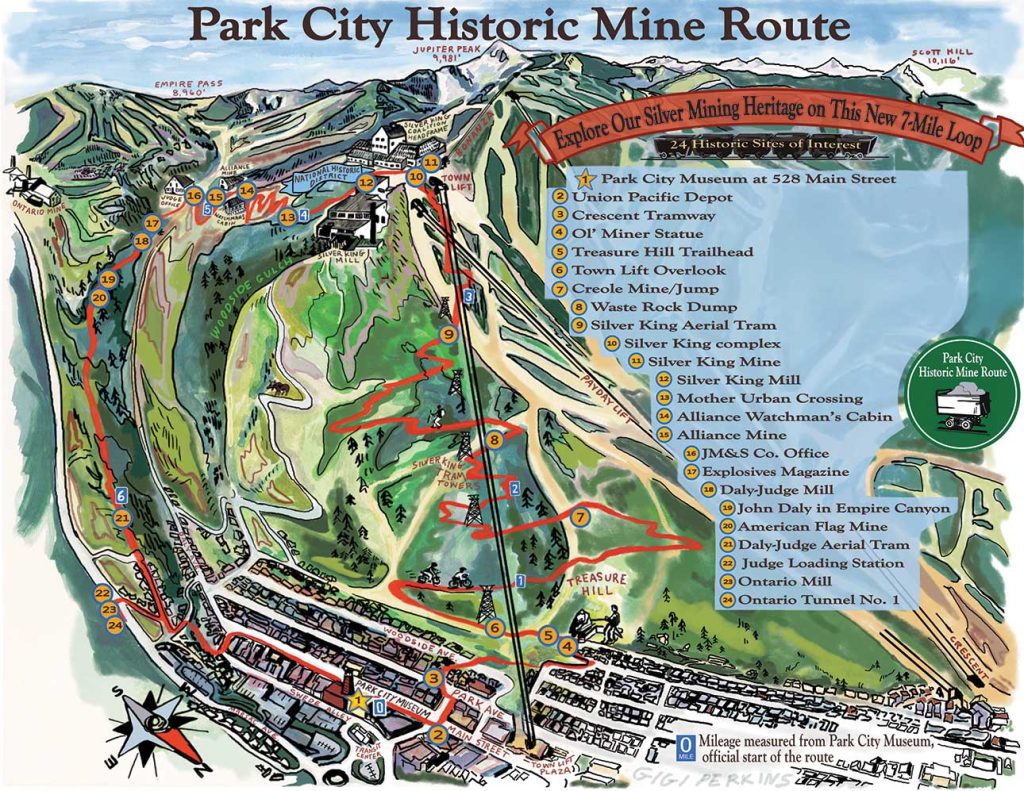
That cool idea resulted in the Park City Historic Mine Route, a 7-mile loop with an elevation gain of 1,200 feet that knits together existing trails for a tour of 24 historic mining sites and structures. The route, marked by bright green wayfinding signs, begins and ends on Main Street at the Park City Museum. From there, it descends to the historic Union Pacific depot, now home to Le Depot Brasserie, and then climbs to the Ol’ Miner’s statue on Lowell Avenue.
The route continues up Treasure Hill to its summit, the iconic Silver King Coalition Mine Headframe Building, located at the base of Park City Mountain’s Bonanza Express chairlift. The descent winds around Upper King Road, into Empire Canyon, and down Ontario Ridge before returning to the museum. Established trails used as part of the route include Mother Urban, John’s 99, Trestle, Sweeney’s, OMG, and Prospect Ridge.
Of course, Park City’s Historic Mine Route could not exist had the town’s mining structures deteriorated into dust. “How preservation happens is when people in a community say it’s important and they continue to work on it over time,” says Brandy Strand, executive director of Preservation Utah, a Salt Lake City-based nonprofit that champions the protection, restoration, and celebration of Utah’s historic architecture and places.
“I’ve been an advocate for local history since I moved to Park City in the 1980s to be a ski instructor,” says Sally Elliott, FSMMH co-chair and founding member. But the effort to save the town’s aging mining structures began in earnest in 1998, when United Park City Mines (UPCM) sold Empire Pass to Deer Valley, Elliott explains. At the time, she and fellow local history advocate Marianne Cone persuaded UPCM, Deer Valley Resort, and Park City Mountain to place 36 interpretive signs at artifact sites within each resort’s boundary.
When Vail Resorts purchased Park City Mountain in 2014, Elliott petitioned Vail and Park City Municipal to do even more. Vail agreed to survey the sites within the ski area boundary and support a fundraising plan for restoration efforts through Epic Promise, the company’s philanthropic arm.
Now 60 members strong, FSMMH formed in 2015. Since then, the organization has completed stabilization and restoration work on more than a dozen historic structures throughout the hillsides above and around Park City. Two years ago, FSMMH landed what could be considered its biggest win when the National Park Service deemed the 31-acre Silver King Mine Complex a National Historic District.
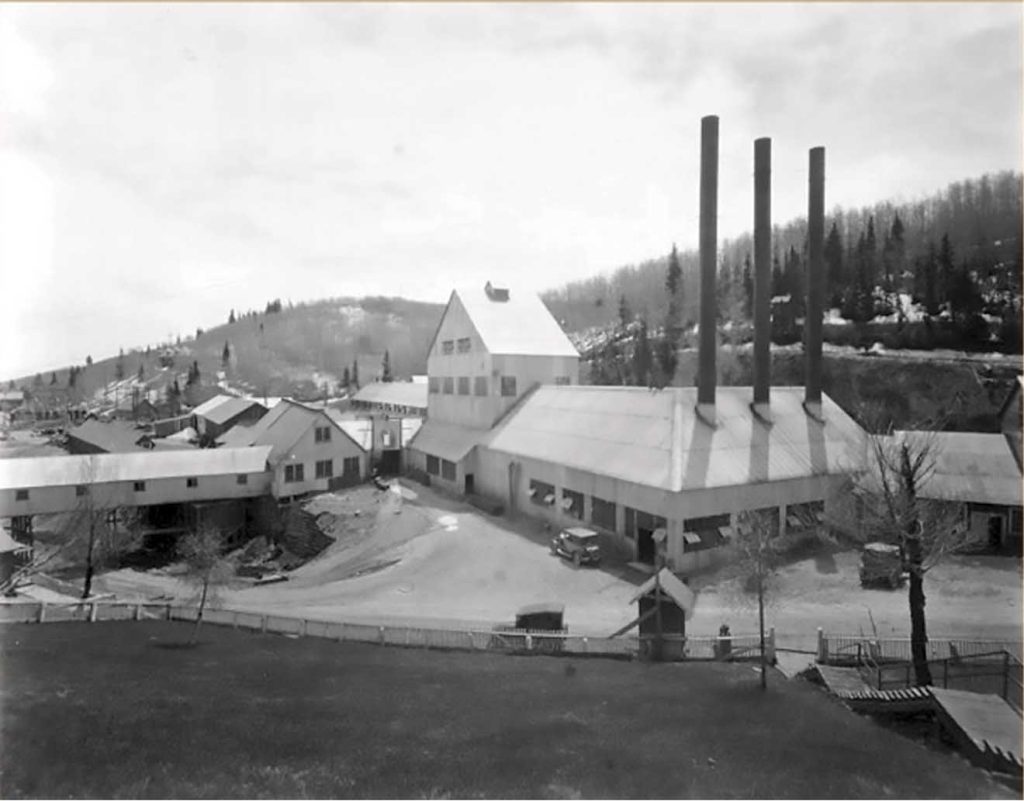
More than a century ago, “community” would have better described the site than “complex,” where 100 men lived in eight boarding houses. The property also hosted an assay office, a superintendent’s house, a miners’ change house, a seven-story mill, a tramway loading station that carried ore down to the Union Pacific Depot in Park City, coal bins, water tanks, an electrical substation, and even a pig farm.
Last summer, the nonprofit led the stabilization and restoration of the complex’s headframe building, a project that spanned four years, cost $1.6 million, and garnered awards from both the Park City Historic Preservation Board and Preservation Utah.
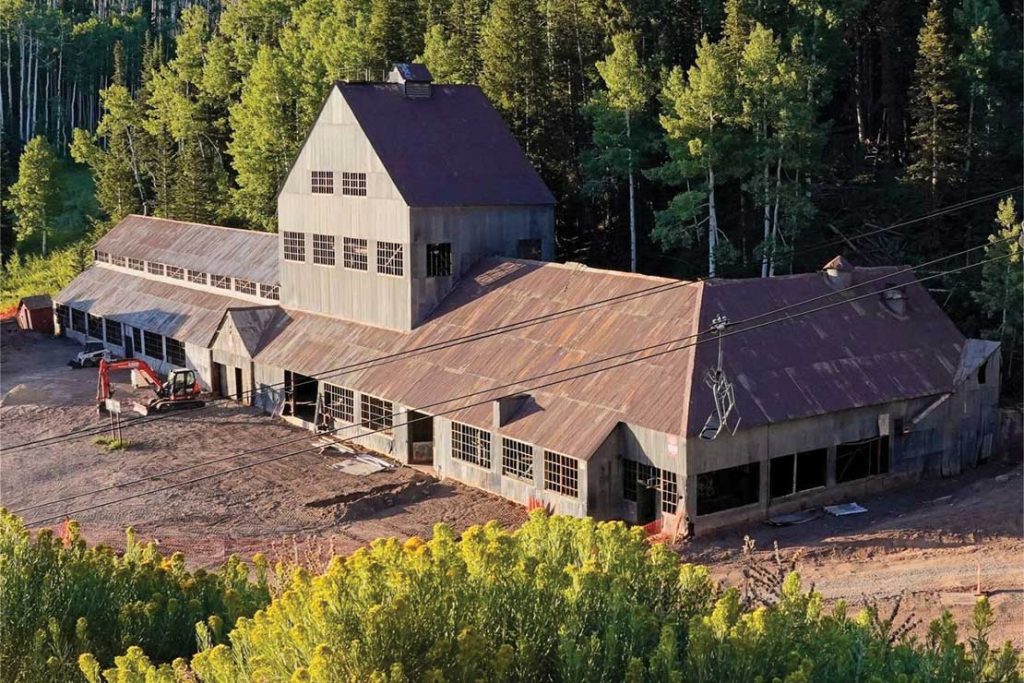
“It is amazing what [FSMMH] have done,” Strand says. “They not only undertook the huge headframe building restoration project but went a step further with the National Historic Registry designation, which will create a lot of awareness for what they’ve accomplished.”
Beyond FSMMH members, a whole village of so-called “sporty historians” has contributed to finishing the historic route. Grants from the Utah Office of Outdoor Recreation, Park City Rotary, Central Wasatch Commission, and the Park City Chamber & Visitors Bureau helped fund the route. Mountain Trails Foundation donated time to install 80 wayfinding signs. And local artist Gigi Perkins painted the Historic Mine Route trail map.
“This is not just a trail; it’s an open-air museum, not unlike the Freedom Trail in Boston or even the Acropolis,” Logan says. “Not all museums are behind glass.”
The Park City Historic Mining Route is scheduled to open on Labor Day, Sept. 7, celebrated as Miners Day in Park City. For a map, free interactive audio tour, or more information, visit the Park City Museum (528 Main Street) or parkcityhistory.org.
Read more stories like this and all of our Community coverage. And while you’re here, subscribe and get six issues of Salt Lake magazine, your curated guide to the best of life in Utah.