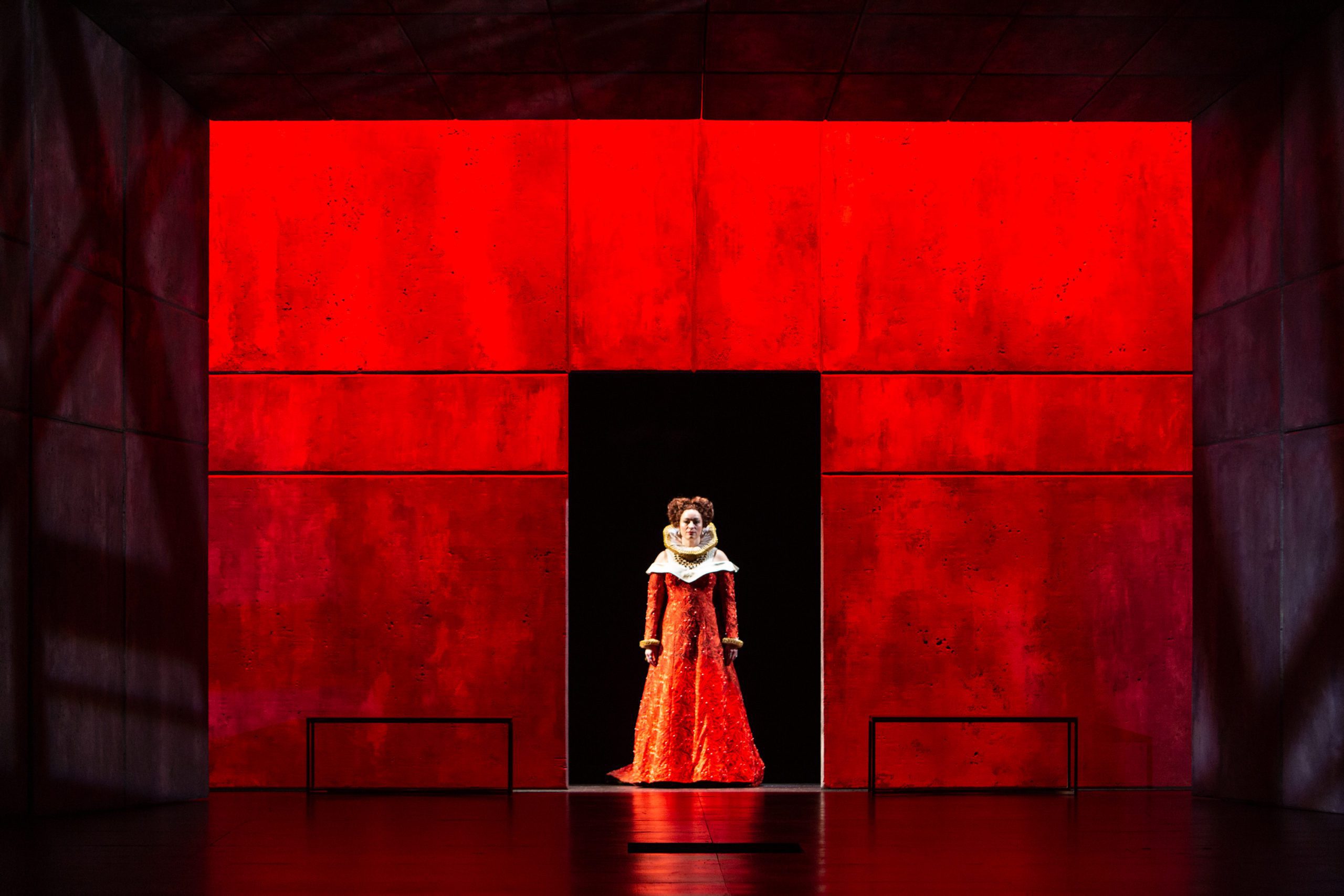
Pioneer Theatre Company’s production of Mary Stuart shows both the satisfactions and the limitations of the royal historical drama. On the one hand, there are some obvious pleasures — sweeping themes, dramatic stakes and lush wardrobes (Brenda Van Der Wiel designed the costumes). There will seemingly always be an appetite for royal gossip — just look at the backlash (and the backlash to the backlash) when Prince Harry and Meghan Markle stepped down from the royal family.
What: Mary Stuart
When: Through Jan. 25
Where: Simmons Pioneer Memorial Theatre
How: Tickets are available on their website.
See more of our theater coverage here.
Still, after centuries of watching bickering kings and queens, it’s a challenge for actors and directors to find fresh angles to the same material. Pioneer Theatre’s production suffers from this exact problem — it is competently performed, but while translating a 200-year-old play about a 450-year-old story, the potency is lost.
The play opens with Mary Stuart, Queen of Scots (Erika La Vonn) imprisoned in England. Her cousin and rival, Elizabeth I (Anne Bates), is threatened by Mary’s possible claim to the throne and opposed to Mary’s staunch Catholicism. Mary knows her life is in danger, and knows that changing Elizabeth’s mind is her best chance at survival. Elizabeth, meanwhile, is conflicted on her next step forward. Both women must navigate a complex tangle of alliances and possible betrayals while maintaining their unstable positions of power.

The cast of “Mary Stuart” (Courtesy Pioneer Theatre Company)
La Vonn works hard, but Mary, despite being the titular role, is not a particularly juicy part — she is saintly, but not always interesting. The play’s structure doesn’t always serve the character well. Because audiences only see Mary as a prisoner, they get little sense of her power and supposed magnetism. When Mary gets to be more than just a martyr, the play comes alive. In the opening scene of act two, Mary and Elizabeth meet in person, and Mary is finally able to unleash some regal righteous anger. La Vonn seems to relish the opportunity.
Bates, meanwhile, has more compelling dimensions to explore. Her Elizabeth is insecure and inconsistent, struggling against the impossible demands of monarchy and facing sexist standards that even women of extraordinary power couldn’t escape. Though the play’s characters tend to side with Mary, (characters often say, directly and indirectly, that Mary is the “pretty one”) Elizabeth is often most sympathetic to modern audiences.
Pioneer Theatre’s production is traditionally staged and designed, and the results are sometimes stuffy. The sets, designed by Sara Ryung Clement, are appropriately cold and imposing, but the actors sometimes look lost in the enormous space. John Ballinger’s music may be the most audacious part of the production — it comes in loud, unexpected bursts of dread — but the results are sometimes jarring additions to long scenes.
Still, whether it’s the 16th, 19th or 21st century, it is still refreshing to watch two women work in unquestioned positions of power. The men in this story are constantly scheming for influence, but there is no question about who’s really in charge. This play argues that these queen’s reigns are just as dramatic, imperfect and bloody as their male counterparts. It’s a twisted kind of progress.