
How are Utah schools faring in the constantly changing world of modern education? This new world includes school violence, more pupils than most other states (we still have the largest households in the country), multicultural classrooms and very little money.
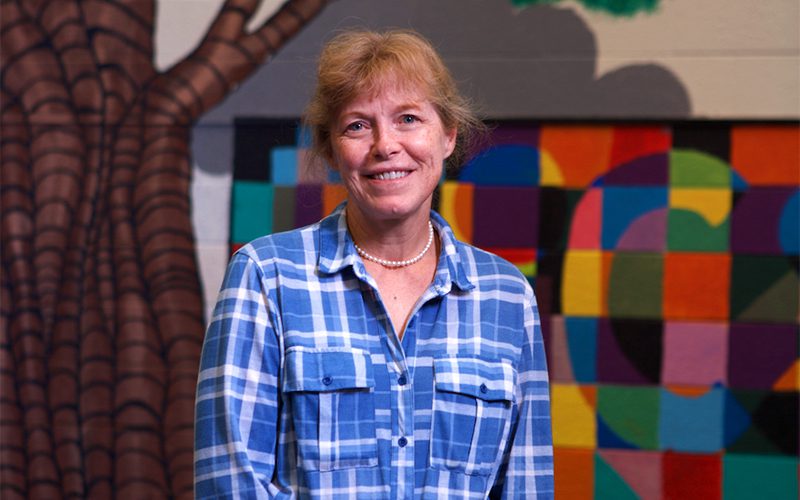
Meet Angela Rowland, Principal of Utah International Charter School.
Utah International Charter School is a public charter junior high and high school in South Salt Lake intended to give refugees, immigrants and American-born students full access to content-based, sheltered English instruction in every class, and to empower them with collaboration skills, critical-thinking skills, and diverse global perspectives. Mixed-ability classes are limited to 25 students, with an average class size of 20.
The art assignment sounded simple. Each student had written an essay about what their “home” looked like; now they were supposed to draw a picture of that place. But many of the students were stumped. Rowland leans over to help a student think the assignment through: “Was your house square? Round?” she asks.
They decide the house was an unadorned rectangle. When many of these students think of home, they’re thinking of the refugee camp they used to live in. It’s hard to translate that imagination to Utah, where we think of picket fences and manicured lawns.
Rowland has experience working with underprivileged and outsider kids—she was a teacher in the Navajo Nation and a social worker for 13 years. She was the founding principal of Utah International Charter School.
Charter schools have a controversial reputation—the week we were researching this article, two went out of business. Intended to add flexibility to education bureaucracy, charters are tax-payer funded like public schools, but many have been managed for profit, a risky business. But you don’t have to visit the classrooms at Utah International to see that it’s unlike other district schools.
“We have 240 students here. And there are 30 home languages,” says Rowland. “Most kids are new to the country. Many have never been to school. We have 15-year-olds reading English at a first-grade level. They’re all behind. We have a schedule full of English, Science, Social Studies, Math, plus PE or art. We concentrate on the basics.”
Besides the linguistic and cultural challenges, The Utah International campus is located in a neighborhood of generational poverty.
“We’re community-eligible, so every kid gets free breakfast, lunch, snack and dinner.”
The students are fed, but this school faces challenges others do not: For funding and follow-up purposes both the federal and state level want to ensure schools are communicating with parents. And these parents value education greatly, they know it’s the key to getting their kids out of poverty. “But the parents of our students often don’t have email. They may not read English, they’re working two jobs or doing shift work. They may own one car for the whole family or not own one at all”. In some classes, says Rowland, only two students may speak the same language. Difference is the norm. But, she adds, “A big strength of our school is that differences that mattered at home don’t apply here. There are a lot of cross-cultural friendships.”
See all of our City Life coverage here.