
You still haven’t taken the family hiking, have you? Well, you still have time before the kids are back in school and you can hear yourself think. So, lace up those Timberlands, grab some Luna bars and hit the trail before it’s too hot to walk outside. Before summer, we suggested six kid-friendly/family hikes. Now, we have six more. Each trail is a chance to introduce kids to the outdoors, starting in our local foothills.
East Mountain Wilderness Park
The trail: Along the 1.7-mile loop that starts near the big “East Mountain Wilderness Park” sign, you’ll see wildflowers, joggers and photo-worthy views of Kaysville without putting in much effort. The trail starts wide and flat, perfect for energetic kids. For a more woodsy experience and slight climb, take some of the side trails, like Graveyard, but be aware they are narrower and mountain bikers may be headed your way around the corners. You’ll also see turnoffs for Bonneville Shoreline Trail and a handful of campsites. Don’t get lost, bring your GPS. Getting there: From Salt Lake City, head north on I-15, take exit 324 for US-89 toward South Ogden, take a right on 200 North, make a quick left onto Mountain Road, and then follow it up the hill. Look for the big sign on the left side of the road, just beyond Davis County Animal Control & Care. Take note: The parking area has bathrooms. Dogs welcome.
Thayne Canyon Loop
The trail: Hiking Desolation Trail to the Salt Lake overlook is totally worth it, but too much for little legs — shorten the trip with the 1.6-mile Thayne Canyon Loop. Start on the Desolation Trail and stay on it when you see the first Thayne Canyon sign. Make the gradual climb up the shaded Desolation Trail, and when you see the second sign pointing to the Thayne Canyon Trail, follow it and begin heading back down the hill. If the kids ask where you’re going, tell them it’s like a Mortal Kombat cheat code: Up, right, up, left, down, kick! For more of a workout, head left when you see that first Thayne Canyon sign and hike down Desolation instead. Getting there: Drive up Millcreek Canyon Road in Salt Lake, and go just past Millcreek Inn to the South Box Elder Picnic Area. Park there or nearby, and look for the Desolation Trail near the picnic area. Take note: Take $3 to pay on your way out of the canyon.
Olympus Hills Park
The trail: Olympus Hills offers a mostly stroller-friendly 0.9-mile paved trail that feels like one of our family hikes in the Wasatch foothills. To find it, just head east after parking your car and climb the steps to the path. If you bear right on the path, the first section will go by noisy I-215, but the rest is pretty quiet and offers stunning views of the valley as it loops back to where you started. You’ll find benches along the way, and a playground, grass and bathrooms in the park below. Getting there: Set your TomTom (or whatever you kids use for navigation these days) for 3131 E. 4500 South, Salt Lake City. Take note: Interconnecting dirt trails go across the loop.
Great Salt Lake Shorelands Preserve
The trail: This is one of our favorite family hikes… or strolls. Start at the pavilion where you can read about the preserve and its inhabitants; then go left or right on the 1.3-mile loop with informational displays and spots to stop and bird watch, including a lookout tower at the halfway point. While the peaceful landscape and wide variety of birds are the headliners, you may come across a few side acts as well; on our last visit, a weasel stared us down. Signs ask visitors to keep the noise level low for the enjoyment of others, plus, the birds spook easily, so it’s a great place to practice the quiet game. Getting there: From Salt Lake City, take I-15 north to the Layton Parkway exit (Exit 330). Then take Layton Parkway to Main Street and turn right, turn left on Gentile Street, and, lastly, turn left on 3200 West and drive past the gate onto the dirt road. You can either park outside the gate or near the pavilion. The gate stays open from 7 a.m. to 8 p.m. daily between April and September. Take note: No dogs allowed, but there are bathrooms.
Freedom Hills Park
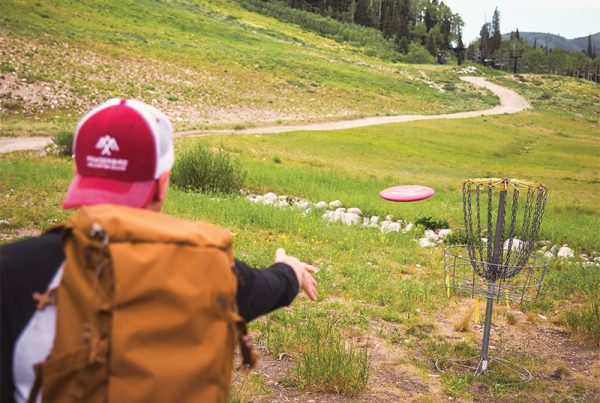
The trail: Another for your list of after-dinner family hikes. Toward the back of Freedom Hills Park, you’ll find 17 switchbacks that gradually take you up a Wasatch foothill. The short gravel trail features lizards scurrying around during hot months and benches to take in views of Centerville and the Great Salt Lake beyond (sunsets rule here). If the climb ever gets too rough for the kids, tell them they’re training for Adam’s Canyon. Getting there: From Salt Lake City, take I-15 north to the Parrish Lane exit in Centerville (Exit 319). Head east on Parrish Lane, pass the Wal-Mart and Dick’s, and make a left on Main Street. A few minutes later, turn right onto Old Haul Road, drive through the subdivision and make a left on Park Hills Drive. You’ll see the park on your right. Or put 2150 N. 150 East, Centerville in your GPS. Take note: The park also has a paved trail circling the disc golf course.
Anasazi Valley Trailhead
The trail: If you’re on your way to Snow Canyon, Mesquite or Grandpa Sterling’s house in St. George, this is a worthy side trip. The short trail near Ivins takes you through desert terrain to a treasure trove of well-preserved petroglyphs just to the right of the trail. It’s about a 3.5-mile round trip, but it’s still suitable for old or out-of-shape people (not that we’d know anything about that). The trail is also stroller-friendly, and bathrooms are near the trailhead. Getting there: Take I-15 down to Exit 6, head north on Bluff Street, make a left onto Sunset Boulevard and turn left after you see a sign for the trail on your right. Take note: Family hikes should be fun, but rock art is fragile. Watch your kids.
Discover more Outdoor inspiration and find all our Adventure coverage. And while you’re here, why not subscribe and get six annual issues of Salt Lake magazine’s curated guide to the best of life in Utah?