Not to make you nervous or anything, but more than 7,000 children in the United States fall victim to out-of-hospital cardiac arrest every year, often with nobody around who knows CPR, and if it ever happens to your kid, God forbid, Kathy Olson wants you to be prepared. You can learn exactly what to do in a local CPR class.
“We teach parents, grandparents and babysitters life-saving CPR skills and how to relieve foreign body obstructions,” says Olson, Intermountain Healthcare clinical education coordinator. Intermountain Healthcare’s classes, held at McKay Dee Hospital, Logan Regional Hospital and Primary Children’s Hospital, include Heart Saver CPR, which leads to CPR certification, and Family and Friends CPR, open to anyone who wants to learn.
In a CPR class, you’ll learn how to administer cardiopulmonary resuscitation (what CPR actually stands for) on infants, children and adults through instructional videos and hands-on practice with trained instructors (using dummies, of course).
“It’s critical to learn CPR from trained professionals, because you can get severe injuries from incorrect hand placement or depth of chest compression,” says Olson, a registered nurse who has taught CPR courses over the past 17 years.
CPR class also covers how to recognize when someone goes into respiratory arrest (breathing is ineffective and rescue breathing is needed) and cardiac arrest (heart stops functioning properly and CPR is necessary), administering CPR solo or with a partner, breathing techniques and differences in administering CPR for different ages. “With infants, you’re just using two fingers; for children, you’re typically using one hand; and for adults, two hands to perform the chest compressions,” says Olson.

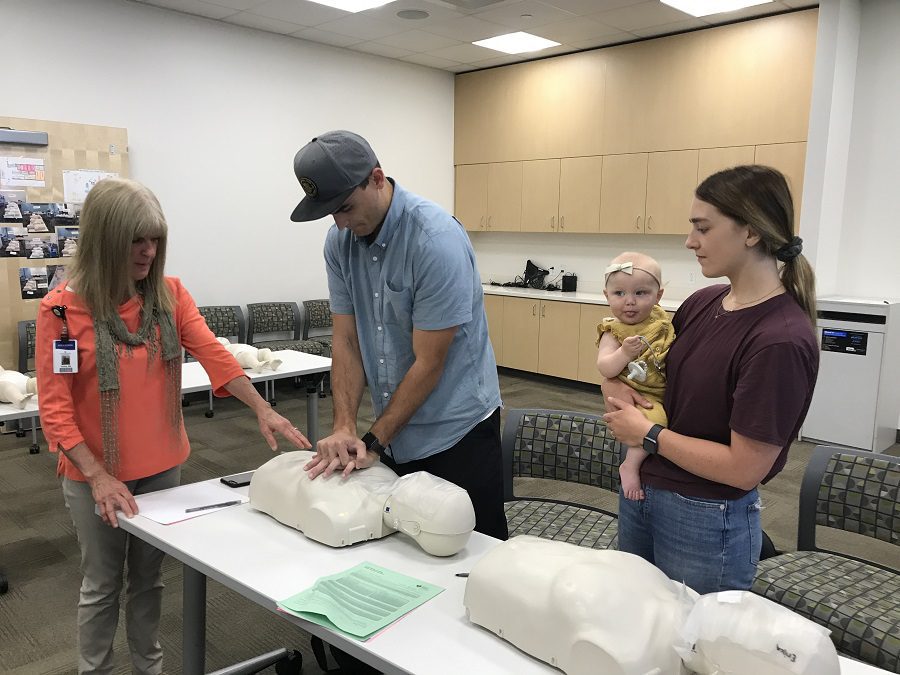
A student in a Primary Children’s Hospital CPR class practices a chest compression for an infant, photo courtesy of Primary Children’s Hospital
Common causes for respiratory and cardiac arrest among children include poisoning, smoke inhalation, head trauma, electrical shock, severe asthma and allergic reactions.
“A respiratory or cardiac arrest can occur anywhere, anytime,” Olson says. “If it was your child it happened to, wouldn’t it be nice to know they lived out the rest of their life because you had the lifesaving skills to save them?” Again, not to scare you.
Visit intermountainhealthcare.org/classes to sign up (search for keyword CPR).
Read more of our family content in our Kid-friendly blog roll.