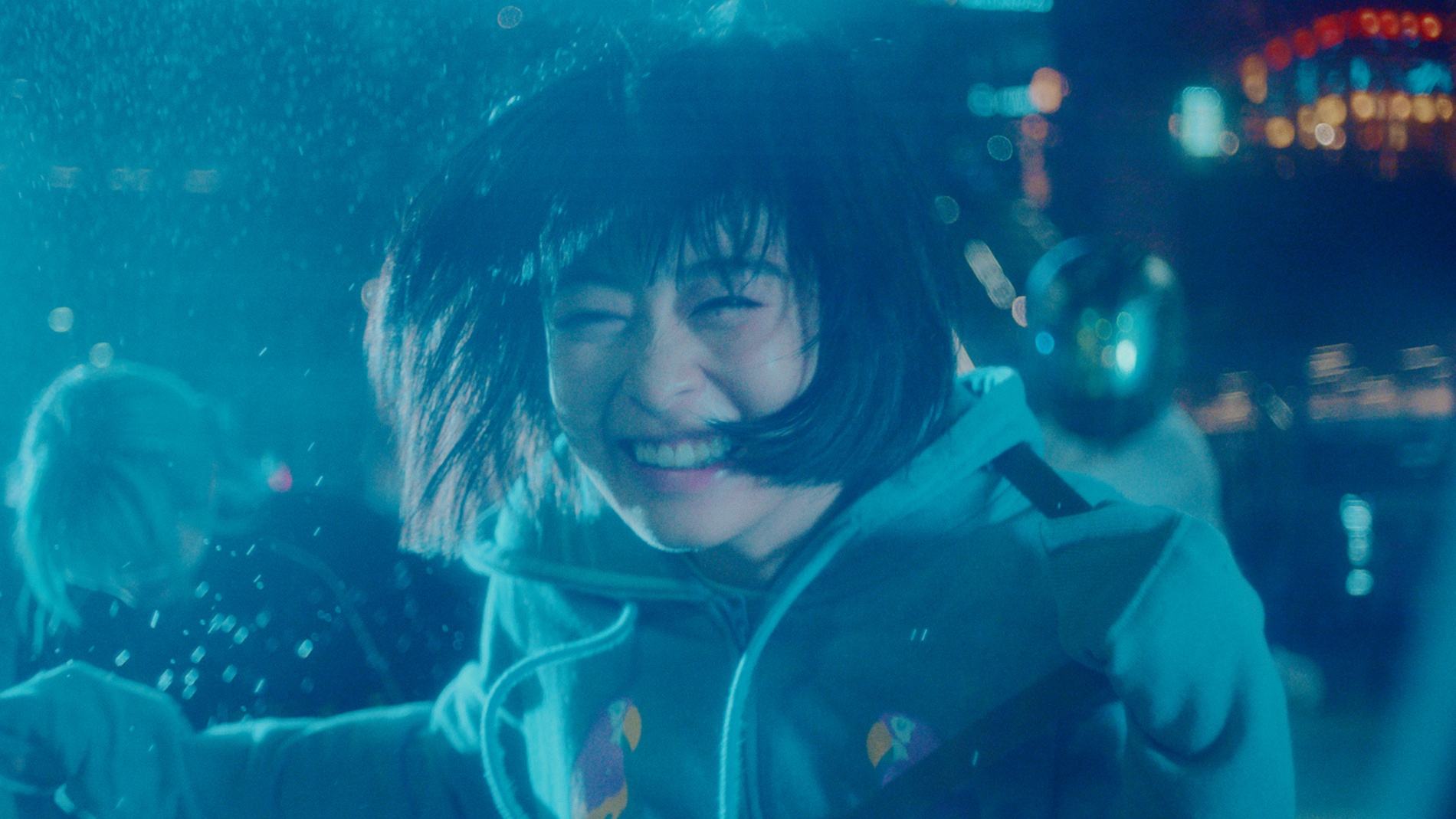
Makoto Nagahisa’s BURN twists a harsh reality marginalized youth face with the totally surreal — demonstrating how no amount of glitter and light can completely hide despair.
In the film, runaway teenager Jurie finds a new home with a group of misfit kids in Kabukicho, the entertainment district of Shinjuku, Tokyo, Japan, leaving her sister in an abusive household and planning to one day return for her. Unfortunately, for Jurie, who becomes known as Ju-Ju when “Ju” is the only sound she’s able to make when introducing herself, some of those she begins to trust may not have her well-being in mind. As viewers, it’s pretty noticeable — as Ju-Ju is given drugs and led into prostitution — but a new sense of freedom, friendships and the hope of saving her sister take precedence.
It all builds to a point, however, and, as Ju-Ju’s world crumbles, we see the principles her fanatical father and mother, who took on the role of abuser when her father was gone, instilled in her come to the fore.
In 2019, Nagahisa brought We Are Little Zombies to the Sundance Film Festival. The film is about four kids who form a band following the death of their parents. While Zombies and BURN are both trippy, colorful and entirely unconventional, BURN feels much more bleak. During the film’s Q&A, Nagahisa said he interviewed teens in similar circumstances to Ju-Ju to learn about their difficult back stories. He said the media often portrays them as dangerous or crazy, but he didn’t see any of that; he saw kindness and pain.
Nagahisa said Ju-Ju’s stutter helps demonstrate the difference between all that she really needs to say inside and what she’s actually capable of speaking. Nana Mori, who plays Ju-Ju, amazingly portrays this internal suffering. She said she prepared for the role by moving to Kabukicho and reducing her needs.
Colorful and dreary, poetic and blunt, serious and stylized, BURN fit well in Sundance’s NEXT category.
More from Jaime Winston: After Three Decades in Utah, the Grizzlies are Moving to New Jersey
Read more of our Sundance festival stories and enjoy all of our Arts and Culture coverage. And while you’re here, subscribe to our print magazine and get 6 copies of Salt Lake magazine each year.