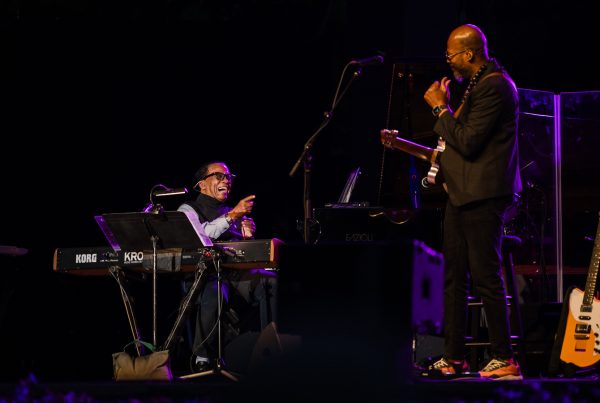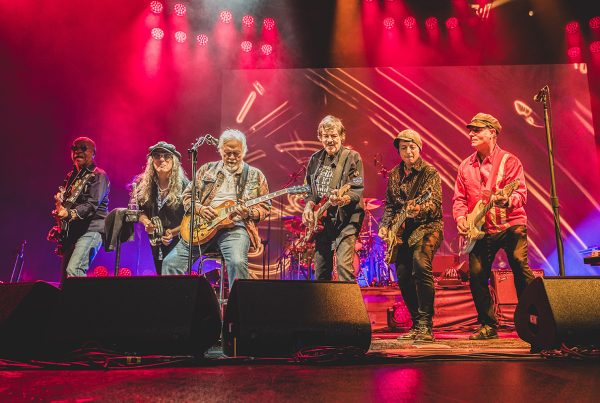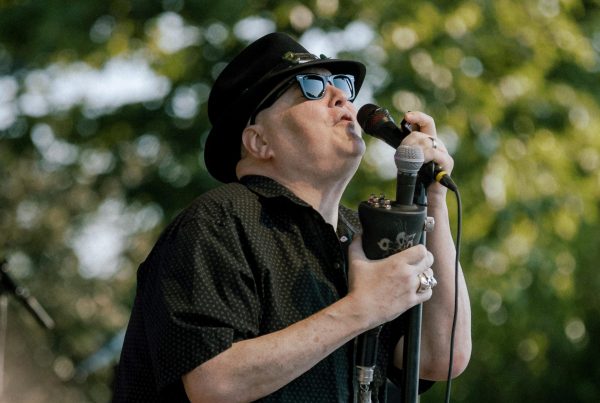
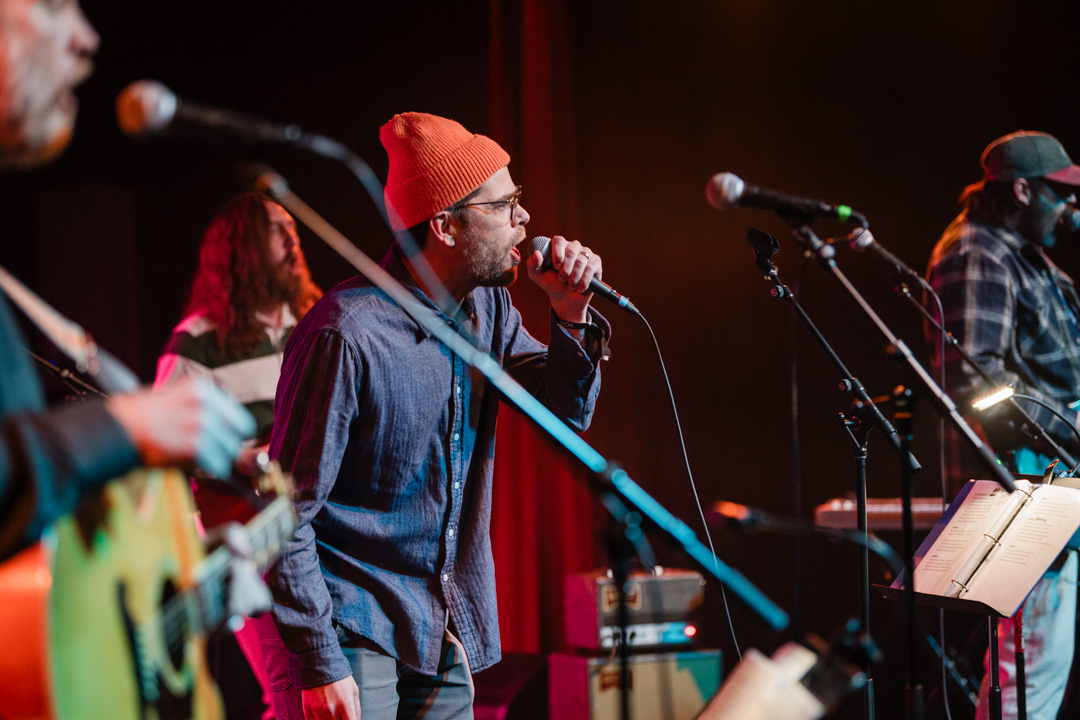
Here Comes the Sun: An All-Star Tribute to George Harrison is a one-night-only performance at The State Room on Saturday, May 2.
Curated by the area’s unintentional tribute concert king, Paul Jacobsen, it includes a who’s who of over 20 local vocalists, including Mindy Gledhill, Ryan Innes, and Brady & Meg Parks, all of them covering a song each from The Beatles’ catalog, George’s expansive solo career, and Traveling Wilburys. too.
I wanted to delve deeper into who Jacoben chose to emulate, and he happily obliged. Our conversation was delayed a few minutes, but for good reason: he was deep into a Reddit thread debating whether or not George felt bitter after The Beatles broke up in 1970. And for lots of reasons, yes, he seems to think he was.
“George was treated like a little brother. He was the only Beatle who had to fight to have his one or two songs on the record,” Jacobsen says. “He resented that. Seven years into it, Paul was still telling him what to play.”
Q: When did your tribute start coming together?
Jacobsen: Originally, it was supposed to be a Covey Center show. For the last few years, they have commissioned me to do a tribute show for their series, so I’ve been stewing on this since last March. A couple of months ago, I learned it wasn’t happening this year and had to scramble. Luckily, Corey Fox and I have a good relationship, and he was willing to let us try it at Velour. It’s trickier, though. I’d guess many in Velour’s audience don’t know who George is. I’m hoping that having some younger artists on the bill helps them realize this won’t be like old fogies covering the Eagles.
The original idea for doing this came from Pat Campbell, my band’s drummer, who passed away six years ago. He always wanted to do a recreation of the Concert for George that happened after George died. I didn’t think we had the audience for it, but it just nudged at me every time I thought about what show to do next. This year, it’s George.
Q: Is it safe to say Pat held George in as high regard as you do?
Jacobsen: Oh yeah. Pat and I were mutual Beatles fanatics, top to bottom. We revered Ringo a lot, and both saw George as the underrated piece of the band. You kind of forget he wrote some of the best songs, especially in the latter half of the band’s lifecycle.
Q: And George was never overly pompous about his talent, maybe a result of having Paul and John in the room. He was quietly good.
Jacobsen: John and Paul took up so much oxygen, right? George probably saw that and didn’t want to act the same way. They kind of pooh-poohed his work. During the recording of the White Album, he brought in a crappy song called “While My Guitar Gently Weeps” and the band just dragged their feet. They treated him like it wasn’t good enough to deserve their attention. So he went home, he’s pissed, and decided to give Eric Clapton a call. He calls Clapton, Clapton shows up, and all of a sudden, everybody’s enthusiastic. They don’t want Clapton to think they’re not any good. And the song became a classic, one of the greatest songs in the entire Beatles catalog.
On the one hand, George had this sense of being very good. On the other hand, these two guys didn’t always acknowledge him the way he deserved. “Isn’t It A Pity” has been around since Revolver, and it never got a chance to be on the records. It’s crazy. He knew he was good, but he had to wonder sometimes, too, because the band wouldn’t let his songs through. Once he got a chance to say what he wanted to really say, I mean, All Things Must Pass is as much proof as you need of the kind of talent he had.
Q: I saw you listed all the songs you’re covering. Did any get left on the cutting room floor?
Jacobsen: One of my favorite George Harrison songs is “Behind That Locked Door.” Kind of his plea to Bob Dylan when he disappeared after his motorcycle accident. This idea of, hey, come out for the rest of us. We love you. It’s secretly a country song. I tried hoisting it on a few singers, and nobody bit. I have made the mistake of prioritizing the song over the singer, and it’s proven to be a bad idea. I’ve learned my lesson. I want to make sure a singer is invested.
Q: What’s that selection process look like? Do you say, oh, here are some songs. Which one speaks to you the most?
Jacobsen: Sometimes I’ll offer a song and ask if they want to sing it. Some singers, I’ll say, pick one of these three songs. But I almost never give them the run of the entire 20. It’s interesting, but some singers don’t know what their voices do best. They might love a song, but they don’t understand how their voice may or may not work with it.
My goal is to bring out what a singer does best and make sure the audience gets to witness them as an incredible singer, rather than being amazed they got through the song. I try to matchmake where I can, but I have a pretty specific vision. 90 percent of the time, I get it right.
Q: Does doing these tribute shows scratch your itch for performing? It seems you do them more than you perform as your own band, with your own material.
Jacobsen: That’s a good question. They are more successful than the ones I do with my own material, and that has contributed to their gaining a momentum all their own. My own shows wouldn’t have half the people showing up. There isn’t a line of people waiting to see a Paul Jacobsen show—
Q: Now, I don’t know about that. KRCL plays a lot of your music on its airwaves.
Jacobsen: KRCL is great, and I love them. But in 2026, the market for a 50-year-old white guy on an acoustic guitar and singing sad songs is pretty saturated. People are turning to the next cooler thing and it’s OK. I still believe very strongly in my music. I’m still writing, and my songs stand up. I also understand that a lot of music is about deciding “Are they attractive?” or “Would I want to sleep with them?” That’s not where my band and I are coming from.
I’ve always wanted to feel like the music community was more stitched together, more like a family than rivalries. Doing this has allowed that to happen on some levels. When I moved back from New York in 2006, I wanted so badly to be embraced by all the cool bands happening then. They were nice and we played shows together, but I never felt like I was in the club. Playing these tribute shows has allowed me to not only be in that club, but to create a network with artists who normally wouldn’t play with each other, whether it’s Talia Keys and Mia Grace or Book on Tapeworm’s Scott Shepherd with Triggers and Slips’ Morgan Snow. They get to be part of the same show here.
I want the vibes to be good, for people to feel like we’re all cheering one other on. That’s what these shows are, and it’s what keeps me coming back. It’s that feeling of solidarity, that feeling of what a cool scene we all have, where everybody gets a chance to strut their stuff.
Q: Did you feel like doing these tribute shows would lead to your becoming this unintentional tribute show king?
Jacobsen: I am painfully shy, and not great at going to an event, networking and gladhanding. I went to Velour’s 20th anniversary celebration, and it was awesome to see all these people I respect, that I either played with or heard about. But I’m a sideline player. I’m more comfortable behind the scenes, helping them look and sound great. I’m conservative about how these shows are going to turn out. When some are very successful it’s a surprise to me every time. And having something to look forward to in February most years is good for seasonal depression, instead of just feeling crappy and breathing in the smog.
Q: You’ve covered some big names in the past: Neil Young, Tom Petty, Bob Dylan. Does this tribute feel more personal to you than some of those?
Jacobsen: For sure. There was an evangelical slant to this show, where we’re reminding people that this guy belongs in the conversation of the best ever. There’s a reason Bob Dylan wanted to co-write with George. There’s a reason Clapton would cover his songs. I want to prove who George was. He was the Beatle who had hits in the 60s, 70s and 80s, which is pretty cool.
I had a greatest hits album of his that’s now out of print, and it covered his worst period. I was in the seventh grade, talking myself into a lot of those songs. It wasn’t his strongest work, but every artist has ups and downs. Bowie ended on a high note. So did Leonard Cohen. Still, there were low notes for those guys in between. Not every Bowie album was a home run. Not every Leonard Cohen album was. Neil Young has had ups and downs. You just have to believe an artist is gonna wax and wane and it’s going to be OK.
Q: You said you have a list of 90 bands you could pay tribute to. What’s one you’ll do in the future?
Jacobsen: The white whale in 2027 will be the 30th anniversary of Radiohead’s OK Computer. It’s the one we are bracing ourselves for, because it’s a real undertaking. I don’t believe we’d ever match it sonically note for note, but we’ll make sure the spirit of it is intact. It’s on the books. Also, as a U2 fan, I would love to do The Joshua Tree, which has its 40th anniversary next year.
Q: I don’t see many George tributes, which makes this feel special. Tom Petty and Fleetwood Mac might get copied for eternity, but he hardly gets the same treatment.
Jacobsen: I’ve thought a lot about this over the last six years of doing these: I want to pay tribute to artists you can’t see anymore. Sure, we did Weezer in 2025, and not long before Weezer came through town. We played the same album they played within four weeks of one another. It was successful, so I’m not bothered about it, but I’m more interested in doing, oh, R.E.M. You can’t see them anymore. You’re unlikely to see Van Morrison or Tom Waits, either. Those are more exciting to me, because people are not going to get any real opportunities to see those artists.
There’s a bit of the classical music ethos to it, where you’re trying to keep a kind of music alive. This show is our way of saying let’s not forget this guy. He wasn’t just the third Beatle; he was one of the strongest songwriters in a band that had two of the greatest songwriters of all time.
Q: How do you measure the success of these shows?
Jacobsen: Depth of response. When we did Pinkerton last year, people were more excited for those songs than they were the Weezer (aka the Blue Album) songs. They sang every word. For a while, Weezer had essentially disowned that album. For us to decide “No, we love this album and we’re going to play the whole thing,” that spoke to a very narrow band of Weezerdom.
And, yes, I want to sell shows out. But if the people who are there are on board with us and they’re feeling it, they’re getting what they wanted. It’s not a money maker. No one’s getting rich. The hourly on this is something I could never calculate, and it would be depressing. But having musicians rally around each other and an audience reciprocate love for the material, in the parlance of MasterCard, that’s the priceless piece of it.
When the people doing it love the material, and the audience loves the material, a third thing happens: there’s a synergy. That’s the magic.
Q: What’s your final elevator pitch for people to attend this concert?
Jacobsen: If you love the Beatles and George Harrison, this is going to be a show you won’t want to miss. I’m not going to be so brazen as to say everybody’s going to love this show. But the musicians are top-notch. They bring so much of themselves to the songs. We’re not just a cover band; we are trying to do justice to George Harrison, and that spirit comes across in all the songs.
Read more of our Music coverage and get the latest on the Arts and Culture scene in and around Utah. And while you’re here, subscribe and get six issues of Salt Lake magazine, your curated guide to the best of life in Utah.