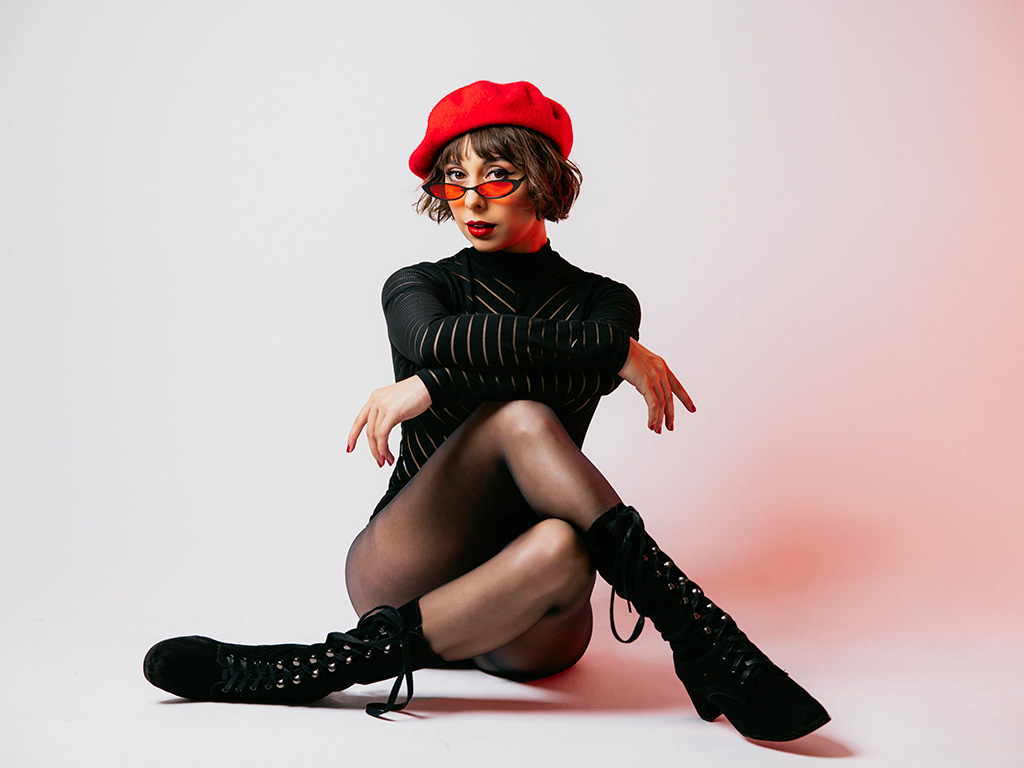
Veronica Swift is playing Brighton Auditorium (Cottonwood Heights) on Monday, March 30.
This is not an objective statement, and that’s perfectly OK: getting the chance to see Veronica Swift do what she does so well is a very rare treat. What does she do, you ask? She is a powerhouse jazz vocalist. She may scat better than anyone still breathing. And she tackles rock with equal parts unleashed energy and dedicated passion.
Mind you, that’s the tip of the proverbial iceberg.
Swift spared time ahead of next week’s Utah performance to talk about new music releasing later this year, what being an artist looks like now after her 20+ years onstage and how getting off our devices may solve some of what now plagues the music industry.
Q: How does your upcoming album differ from the self-titled one you put out in 2023?
Swift: “That one’s the transgenre album. It was the first time I was able to freely put out music from across the genre spectrum. It was my dream to showcase everything I do. People like to put artists in neat, easy to market boxes. This one is chocolate chip cookies. This one is lemon bars. But we are multi-layered, complex creatures. Art should reflect that. The last record was the full rainbow … if you were to take LGBTQ and make it music. The upcoming record is getting back to my roots, which are in jazz and American Songbook and theater and folk and Appalachia. It’s a bridge between worlds, a telling of my story, moving from the east to the west coast. Because I now live in L.A., it takes people on the journey through what home means.”
Q: Any sneak peeks into what tracks you’re doing?
Swift: “There are songs from musicals like Phantom of the Opera and The Wiz and Next To Normal. There’s standards for the audience wanting to hear the American Songbook. There’s a new song that’s never been recorded or released by the great composer, David Ross, as well as rock classics by Led Zeppelin, Billy Joel and Simon and Garfunkel done in a new kind of jazz way.”
Q: And you pulled from your influences what songs you want to perform?
Swift: “Yes, when I decide what kind of show I want to put on or what album I want to record, everything is about the story. I don’t just pick songs because I like them. I ask where does the character come from? Who is this character? What is their dream? What’s their goal? And I take them through the struggles they’ve had to get to where they are, their fall, and how they build themselves back up again, then become who they are and march on to their fate.”
Q: Ever get any pushback from the jazz world when you do music they’re not used to?
Swift: “In my own shows, I don’t get any. I’ve been performing transgenre shows for the last five years, and everything is a story. I connect my personal experiences to the audience. When we listen passively on streaming platforms, or look at a YouTube video and say, “Oh, that’s what that person does,” it’s a small puzzle piece of somebody’s artistry. When someone comes to a show, they are there for the full performance, and to hear the story. I’m very personal onstage, and I talk to the audience in a way that allows them to draw on their personal experience and connect to me. Then it doesn’t matter what genre I’m performing. The story is what matters. If I do Led Zeppelin’s “Going to California” about leaving life behind and starting in a new place, that’s something most have experienced. And Billy Joel’s “You’re My Home” is about finding love and finally finding someone who makes you feel at home. That’s what we all experience or long to experience. What’s more connecting than that?”
Q: Have you always done that, or is that something you’ve learned to do over the years?
Swift: “I have been performing professionally since I was nine years old. In my early years, I looked for songs I was drawn to that were not one dimensional. A lot of Cole Porter songs have hidden imagery, and it’s about trying to find those pieces. How can I connect all these genres and stories together to tell a story in a fresh way? Jazz music is a great tradition I’m honored to be a part of, but I want to move this world and give it access to everything we have. We can listen to any kind of music at the click of a button, but I found people my age look less at the genre and more at the story. When I was a kid, that’s how it was to be influenced by everything. I wanted to put it all in, like gumbo. And gumbo is one of my favorite dishes, because it’s got so much in it. It’s a rich, delicious combination of so many different flavors and tastes.”
Q: You did some songs with Postmodern Jukebox that were very much in that vein.
Swift: “Talk about a band that’s able to restructure very popular songs into brand new ways! We did Van Halen’s “Ain’t Talkin’ ‘Bout Love,” and “Rag Doll” by Aerosmith. I sing jazz and grew up in a jazz music family, but I’m a rock and roller. That’s my identity. What jazz people need to understand is that rock is so similar, especially in its earlier years. It’s got this rich history of cats playing together. There’s a standard repertoire in the rock world, too, of people getting together and playing certain songs, just like they play the American Songbook. Doing something different with these standards that everybody plays the same way is what I live for.”
Q: Even your take on “Don’t Rain on My Parade” is totally different than any I’ve heard.
Swift: “Thank you. I do it with orchestras, too, the way Barbara Streisand did, but I also do that version with my rock band, DAME. It’s really fun. We have a confetti cannon and I march around with the flag. It’s all about not taking shit from anybody. It’s saying this is who I am, take it or leave it. It’s the epitome of what punk rock is about, and I had to do it that way.”
Q: Is your bigger message to both fans and aspiring musicians that you can be yourself? That you can go any direction you want to and should?
Swift: “You said it, brother. It’s finding ways we can do that. It’s about being the last man standing. This world wants to homogenize, especially now that music has been so grossly corporatized. Private corporations are gatekeeping what gets heard. Playing underground is really the last frontier of where the great artists are and will be found if we can withstand this. I used to think it was about fighting back. What I realized is, if you can withstand the punches, you’re like Rocky Balboa. You go round after round until your opponent gets tired and you’re able to deliver that final punch. It’s about finding every chance you get to be yourself without explaining your reasons why. That’s the difference. In my 20s, I thought being myself meant explaining who I was, but that held me back. Talking about being yourself is not enough. There has to be action.”
Q: And you’ve had some new battles to fight with AI, people using your name and likeness.
Swift: “It’s not much of a fight. It’s just … Can we withstand this? A lot of playlists are prioritizing the great, legendary recordings of Boston, Queen and Journey. But we’re starting to hear AI’s version of “Don’t Stop Believing” instead. You won’t even hear Steve Perry’s voice in public spaces anymore. New technology is the shiny new toy, but this is a problem we’re facing for the first time. There’s been civil rights and women’s voting rights, but now we’re experiencing a threat to human rights. And it’s not AI, but the people who misuse it. So we have to keep signing those petitions and finding ways to have a voice in all of this.”
Q: Have you taken the temperature of where the industry is lately?
Swift: “Where things are, it is not sustainable. I have been at this professionally for 20 years, and this is not the world I thought I’d be coming into as an adult. People are scrambling to make a connection and find an audience. We have to get off these devices or find a new outlet. I put up flyers around town, and many people find out about what I do that way. Everything’s going back to CD players and cassettes and vinyl. We have to get back to the physical. And we’re going to lose a huge population doing that, because the pool will be smaller. But there’s a lot of shit out there that has a platform because things are too accessible. People don’t know how to discern between crap and really great art.”
Q: But when you experience it in person, you can easily make your mind up.
Swift: “Seeing it live creates a unique experience. All music should be experienced that way versus streaming half a song and making an opinion about it.”
Q: And your secret weapon is you can go eight different musical directions if you want to, and you’re going to do all of them well.
Swift: “If you’re going to do something — anything — do it well, man. I mean, I would never sing music that doesn’t feel natural to me. Gospel is natural. Old Motown soul is natural. So is rock and roll and 20s blues music. If you feel right singing a certain song or genre, follow that.
I have students who come from Muslim families who want to sing jazz, so I tell them to bring me what feels natural to them. Put that into your jazz music and it is uniquely your own. You bring your culture into it. That’s what makes this music speak to people all over the world.”
Q: Instead of tamping it down, put a microphone up to it.
Swift: “Exactly. That’s what it’s got to be.”
Read more of our Music coverage and get the latest on the Arts and Culture scene in and around Utah. And while you’re here, subscribe and get six issues of Salt Lake magazine, your curated guide to the best of life in Utah.