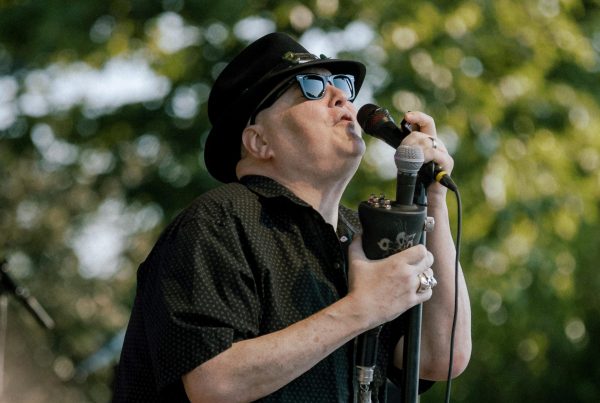
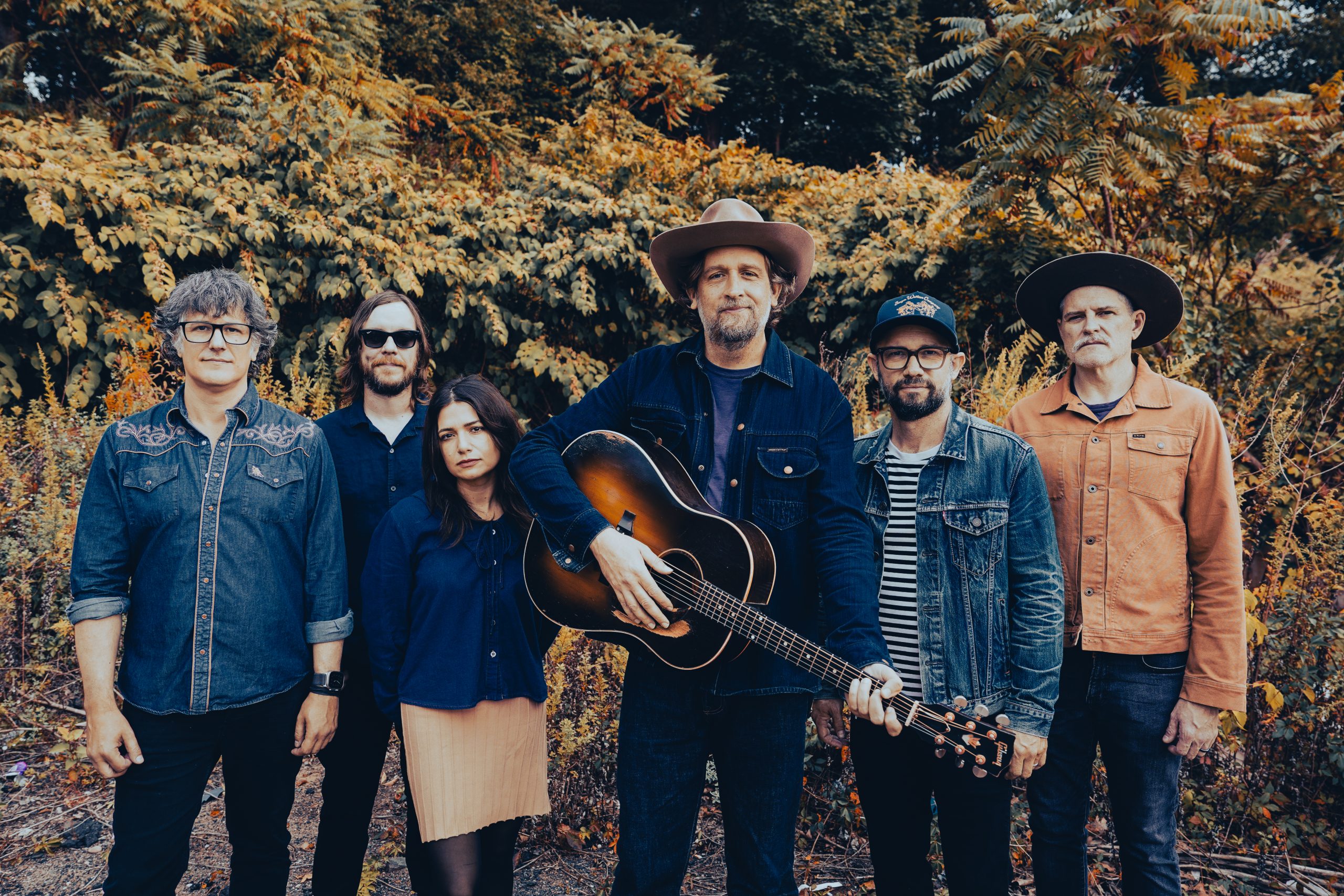
Hayes Carll is an easy favorite in these parts. He must know that. He and his band are headed back to The Commonwealth Room on Thursday, Feb. 19.
Carll is on the third and final leg of his We’re Only Human tour. He was in San Diego and between shows when we had a chance to chat. He said his music career has included a lot of soul searching, and sometimes that means a lot more songs. And even though he’s still finding his best way forward in both his career and life, the future is clearer than it’s ever been.
Q: Talk to me about the latest record, 2025’s We’re Only Human. What do you like about it?
Carll: As my 10th record, it’s the first time I ever set parameters for what I wanted to do as a writer. They weren’t story songs. They weren’t character songs. They weren’t somebody else’s point of view. It was me trying to make sense of my life and finding a way to live it with more joy and ease. These songs are reminders to myself to get back on the path when I inevitably fall off. And it was a rewarding process, creating with intention. It’s also a lot of fun to sing the songs. I’ll be on stage and, in the moment, my mind will be racing — I’ll be stuck or in a bad mood — and it’ll hit me: this is what these songs are for, to be present and enjoy the experience. I’ve never had my music hit me that way. It’s fun to feel that evolution as a new way to use creativity.
Q: So you’re saying these songs are an honest reflection of where you are in your life.
Carll: Yeah, yeah. I mean, I have a great life, and I’ve been incredibly fortunate in all areas, but I still struggle. Everybody does at some point. This human experience is challenging, no matter who you are and what you’re blessed with. It hit me, after all these years of being frustrated, that I couldn’t appreciate or enjoy or live my life as fully as I wanted to. I always felt stuck. That realization and some life events — divorce, getting older, my son growing up, time passing — made me feel like I needed to sit down and get stuff sorted before it was too late. I wasn’t writing for anybody else, but trying to hammer home reminders of what worked for me and how I wanted to approach the world.
Q: Can I say I really like the song “High”?
Carll: Thanks, man.
Q: And I have to assume that one makes you friends wherever you play it.
Carll: It’s a fun one. I tell people all the time: it’s not a drug song, but I was stoned when I wrote it.
It’s about my struggle to be present and not be stuck in the past or overly anxious about the future. Every once in a while, I can get to that place, and it’s beautiful.
“Stay Here Awhile” has a similar theme. I wanted to codify those moments as reminders of how you can get to this place and how good it is for you. When I start spinning out, those songs help me remember I can breathe and be OK with myself. It seems simple enough, but it’s been a hard lesson to integrate into my nervous system.
Q: Did you discover your writing voice early on, that doing this career was a possibility?
Carll: I feel like finding my voice is still in process, but from a really young age, I had fun writing songs. As a kid, I was into the power of songwriting and poetry and literature, language of all kinds. I had these heroes, people who wrote songs and helped me articulate my own feelings that I didn’t have the ability to express. It gave me a sense of identity and belonging, and feeling seen. It was such a powerful art form and so fun to rhyme and create worlds and make people laugh; it was always infinitely interesting. At first, I did it for fun. Then I wanted to pursue it and see if I could find my own voice in a meaningful way. There were a lot of years of frustration because I compared myself to my heroes. That’s a losing proposition. But, over time and trial and error, I started to find what worked for me.
Q: It’s like what they say, right? That comparison is the thief of joy?
Carll: Yeah, and I find that is true in life in all areas, whether it’s my career, physique, finances, love life, or friendships. It’s another hard lesson to process, but if I can be grateful for what I have, without comparing myself to somebody else, I find I’m a lot better off.
Q: And who were your heroes?
Carll: They haven’t changed since early on. The first ones were Willie Nelson and Jimmy Buffett. Shortly after that, I got hip to Dylan, and that blew the doors open. It went from songs that can be entertaining to storytelling that can change the world. That led me to Kristofferson and Prine and Lovett. Together, those six men make up my Mount Rushmore.
Q: What I like about what you do is you can be totally hilarious, but also go the other direction and be poignant. Like you’re actively trying not to be a one-trick pony.
Carll: I like it all. Growing up, “Yakety Yak” was as fun to me as “Blowin’ in the Wind”. They just scratch different itches. I look at the human experience as not one thing; it’s not just sadness, it’s not just rock and roll, and it’s not just humor. That’s how I see life.
Discovering a guy like John Prine was a big lesson for me. Sometimes that plainness or that humor or quirkiness can enhance the poignancy of something and make it relatable. It can make it an easy entry, a sneak attack way to paint a fuller picture. I’ve always been drawn to that. I don’t like the idea of being one-dimensional, so it’s naturally where I’m inclined to go.
Q: You started playing guitar at 15. Did songwriting come naturally after that?
Carll: I wrote before I learned how to play. Somebody in Palm Springs asked me about my first song the other day, and I played it for him. I borrowed the melody from Charlie Daniels’ “Uneasy Rider” and wrote a song to that, a talking blues thing. I did that a lot before I could play an instrument, borrowing melodies and writing lyrics to them. But when I got the guitar, it opened up a new world of possibilities. It took time before I could do anything on it, but once I could, I started finding my own melodies, picking patterns and making it more authentic to myself.
Q: And that probably gave you a better chance of connecting and giving your audience a perspective they could adhere to.
Carll: I’m aware of the audience, and there’s still a part of me that longs for people to say, “This is great, Hayes,” and “We love it,” but I figured out early on — and great mentors hammered this home — the only thing that makes you unique is being yourself. I wasn’t the greatest singer. I wasn’t much of a guitar player. I don’t dance and I’m not a model. So how was I going to separate myself from the 100,000 other people who do some version of what I do? The easiest solution was to just do me. It’s the only way I could guarantee that I was doing something unique. I try to lean into that. I see people play songs that I’m in awe of and think I should try and do that, too, but it ultimately feels false and unsatisfying. Regardless of how many records are sold or where my career goes, I can look back and say that was me doing me, and I did it to the best of my ability. That’s career success.
Q: In a past life as a radio deejay, I used to play your song “She Left Me for Jesus” on my show. Tell me about that one.
Carll: That’s a good one. I wrote that with my buddy Brian Keane in 2007. I’d just signed with Lost Highway. I was independent before that and all of a sudden, I was with a major label. The roster was Willie Nelson, Lyle Lovett, Lucinda Williams, Ryan Adams, and Elvis Costello. It was high cotton, and I didn’t have any songs. I felt a lot of pressure because there were more eyeballs on all I was doing. I wasn’t the anonymous underdog anymore. We wrote that song in an hour, trying to be satirical and poke fun at folks who call themselves Christians, but would probably beat up Jesus if he walked into a bar. And I didn’t want to be pigeonholed, like you mentioned earlier. I’d seen people do gimmick songs. But while it brought them some fans, they were labeled as one-hit wonders for the rest of their career. I was concerned about that. It’s why I put it 14th on the record, back when people used to listen to the whole thing. They’d hear it, but they’d hear 13 other songs first and know I’m more than just that song.
Q: What’s on the horizon?
Carll: I sort of put my pen down for a while after the last record, but I’m getting fired up again. I don’t know what the project will be yet. I’m trying to enjoy the ride I’m on, getting to play music and tour. I’ve got an incredible band, and I feel like the show’s the best I’ve ever been on stage. That’s exciting. I was talking with myself today to try not to be limited by my past or my fear, because there’s a whole world out there, and I want to see what I can create inside of it. The mission at the moment is to keep exploring and writing about what has value to me.
Q: It does feel like you’re connected to a style that’s not gone away, but feels less popular: the art of telling stories within a song. It will always exist, but it feels like a connection to what once was rather than what largely now is.
Carll: You know, I watched the Grammys last night and, yeah, there’s a lot in popular music that’s light years away from what I do. But I’m a country singer. I’m a folk singer—a storyteller. A lot of my heroes were never international successes. A lot were. I see a resurgence of storytellers/Americana/folk/country singers, whether it’s Tyler Childers, Turnpike Troubadours or Zach Bryan. Authentic, country-oriented music seems to be having a major resurgence. So my style is not relegated to the dustbins of history yet. There’s still an audience there. Fortunately, I’m able to keep touring to good crowds and do this for a living, so I’m not giving up hope yet.
Q: And let’s face it: the world will always need storytellers. We’re hungry for it.
Carll: I think about AI a lot. People ask me if it’s going to put me out of a job. When somebody expresses something in a way that resonates and is true, though? It still has the power to shift your perspective. Maybe technology will be able to do that at some point. Whether it does or doesn’t, there will always be people in the world who appreciate the craft and point of view of a songwriter. And I get a lot of satisfaction out of it. Even if it’s just playing for my son or my friends, I’m going to keep at it.
Don’t have a ticket yet? This will help change that.
Read more of our Music coverage and get the latest on the Arts and Culture scene in and around Utah. And while you’re here, subscribe and get six issues of Salt Lake magazine, your curated guide to the best of life in Utah.