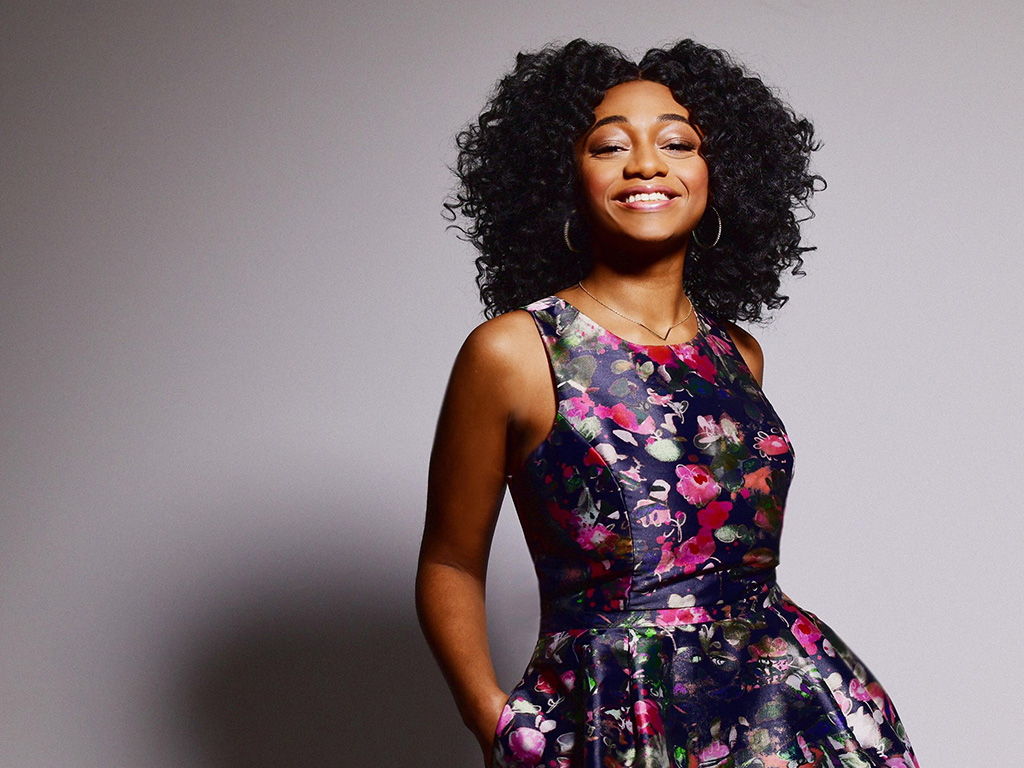
Samara Joy performs at Kingsbury Hall on Tuesday, April 7, parts of the UtahPresents jazz series. The performance begins at 7:30.
When Samara Joy visits Utah tomorrow, she brings a string of accolades along with her. The jazz vocalist now has more Grammys than she does albums, including a recent 2026 win for Best Jazz Vocal Album (for her third album, Portrait). Her career is a fascinating phenomenon still unfolding and yet? She claims the awards don’t matter as much as improving on her craft.
I caught up with Joy when she was in Austin, Texas, last weekend. She shared what first inspired her to tackle the genre, her neverending quest to become better, and how a little curiosity — in a singer, in an album, in a good drummer — is a perfect starting point to deep and lasting enjoyment.
Q: YOU STARTED IN THE GOSPEL WORLD. WAS THAT AN EASY TRANSITION INTO JAZZ?
Joy: “It was difficult at first, because I didn’t listen to jazz growing up. I encountered it during my freshman year of college, after 17 years of listening to my parents’ music — soul and R&B and gospel — so it was a challenge. It meant not throwing away everything I had learned about music up until that point, then adding another layer and sounding authentic while doing so, which took time. A lot of listening meant understanding the kind of phrasing and improvisational aspects of the music that I could express authentically, so I didn’t sound like a gospel singer trying to sing jazz with no real knowledge of it. It took time to practice, but that helped me.”
Q: WERE YOU DRAWN TO JAZZ BY ANY PARTICULAR BANDS OR SINGERS?
Joy: “The first recording I listened to was a Sarah Vaughn concert on YouTube where she sang “Somewhere Over the Rainbow” and “Lover Man.” It was completely captivating, and her band was incredible. I was amazed by how much sound they could get out of four people playing together. The other recording by an instrumentalist I really loved was Clifford Brown’s live version of “I Can’t Get Started.” The whole time he’s playing, he only references the melody within the first few bars. He’s just improvising over the song, but it sounds like he’s creating his own melody and expounding upon it every minute. Every time I listen to it, I’m inspired. Both artists got me on the path of deep listening and wanting to learn how to really play jazz.”
Q: HAVE YOUR GRAMMY WINS CHANGED YOUR JOURNEY?
Joy: “I’m proud to say they haven’t, and I really hope they don’t. I didn’t venture into learning about jazz to make money or a career out of it. It was a desire to be as great as the musicians and vocalists I heard, learning how to interact with musicians around me, how to sing a melody differently every time. That creativity was fostered in college, and I’m still actively trying to get better every single night. That’s not an exaggeration. I’m trying to get closer to what they were doing, but with my own approach. The awards give me encouragement from my peers that they’re listening, which is an unbelievable honor I do not take for granted. Awards were never the motivation, and they haven’t changed the process or the reason why I love doing this.”
Q: IF ANYTHING, THEY PROBABLY JUST GIVE YOU A BRIGHTER SPOTLIGHT.
Joy: “People who come to the concerts don’t expect me to do the same songs or sing them the same way. They’re expecting something fresh and different. That’s what I keep working at. Sometimes it doesn’t feel like I’m making much progress, but it’s gradual. I’ll keep working at it.”
Q: WHEN YOU’RE COMPARED TO THE GREATS LIKE SARAH VAUGHN OR ELLA FITZGERALD, WHAT DOES THAT DO TO YOUR MINDSET?
Joy: “Through the perspective of a vocalist, the comparisons will always be there, so I don’t mind it. I mean, it’s important to acknowledge that my foundation is based on their contributions. I’m trying to contribute to what they’ve laid out previously. I know I can’t completely copy them because I have a different musical background, and I approach music from the perspective of parents who grew up in church. My father was a bass player, and I listened to a lot of funk and disco records. Naturally, I’m going to have a different way of hearing music and interpreting melodies. Just as they carved out their own sound, I hope to do the same thing.”
Q: YOU ARE EVOLVING THE GENRE ON A LOT OF LEVELS, I THINK.
Joy: “What’s great is now it feels natural. It doesn’t feel like I’m trying to reinvent anything. I started out singing standards — and I still do it to this day — but these are things I’ve been led to do, and they are going to help push me forward as a vocalist and expand my sound. I want to get better at being a lyricist and improviser, and become a better band leader.”
Q: WHAT ADVICE DO YOU HAVE FOR THOSE TRYING TO UNDERSTAND JAZZ MUSIC BETTER?
Joy: “Don’t feel pressure to try and know everything about it in one day. I did a lot of listening while I was in college. I received recommendations from other people, and we traded records we were listening to, artists we were checking out.
Start with one. If you want to learn more about a vocalist, start with one album. Listen to one song. Find out who they played with, who they were inspired by. Then, go to that artist and listen to one song or one album by them, and look at the credits. See who the drummer is, who the pianist is, and look at their photography. That’s how I did it. I kept listening and exploring. It was a domino effect. Sarah Vaughn plays with Roy Haynes. Who did Haynes play with? Oh, he made his own record, and he played with Bird (aka Charlie Parker). That allowed me to gain a better understanding, a continuity of the music and how everything was interconnected.”
Q: AND THAT’S WHY LINER NOTES ARE SO IMPORTANT. ANY PROJECTIONS ON WHAT THE NEXT FOUR OR FIVE YEARS WILL LOOK LIKE FOR YOU?
Joy: “In five years, I’ll be 32. Right now, we’re on a pretty good path of proving that, just because you’re young, it doesn’t mean you don’t have the creativity to shape music in your own way and inspire others to do the same. What started off as a project of arranging songs turned into writing for orchestras and expanding upon that sound. I don’t know how much bigger you can go from that. Movies? I’m excited to add layers of depth and musicality to all I do and surround myself with people who want to do the same. If you do that, you will never stay still, so we’re going to keep moving.”
Limited tickets remain. Get yours.
Read more of our Music coverage and get the latest on the Arts and Culture scene in and around Utah. And while you’re here, subscribe and get six issues of Salt Lake magazine, your curated guide to the best of life in Utah.