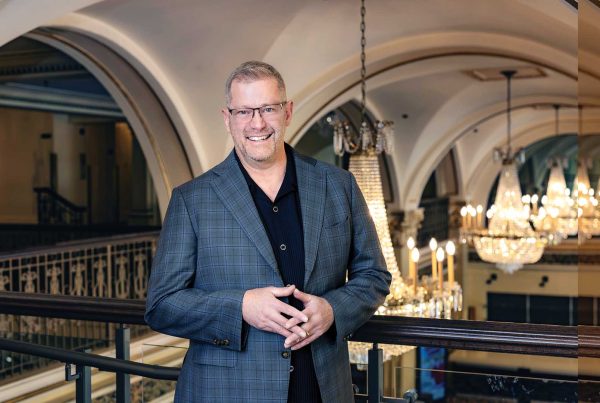

For nearly two decades, Adam Sklute has led Ballet West with the instincts of someone who knows what to protect—and what to gently upend. He’s expanded the repertoire, invited in contemporary voices and kept the company grounded in its classical identity. But West Side Story: Broadway & Beyond feels like a deliberate step outside the lines.
At one point, the dancers start to sing.
That may not sound radical—unless you care about ballet. The art form is built on the idea that the body can say everything the voice cannot. And yet here is Ballet West, handing its dancers a new tool and asking them to bridge that gap.
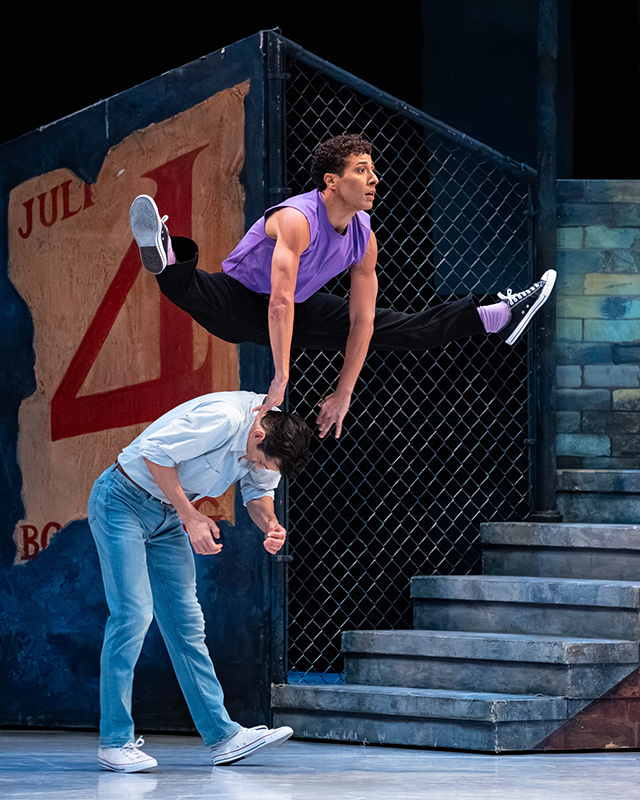
Before anyone clutches their pearls: this is not a full staging of West Side Story. It’s a mixed bill, with Jerome Robbins’ West Side Story Suite closing the night, and even then, only select, dance-forward excerpts. Think of it less as a retelling and more as a curated progression.
The evening opens in an unexpected place. Robbins’ Antique Epigraphs, set to Claude Debussy, leans into a dreamy, impressionistic mood—soft lines, sculptural tablaues, a sense of restraint that proves unexpectedly beautiful.
From there, Christopher Wheeldon’s Carousel (A Dance) shifts the tone. Without ever showing an actual carousel, dancers—expertly led by showstoppers Rylee Ann Rogers and Hadriel Diniz—create one through motion, circling, lifting and sweeping with playful precision. It’s inventive in a way that sneaks up on you—suddenly, you’re smiling.
Wheeldon’s After the Rain, danced by Katlyn Addison and Adrian Fry to Arvo Pärt, brings the evening inward again in ways so beautiful I was nearly brought to tears. Spare and intimate, it trades spectacle for emotional clarity. Watching the two move through that quiet space feels almost intrusive, like witnessing something too personal for an audience. It’s the kind of performance that sneaks up on you—and lingers.
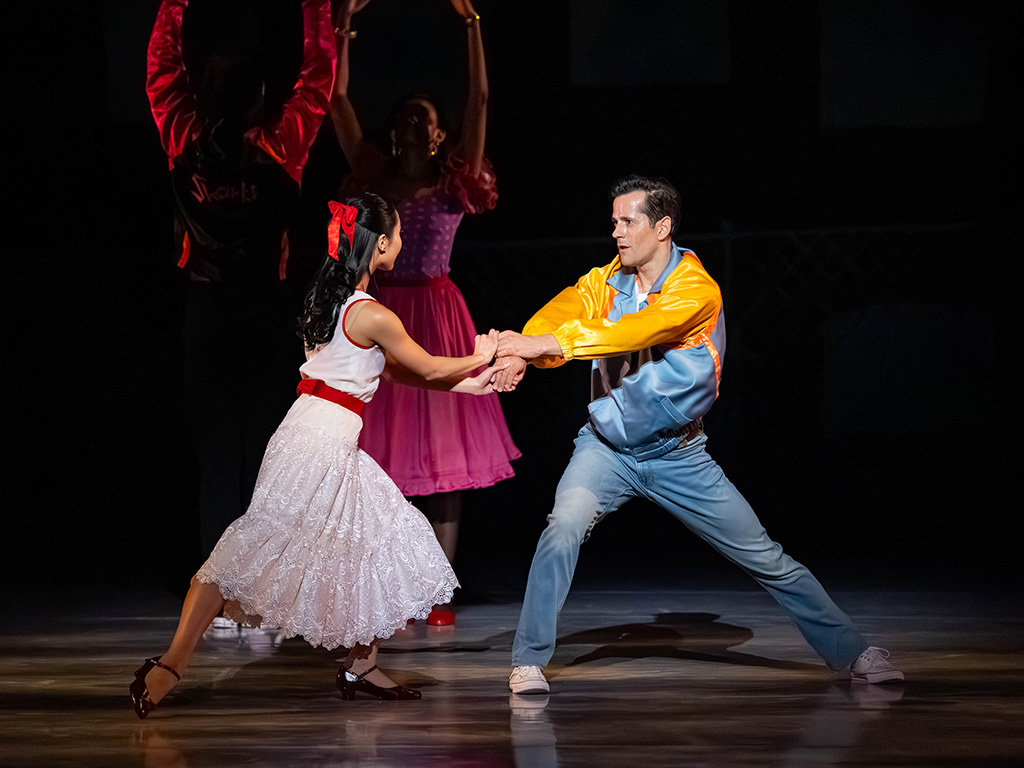
Finally, in West Side Story Suite, the rules begin to loosen. Guest artists Robbie Fairchild and Georgina Pazcoguin (Jordan Veit 4/16) step in as Tony and Anita. Pazcoguin, coached by the famed original, Chita Rivera, delivers the full package—dance, acting and voice. Fairchild, a Salt Lake City native and Ballet West alum, doesn’t sing—but can hardly fade into the background.
The real curiosity lies with the company. When Jenna Rae Herrera, as Rosalia, takes on “America,” her voice lands with surprising warmth. Other moments are less assured. Some dancers sing gamely, others defer to underwhelming offstage guest vocalists, creating a slightly disjointed effect. The experiment doesn’t always land, and at times it feels like the production can’t quite decide what it wants to be.
Still, there’s something undeniably engaging about watching dancers stretch beyond their training. Even when it falters, the effort feels sincere—and the audience seems willing to meet it halfway.
There’s a case that this blurs the boundaries of ballet. There’s another that boundaries were made to be tested. Sklute, it seems, is comfortable with that tension. Tradition, if it’s going to endure, has to risk a little discomfort. Even, occasionally, a song.
- When: April 10–18
- Where: Capitol Theatre, Salt Lake City
- Tickets: Starting at $29
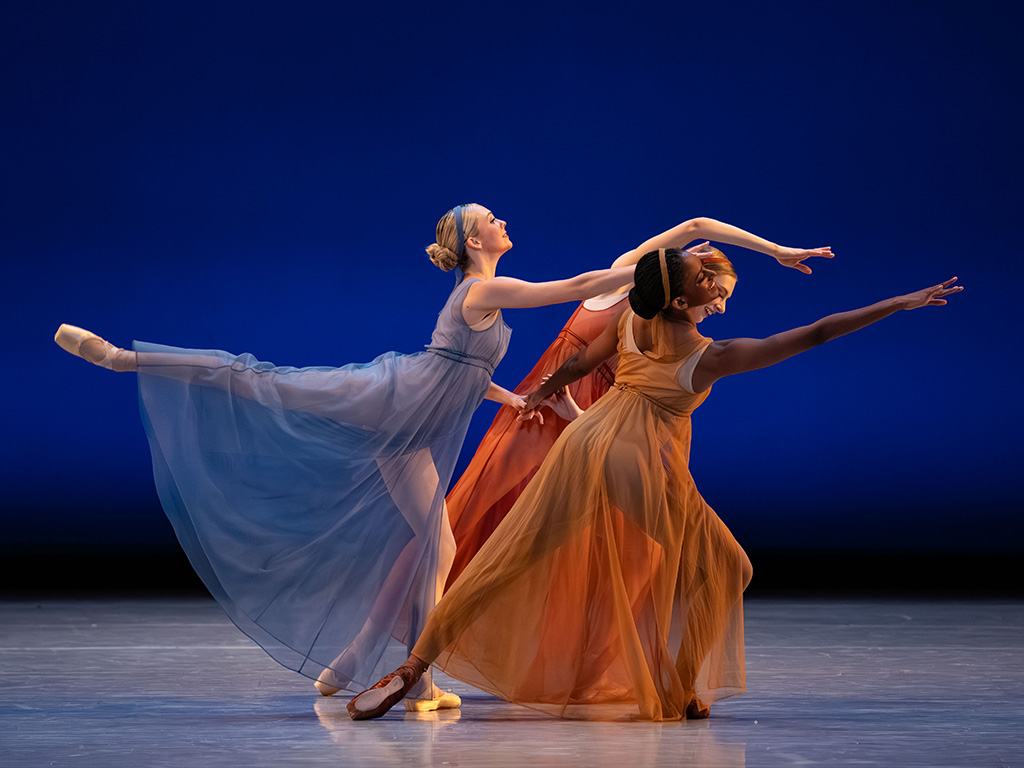
Ballet West’s caps its season May 13-17 with Choreographic Fest VII: Spotlight Utah
This year’s production will feature a fusion of modern, local dance with classical music. The festival showcases works from guest choreographer Donald Byrd, alongside Utah-based companies Ririe-Woodbury Dance Company, Repertory Dance Theatre and SALT Contemporary Dance.