When 23-year-old Breana Landon woke up at the end of March with body aches and vomiting, she thought she had the flu. “I was very surprised when I went to the doctor,” she said. “The doctor came in, came right up and hugged me, and I just knew,” said Landon. She had tested positive for COVID-19.
Landon, a front-line healthcare worker, was fully vaccinated for COVID-19 at the time—it had been more than two weeks since her second shot of the vaccine. As an insurance coordinator at Copperview Medical Center, Landon was tapped early in the pandemic to assist in COVID-19 testing. She had already tested positive for the virus once before, back in October. “I was scared,” she said. “The first time hit me pretty hard. I got super sick, and it ended up developing into pneumonia.”
It’s rare for someone to test positive for COVID-19 after they were fully vaccinated. As of Wednesday, Utah has recorded 163 breakthrough cases out of 699,517 people who are fully vaccinated, according to the state health department. That makes the rate of breakthrough cases just 0.02%.
Dr. Emily Spivak, an infectious disease physician with University of Utah Health, takes some issue with the term “breakthrough” case. “Breakthrough implies we don’t expect it to happen,” she said. “But we do—just at a very, very low frequency.”
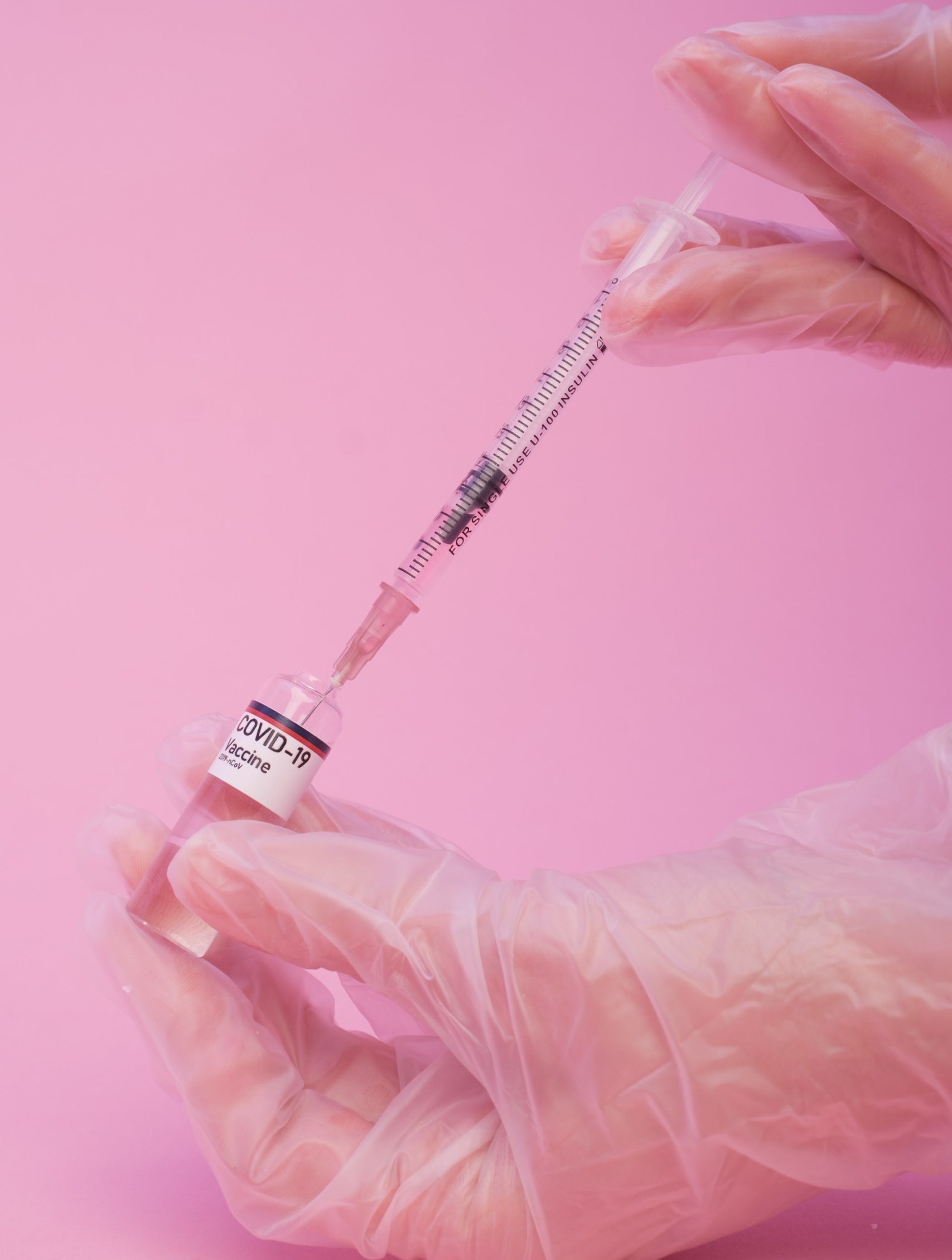
While people might be quick to infer the opposite, the rare possibility of breakthrough cases is all the more reason to get the vaccine. “These vaccines prevent severe disease and hospitalizations,” said Spivak. “To turn this pandemic from everyone scared for their life to… just the small possibility that you may get it, but, if you do, there’s almost zero chance you’ll get hospitalized. That’s really amazing.”
“We should look at the strengths of the vaccines. The vaccine still makes a deadly disease less serious.”
Dr. Emily Spivak, University of Utah Health
The mRNA vaccines have efficacy rates of about 95%. “You would expect, if you have a population who has been fully vaccinated, 5% could still get COVID” said Spivak, but the real-world data has put the effective rate of breakthrough cases much lower.
Data recently published in the New England Journal of Medicine showed the impact of early vaccination on healthcare workers at the University of Texas Southwestern Medical Center (UTSW). According to the report, the launch of the vaccination effort on Dec. 15 came as the number of infections was rapidly escalating in Texas.
Between Dec. 15, 2020, and Jan. 28, 2021, 350 of the 23,234 (1.5%) employees who were eligible to receive the vaccine tested positive for COVID-19. The majority (234) of those people had not yet been vaccinated. 112 were partially vaccinated. Only four people who had been fully vaccinated tested positive for the virus, representing 0.05% of the fully vaccinated employees.
“Real-world experience with SARS-CoV-2 vaccination at UTSW has shown a marked reduction in the incidence of infections among employees,” said the authors of the report. “This decrease has preserved the workforce when it was most needed.”
Another report, also published in the New England Journal this past March, showed similar results at two university health systems in California. The University of California, San Diego (UCSD) and the University of California, Los Angeles (UCLA) both started testing asymptomatic employees after they launched their respective vaccination programs in December. The area was also experiencing a surge in COVID cases at the time.
From Dec. 16, 2020, through Feb. 9, 2021, only eight health care workers tested positive eight to 14 days after the second vaccination, and seven tested positive 15 or more days after the second shot. Once again, this put the COVID-19 positivity rate among the fully vaccinated at 0.05%.
A few things could put someone more at risk of contracting COVID-19 even after they are fully vaccinated. “It’s often people who are immunocompromised,” said Dr. Spivak. “Older people also have less robust neutralizing antibody reactions to these vaccines, but we knew they can be less effective as we age.”
Even so, Dr. Spivak emphasized breakthrough cases are still rare. This remains true despite the introduction of new variant strains of the virus. “Everything we have talked about with the efficacy of the vaccine has held true for what we’ve seen in Utah,” said Spivak. “Vaccinated people are still getting infected, but the rate is less than 1%.” If we do see an uptick in breakthrough cases, “It’s going to be a multitude of factors, not just the variants spreading more,” said Spivak. She said the removal of the mask mandate and an increase in COVID-19 cases overall could be potential factors.
“We should look at the strengths of the vaccines, not this very small weakness,” said Spivak of breakthrough cases. “And this weakness is not even a weakness. The vaccine still makes a deadly disease less serious.”
“I’m hopeful that people will get the vaccine and still continue to wear their masks. Without mass vaccination, this isn’t going to go away any time soon.”
Breana landon, front-line health care worker
When she tested positive for the virus after the vaccine, Landon said it was far less serious than the first time she had COVID, but she had to recover from the emotional side effects as well. “It was almost like a punch in the face,” she said. “All of the front-line workers are doing everything we can to get vaccines and run these tests for all these sick patients. It’s so discouraging—knowing I’m doing what I’m supposed to do and I still got it again.”
All that said, Landon does not see her experience—or any breakthrough case—as an excuse to stop doing “what we’re supposed to do.”
“I’m hopeful that people will get the vaccine and still continue to wear their masks because you can still catch the virus,” said Landon. “Without mass vaccination, this isn’t going to go away any time soon.”
Medical experts like Dr. Spivak have been saying that all along. “If everybody took them [vaccines], it would really halt community transmission to the point of going back to normal life,” said Dr. Spivak. “If not enough people take them, we’ll always have a vulnerable population and masks forever.”
It’s a message Landon has internalized through her experience. “I am still highly pro-vaccine,” said Landon “But I do think it has changed my outlook on it. It’s not ‘oh, you just get it and you’re good to go.’ It takes a lot of people getting the vaccine for it to work.”
Now, Landon is feeling much better. The Utah Health Department cleared her to return to work on Tuesday.
While you’re here, check out what activities are safe after you’re fully vaccinated, the return of some in-person film screenings and our latest print issue of Salt Lake magazine.