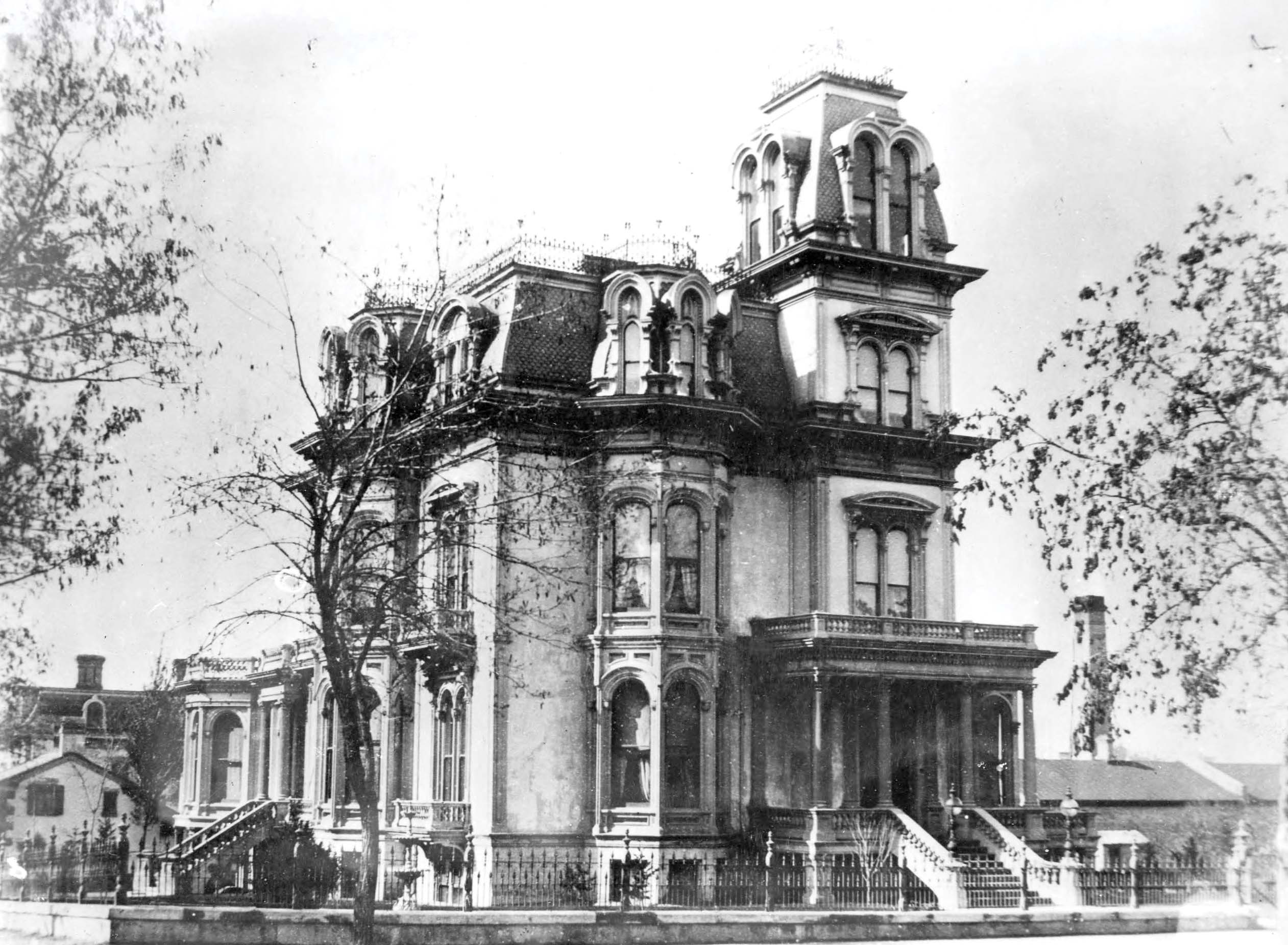
Before it became City Creek’s World Trade Center, 70 E. South Temple was once the site of Utah’s finest Victorian mansion: the Gardo House. Brigham Young commissioned the 46-room home in 1870, ostensibly in need of a location to host dignitaries and church officials.
Young enlisted Joseph Ridges and William Harrison Folsom to draw plans for his late-life endeavor. Folsom served as an LDS Church architect and played a role in designing the Salt Lake Temple, Salt Lake Tabernacle, Salt Lake Theatre, and several private residences. His daughter, Harriet Amelia Folsom Young, was one of Young’s latest wives and widely regarded as his favorite. Though the pair did not have any children (he was 61 and she was 24 when they married), Amelia became Young’s most prominent female companion and was appraised as a well-spoken and educated member of the church. To further ensconce her in church dealings, Amelia was to act as the resident hostess of the Gardo House once it was finished — hence its facetious nickname “Amelia’s Palace.”
Young was not alive to enjoy the realization of his efforts — or the controversy that surrounded the residence for decades afterward. Despite Young’s bequest of the residence to Amelia, the church ultimately absorbed the property as part of a larger settlement for Young’s $1 million debt and voted to make it the official parsonage for LDS church presidents. As such, Young’s successor, John Taylor, became the first official occupant of the Gardo House, despite his many objections. Perhaps Taylor’s instinct to avoid being tied to such symbols of opulence was correct, as critics reprehended him and the church as attempting to “build up aristocracy in Utah, where the few are to rule in luxury, while the many, to support the luxury, are to toil and suffer,” as quoted in a scathing Tribune editorial published ahead of a public reception and tour of the Gardo House in 1881. To many Mormons, however, Taylor’s move was interpreted as fulfillment of a prophecy and a symbol of the church’s hard-earned success in the face of persecution and hardships.
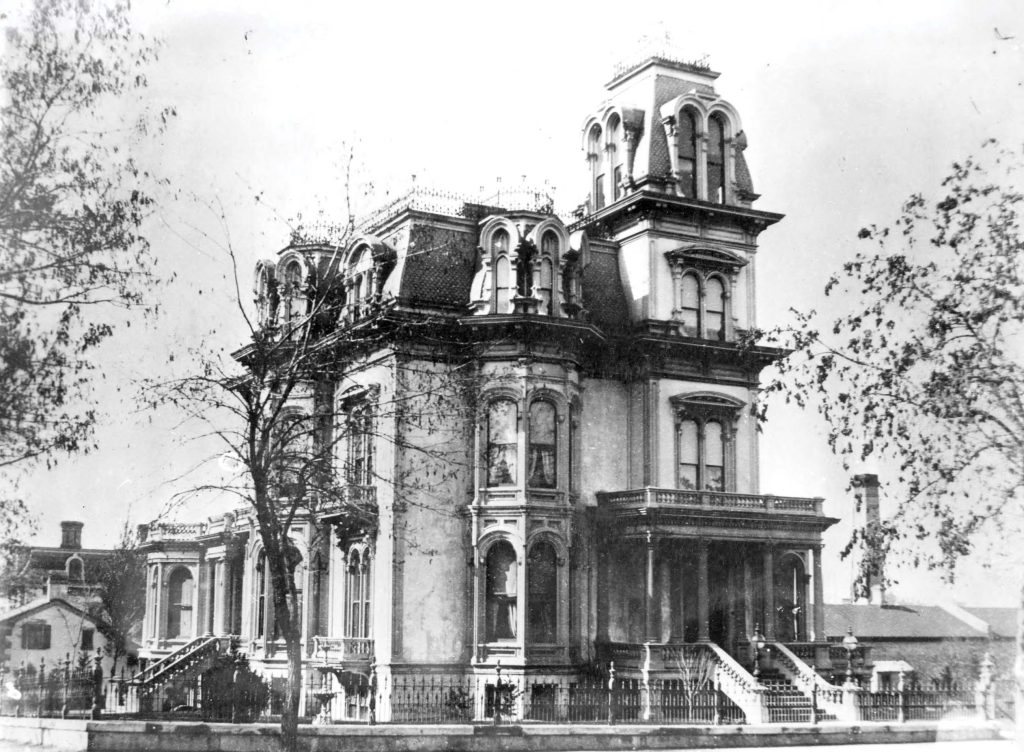
After Taylor’s passing, Wilford Woodruff took up residence for a few short years until the federal government confiscated the property under the Edmunds-Tucker Act. In the years following, the mansion served as an alcohol treatment facility, the LDS School of Music, and the home of several millionaire mining barons. In 1926, the Federal Reserve Bank purchased and tore down the property.
Haven’t subscribed yet? You’re missing out. Head over to our subscribe page and get six copies a year of Salt Lake magazine.