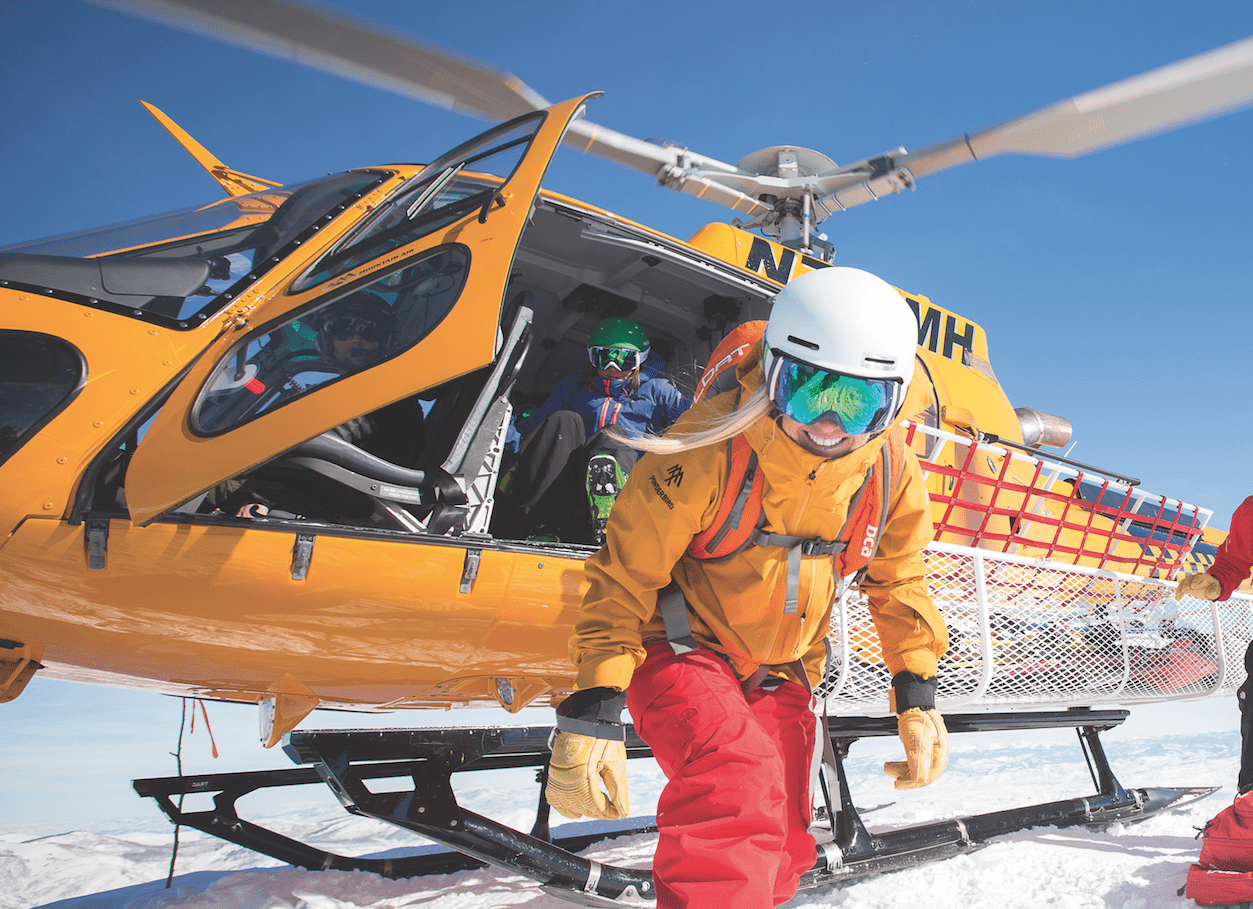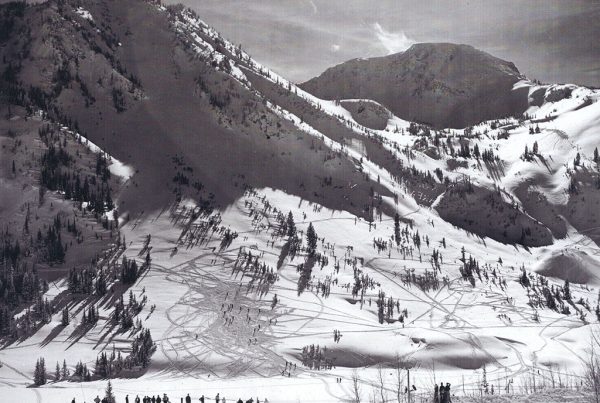
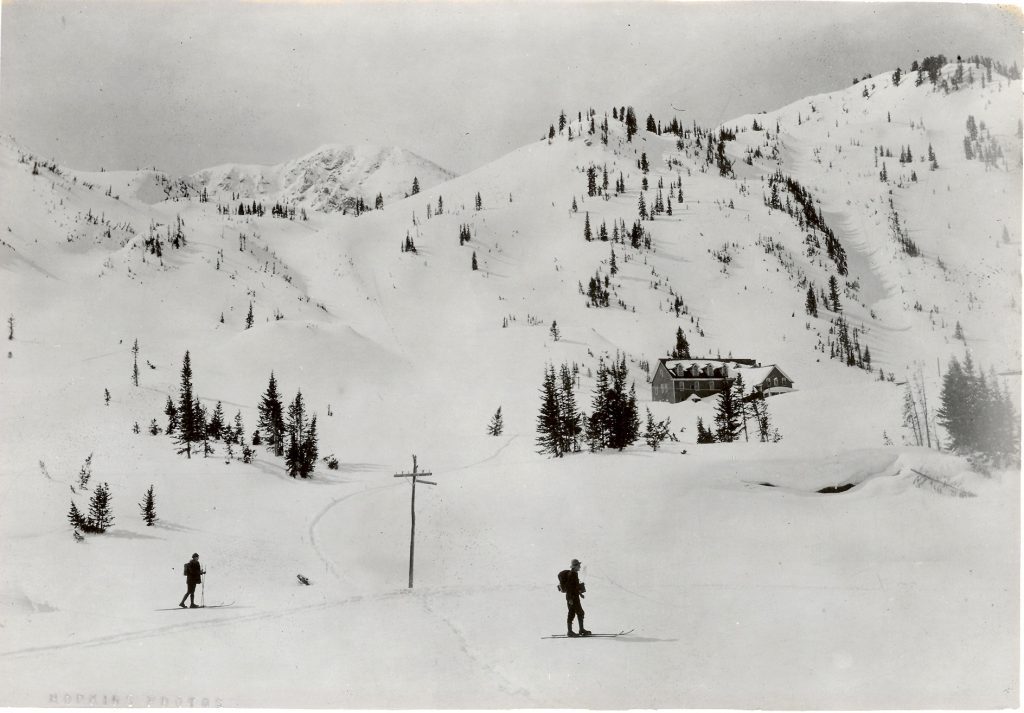
When the first ski lift was installed at Alta Ski Area in 1939, it became the first in Utah and the fourth in the U.S., marking the beginning of an era of innovation. The resort has contributed to industry-wide innovation, from ski instruction to avalanche mitigation.
This season, the resort is celebrating its past and present by inviting skiers to grab a friend and head up to ski “powder eights” in the world-famous terrain. Read more about the people who helped Alta become what it is today here.
Powder Skiing and the American Method
As skiers began recreating in Little Cottonwood Canyon, it became apparent that traditional European techniques didn’t work in Utah’s light, fluffy snow. Skis sank instead of floating on top, making it hard to navigate terrain. Alta’s Ski School was at the forefront of developing what became known as the Alta Powder Technique. It later inspired the development of gear technology, including shapes that help skiers float through the snow.
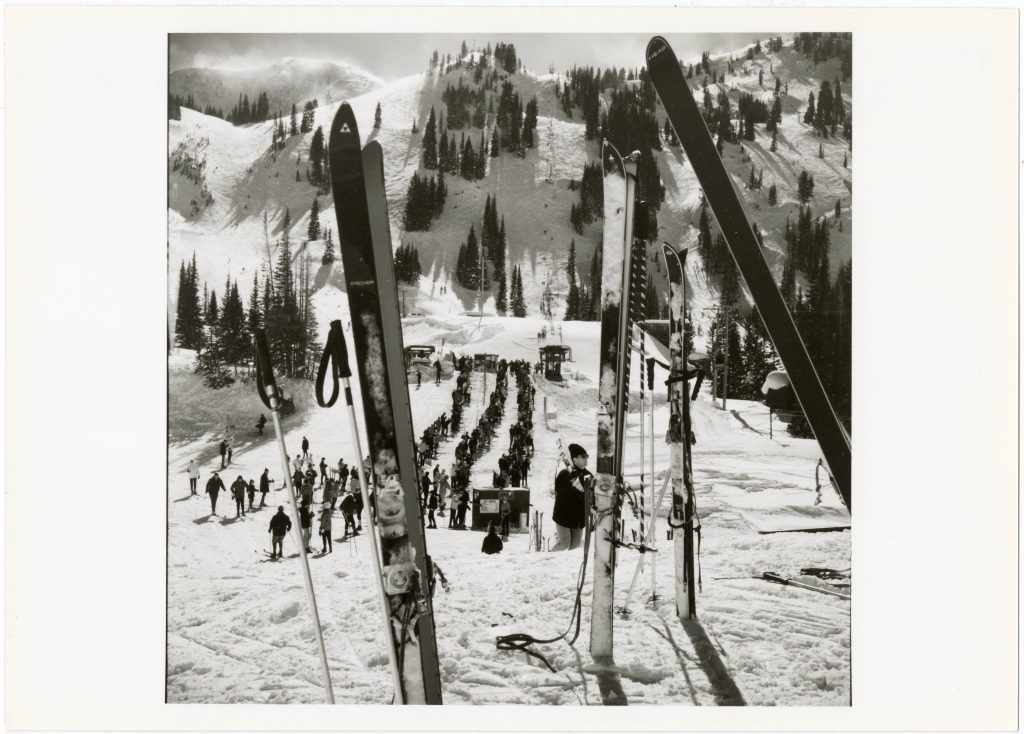
Powder skis are often wider and shorter, which offers better maneuverability.
The resort played an equally essential role in the development of the American method, which standardized the way instructors teach the sport.
“One of the first meetings of the Professional Ski Instructors’ Association was here at Alta,” said Alta Communications Manager Lexi Dowdall.
The organization, now called the PSIA-AASI, works to train and certify snowsports instructors.
Alta has one of the oldest ski schools in the U.S., and it’s among a minority of schools that require entry-level instructors to possess a level one PSIA certification.
“Some ski schools will just bring folks in and gradually train them up, but to start here at Alta, you do have to have that level one certification,” Dowdall said.
Avalanche Mitigation
In 1885, when Alta was merely a mining town, the area suffered a catastrophic avalanche. It killed 16 people and destroyed the town. Although unstable snowpack is common on any mountain, and Little Cottonwood Canyon is notorious for high avalanche danger (it has thousands of slide paths, 64 of which cross Highway 210), another factor contributed: lack of trees. When they’re densely packed on slopes, as they are in many forested areas, they tend to help anchor snowpack and slow down avalanches.
“When [the resort was established] in 1938, they knew they had an avalanche problem, but there wasn’t much known at the time,” Dowdall explained. “Every single snowpack is different … they were experimenting with some different [methods].”
In the beginning, they tried cutting cornices and using hand explosives. Both methods are extremely dangerous. The Forest Service began a program to understand what causes avalanches.
“That tradition began right at Alta’s start. They had to figure out how to make this place safe for skiers,” Dowdall added.
In 1949, things took a turn for the better. A Forest Service Ranger who served in World War 2 recalled seeing Swiss Villages firing cannons at the slopes to trigger avalanches. He convinced the Utah National Guard to deploy a Howitzer. “Eventually, a Howitzer came to reside up here at Alta and they began to use that to control some of the avalanches,” Dowdall said. After they fired some shots, they realized how efficient the method was.
In 2014, the military asked avalanche professionals to begin exploring alternative avalanche mitigation techniques.
“[They] didn’t love that we were firing rounds over occupied buildings,” Dowdall said.
That continued until 2023. The Utah Department of Transportation, Alta, and Snowbird have been working to adopt Wyssen towers—remote avalanche control devices.
According to Dowdall, Little Cottonwood Canyon continues to be at the forefront of avalanche mitigation efforts —it has the densest concentration of avalanche towers in North America. At Alta alone, there are 18.
Alta Environmental Center
Throughout the resort’s history, environmental restoration and protection have been prioritized in the area. It began with replanting a forest that was decimated by miners and continues as stewardship.
In 2008, the Alta Environmental Center was formed. It leads sustainability efforts by protecting Little Cottonwood Canyon ecosystems, reducing environmental impact and offering opportunities for the community to get involved. One standout regeneration event is Alta’s tree planting day, which is hosted every fall and invites people to plant native Engelmann spruce saplings on the slopes.
Next time you’re skiing at Alta, keep an eye out for reminders of the area’s past, like the Snowpine Lodge, which is the oldest building in the town and now functions as a luxury ski-in/ski-out resort, or the Collins Lift. Although it’s since been modernized, it maintains the path that the original chairs followed.
Discover more Outdoor inspiration and find all our Adventure coverage. And while you’re here, why not subscribe and get six annual issues of Salt Lake magazine’s curated guide to the best of life in Utah?