A Shark Tank for civic ideas brings policy proposals from whiteboard to spotlight
Great policy ideas don’t always come from the Capitol, according to Emily Bell McCormick, founder of the Policy Project. More often, they come from teachers, parents, social workers and neighbors. “The best people to solve problems are those living in them,” she told the crowd at the organization’s first-ever Policy Pitch Competition.
Pitching Policy
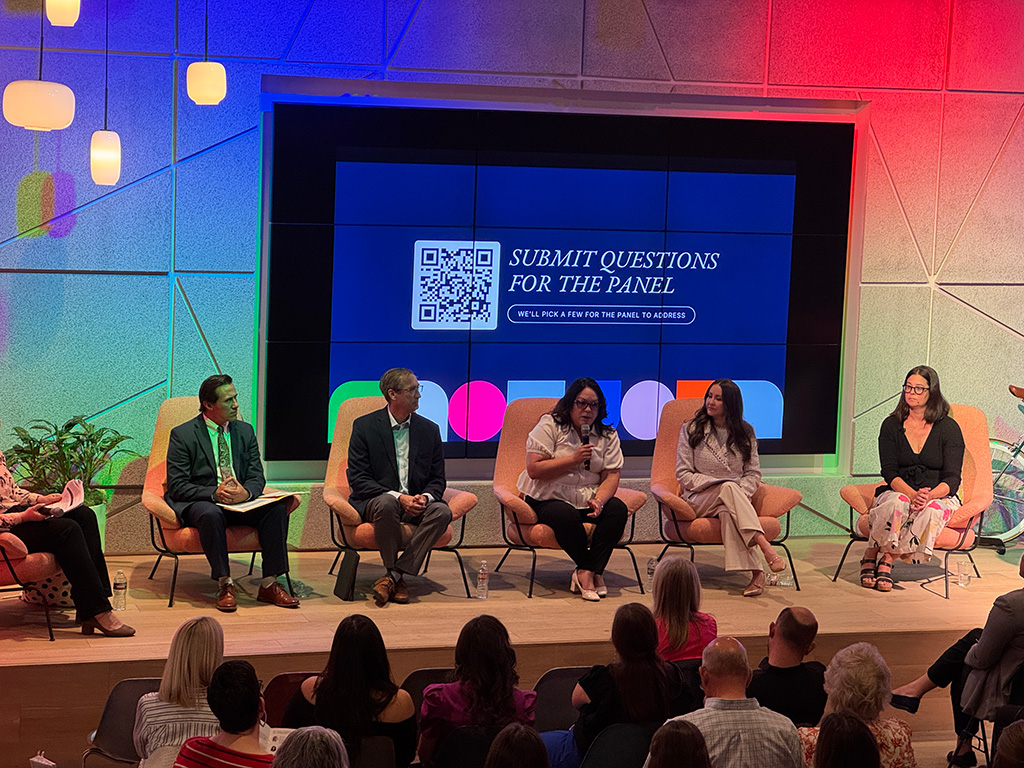
On June 12, three finalists emerged from a field of 115 applicants who submitted bold, evidence-based ideas for improving life in Utah. Taking the stage before legislators, practitioners and policy experts—and a live audience—each made their case for change.
The winner was Melanie Webster, a Master of Social Work student at Utah State University, who took home the $10,000 grand prize. Webster’s proposal aimed to remove barriers facing formerly incarcerated Utahns burdened by court debt. Borrowing from a Texas model, she proposed suspending interest on court fines during incarceration and allowing rehabilitation programs or community service to count toward repayment after release.
Utah Senator Luz Escamilla praised the concept while noting the practical challenges ahead. Reintegration, she said, is critical, but implementing rehabilitation credits would require navigating an already strained criminal justice system.
The other finalists included BYU strategy student Sophia Strong, who proposed capping payday-loan APRs at 36 percent, and Ashley Anderson, an arts educator and member of the Utah State Board of Education, who called for reforms to tax increment financing, arguing that the current system diverts property-tax revenue away from public schools.
A Social Impact Incubator
Equal parts problem-solving lab and policy accelerator, the Policy Project takes ideas from concept to legislation. In its seven years, the organization has built a track record of turning ideas into law by engaging people who don’t traditionally see themselves as part of the political process. Through social media, nonpartisanship and visual identity, the organization has created easy onramps to political participation.
“When we started, we were asking legislators to take on our ideas,” McCormick said after the event, citing the organization’s first success in pushing for period products in schools. “Now we even have them occasionally coming to us.”
While lawmakers attended as panelists and guests, McCormick said many expressed interest in hearing well-developed ideas from everyday Utahns. While spotlighting the top three pitches, the event also showcased the top 15 submissions for public review.
Roughly half the applicants were policy professionals and half were community members, she said. Whether Webster’s proposal ultimately becomes a legislative priority remains uncertain. The summit’s larger purpose, McCormick explained, is to surface ideas and identify emerging concerns.
“We don’t necessarily pledge to make the winning policy our next objective,” said McCormick, who is working to ensure the competition becomes an annual event. “What it does give us is a window into what people care about. It’s not just about rewarding a strong idea—it’s about identifying the challenges Utahns are most eager to solve.”
Read more stories like this and all of our Community coverage. And while you’re here, subscribe and get six issues of Salt Lake magazine, your curated guide to the best of life in Utah.