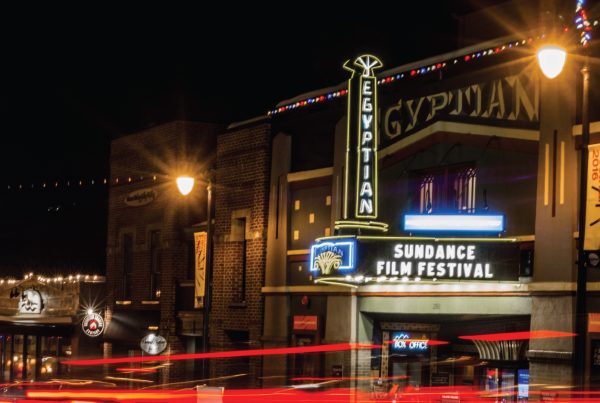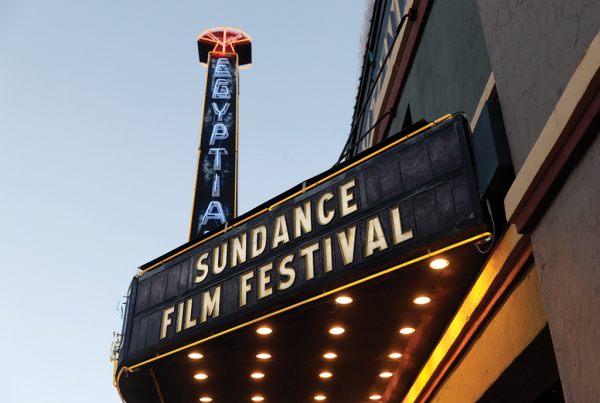
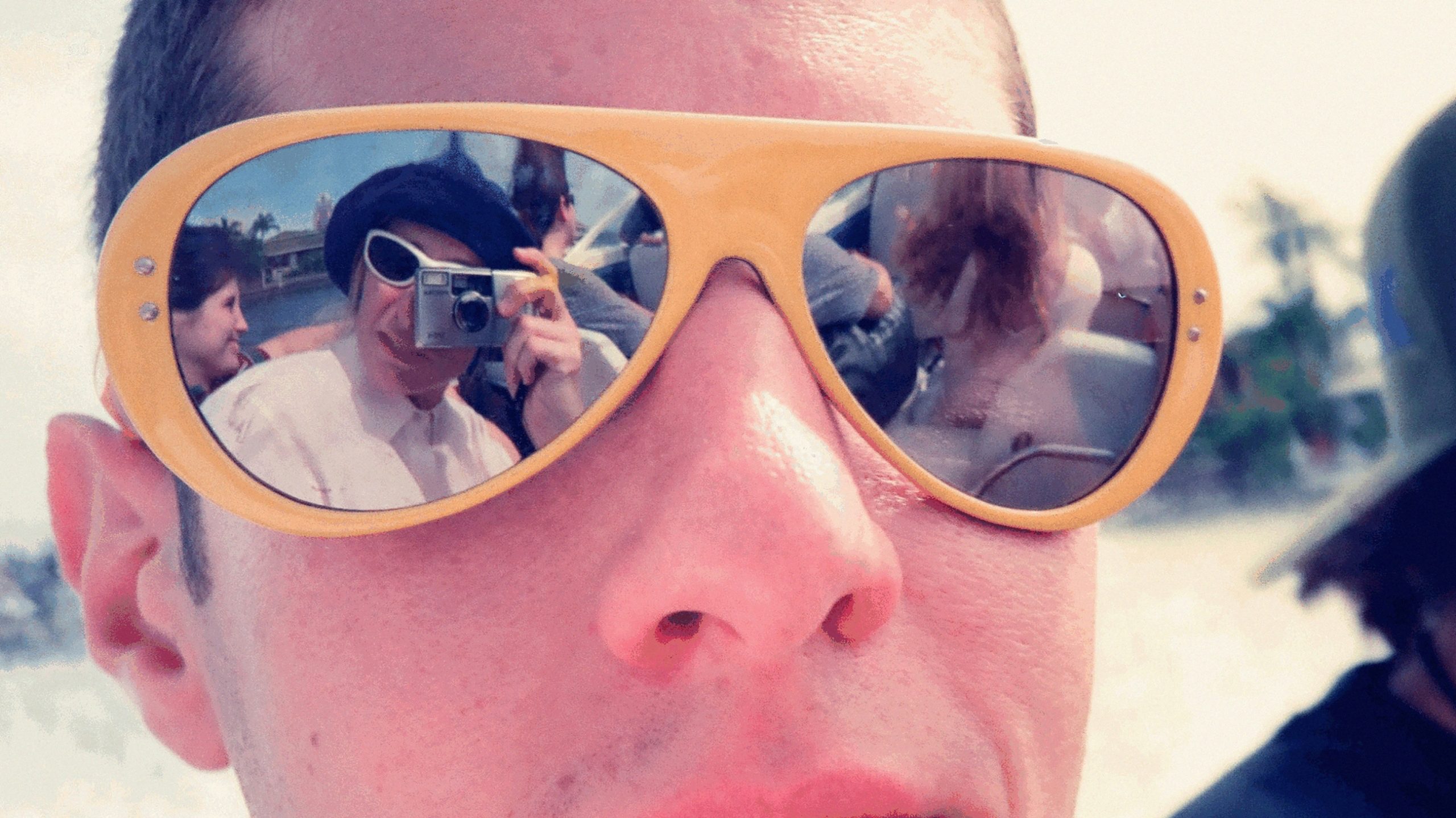
Tamra Davis’ film The Best Summer premiered at the Sundance Film Festival on January 24th. Shot entirely by Davis in 1995 at Summersault, anAustralian indie music festival, mostly in long, uncut takes, the film drops viewers into a first-person swirl of backstage chaos, onstage euphoria, and the strange disorientation and fragility of performance. It’s a love letter to a time when everything felt bright and impossibly alive.
After the premiere, I got to sit down with Tamra Davis and talk about directing and how this love letter came to be.
Q: Can you walk me through what The Best Summer is and how it was created?
Davis: I was home recently— I usually work so much, but Hollywood is in such a weird state. I live in Malibu, and after evacuating for fires three different times, I had all these boxes of old tapes I’d been lugging around, and I was like, what’s in these boxes? I looked, and then I realized that in 1995, I went on tour with my husband, Mike D, in Australia. I had brought my cameras, and I didn’t realize that at that time I shot an entire documentary. I filmed all live footage. I did interviews. I filmed this whole thing, and I forgot I did it. It was just in a box, just sitting there. So I was like, “Oh, I’m just gonna make a movie.”
Q: What was it like going through all that footage again? How did you decide what belonged in the film?
Davis: I kind of felt like it was just such an incredible time machine, a time capsule. I didn’t want to interview anyone now about that experience. I didn’t want to cut to the old person and be like “What’s it like?” I was like, “Look at how beautiful and young they are then.” I didn’t want to add context from the future into the past. Once I set up the film, it’s a time machine you go into, and it’s all my point of view, and you go on tour. And your access is insane, you’re backstage, you’re onstage, you’re in the buses. You’re part of it. And it gives you that experience of first person, so it makes it feel like it’s your shared memory.
Q: When you watched it back, did it feel nostalgic? Melancholic?
Davis: That’s why I called it The Best Summer, I realized how happy we were. We were all so happy at that moment. and then, of course, when you look back years later you can see like, oh, that person isn’t with us anymore. These people aren’t together. You see what time does and how everything has changed from that beautiful, pure moment. And so that’s why it’s so special for that time. I look back at it, I definitely look back with nostalgia. The first time I saw it all assembled, I just broke out, sobbing. It’s a memory of a beautiful captured time. We really had the best time ever.
Q: How do you feel the industry has changed for women directors since you started in the ’90s?
Davis: When I started, there were maybe five women directing. So it was really different to be a female director. And I’m so happy now that it’s normal if you’re a girl to say you want to be a director. Nobody’s gonna be like, “No, girls don’t direct.” So I feel like that is hugely different. But if you look at the statistics, they’re not much better.I just feel like that’s what we really have to keep pushing, keep changing.
There’s girls that are having careers now that I wish I could have had, but I had to have my career in order for those girls to have these careers. I’m so overjoyed to see Chloe(Zhao) or Greta’s (Gerwig) career and know that now we have women making huge movies. You don’t know a woman can direct until you see an image of a woman directing. It’s so important for girls to see images of women behind the camera. And the more they do that, the more normal it will be.
Q: You’ve worked with so many artists across counterculture and alternative scenes. What keeps drawing you back to those worlds?
Davis: I feel like when I made a lot of those things, the people that I work with, they weren’t big before I did it. It was the job I got because I was a girl. They didn’t give me The Matrix. They don’t give me Star Wars. They weren’t giving me big movies at that time. They gave me a low budget movie at Universal starring an unknown comedian. I turned it into something special. You give me something and let me make something out of that. Give me the opportunity. And that’s what I think girls need is just to be given those opportunities. “Give me that opportunity to direct a film, and you’ll see that I’m capable and I can make an important film”.
Q: In an LA Times piece, you said you direct “like a fan.” What does that mean to you?
Davis: I am a fangirl. Watching the best Summer, those are my favorite bands. If you could watch my face, I’m like a crazy person. I’m so happy. So I feel that that’s what I can add to anything I do is my authentic love. I did so many music videos, but I could never do a video for somebody I didn’t like. I had to be a fan, and it didn’t matter what genre. I just had to be a fan of that person and direct with those eyes because I wanted the person who was their fan to like it.
I loved Adam Sandler, and I loved Dave Paul. I thought Dave was the funniest person I’ve ever met. Nobody knew who he was, but I was like, “This dude’s hilarious. I’ll do anything for him.” The one thing that I can believe in and know that’s true is my love for that person’s authenticity, my love for that film and that moment. That’s the only thing you can really control, you don’t know what’s gonna happen afterwards, so you have to be like, I gave my best because I really loved that moment and I was trying to make you love that moment and see the best of that person or see what great thing that person is capable of.
Q: Were there films or media that influenced how The Best Summer was shaped?
Davis: Yeah, I mean, it is unusual. There aren’t that many movies that are similar to it, because usually when you see a music doc or you see documentaries, they’re just really cut up. It’s like, oh, great line, and then you’re onto something else. They’re like, here’s the stroke of the guitar and then it cuts to the singer. Somebody said it (The Best Summer) was like French New Wave that I don’t cut. I tried to make it like an experience, and so that was kind of radical. I watched Summer of Soul cause that was like a found music documentary, but mostly I just tried to do something. I wanted it to feel like you had my experience and that was kind of what my goal was.
Q: Do you see yourself gravitating toward a particular genre, or do you prefer bouncing between different kinds of projects?
Davis: I just want to collaborate with amazing people and work and do things that I love. I feel like when you’re a director, it doesn’t matter if you’re directing a documentary, a music video, a cooking show, whatever it is, you’re creating content. You create. The most important thing though is to finish it, and then show it. You can’t say, “Oh, I’m going to make this film.” Just make a film. Go out and make shorts, and you’re gonna get better and better at it. Don’t wait and be like, “One day I’m gonna make a feature.” It’s an experience based media. Work as much as possible, film as much as possible.
Q: Do you have any advice for young female filmmakers?
Davis: If that’s what you want to do, if you want to direct, pick up a camera. If you want to write, pick up a pen. Just start doing it. Of course, it’s gonna be bad at first, but then rewrite it, re-edit it. Nobody’s gonna see it at first. Just keep working on it, but you got to get it out there first. This film, I just was like, I’m just gonna do it. I’m not gonna wait for Hollywood to knock on my door. They’re not knocking on your door, you know? You’ve got to make your own opportunities and don’t wait for somebody to give you an opportunity. Make your own.
Q: What do you want audiences to feel after watching The Best Summer?
Davis: I want them to take away an incredible smile and a feeling of, like, that was so much fun. I just really had a great time, experiencing this world, and you see that. It’s like a love letter to that time. I want to make people happy. This is such a horrible world we’re living in right now. To sit people in a theater and take your time, I want to give you something that gives you joy.
More interviews from the 2026 Sundance Film Festival: Run Amok Producer Julie Christeas on Sustainability, Starting Conversations With Film
Read more of our Sundance festival stories and enjoy all of our Arts and Culture coverage. And while you’re here, subscribe to our print magazine and get 6 copies of Salt Lake magazine each year.