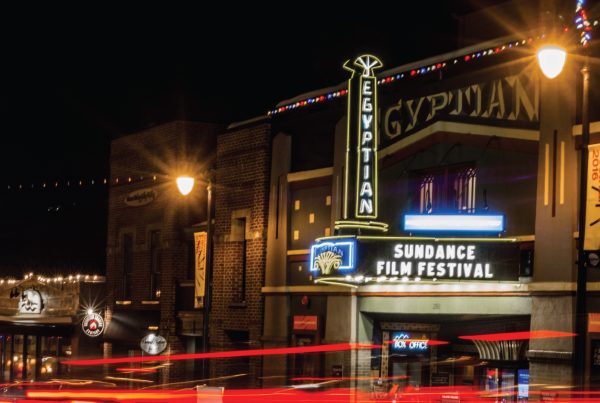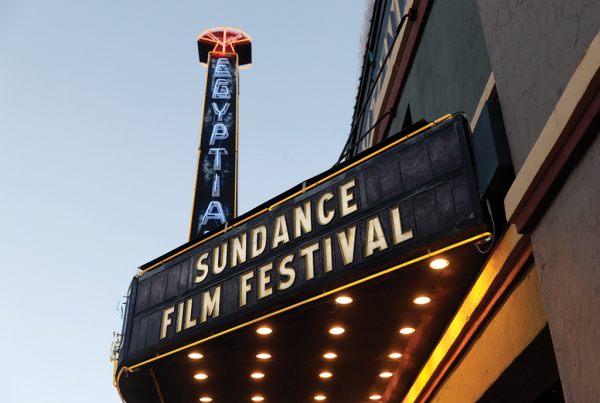
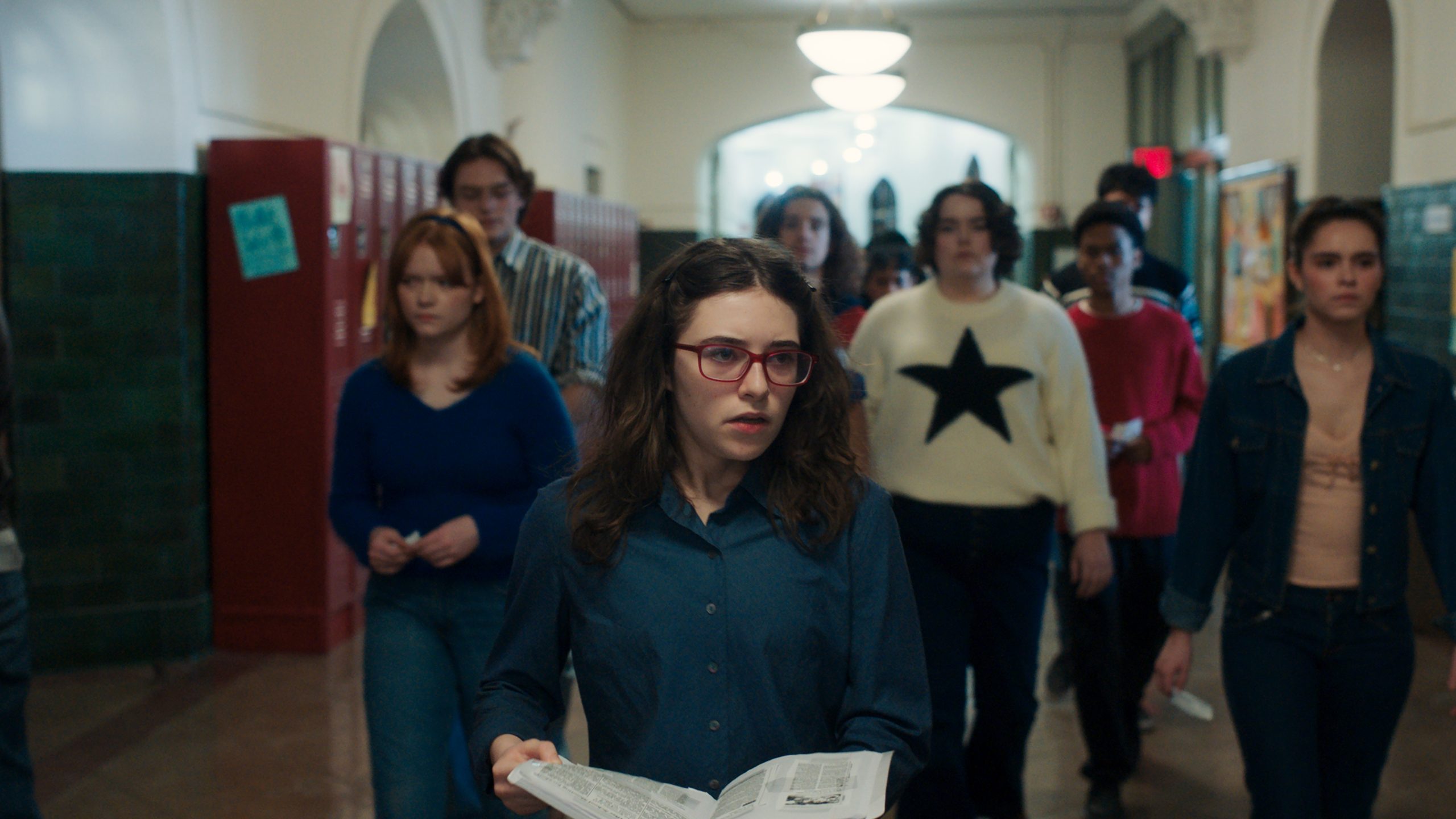
Run Amok, written and directed by NB Mager, premiered at the Sundance Film Festival on Monday, Jan. 26. The film follows Meg, a teenage girl played by Alyssa Marvin, who tries to process a school shooting by staging a musical about it.
Ahead of the world premiere, I met with Producer Julie Christeas at the Sundance Film Festival. We talked about sustainability on film sets and having meaningful conversations.
Q: What’s it like to have a movie in the Sundance Film Festival?
Christeas: “This is the last year in Utah, so I think I’m among many independent film producers who made movies last year and hoped that we might have this amazing opportunity to be here. It’s very special and very humbling.”
Q: This is your fourth time premiering a film at Sundance. What has the progression felt like?
Christeas: “The first movie I had here was The Sleepwalker, which was Mona Fastvold’s first film. I had no idea how to do anything. Being in the echoes and the size of that audience and the size of that venue was all so overwhelming. This just feels different in so many ways, one because I’ve evolved as a producer through my career, but also because I do understand what a big moment it is. The programmers here are so thoughtful about the directors and the work that they’re highlighting.”
Q: Tell me about the impact you hope Run Amok has on viewers
Christeas: “Run Amok is ultimately a story about kids in high school who are at this time where they are truly changing in every way—our bodies, our minds, cellularly we’re going through these huge transformations. They’re dealing with a really tough subject matter, and the way that they are beginning to have a conversation around it is through theater is through putting on a musical. They’re coming to the table with world views that have been defined probably by the homes they live in, the friends they have, the things they watch online, and they have to learn to work together.”
“For me, it’s this really special experience of watching a coming-of-age story where we as adults are having tremendous challenges communicating in an effective way because everything has become right and wrong, black and white, and that is usually a pathway to the worst conversation and no understanding. The best conversation happens when we can open up our hearts and open up our eyes I this movie hope will allow the audience to do that.”
Q: Your production company, Tandem Pictures, places value on sustainability. Why is it so important?
Christeas: “I’m an independent film producer. We’re not working on backlots or in studios, and as I was making more movies and sort of realizing the impact that we were having on these places we were going into, bringing jobs, opportunities, hiring catering, and renting equipment. [But the results were] waste and a terrible ecological footprint. At a point, I just said to myself: ‘This is so disingenuous what you’re doing. You have to figure out a way to leave the space for the better having had us.’ Not just that there was an economic boom for a short amount of time, but that we did something that people could walk away saying ‘I’m so glad they were here’ instead of ‘we’ll never do this again.’”
Q: How do you implement sustainability on your sets?
Christeas: “Really, the trick is figuring out how to work with the director and figure out certain lines in the budget to make it sustainable. For example, if I have to do a big build, is there a way that I can upcycle the resources or get recycled materials?”
“We’re eating at least two—sometimes three—meals a day together. What is the culture of that? Everything’s disposable. So, we take the time to get real plates, forks and knives, especially if we’re going to be in a place for more than one day. Additionally, sitting down and using real flatware makes people feel better, as opposed to breaking plastic spoons or shoving food in their faces to run back to work. Plus, we consider if things can be composted, if food waste can be composted.”
“That’s a really big thing with film teams because the food that’s left on your plate, that just goes in the landfill with the rest of your garbage. And it’s not a little. It’s thousands and thousands, sometimes tens of thousands of pounds that could be diverted into compost. So, that’s a really important piece of the puzzle. Banning single-use plastics for me is a huge thing.”
“Then, another really big thing of course, is fuel—so all the gas in our cars, all the travel, all the plane travel. How do we start to think of things in a more sustainable way? Trailers, every agent is like screaming right now, but it’s true. All of those star trailers that are not solar-powered that we leave idling are a tremendous amount of pollution. And it doesn’t have to be that way. We can talk about all these things ahead of time and explain that there’s a green philosophy here.”
Run Amok is screening at the Sundance Film Festival in Park City until Jan. 31.
More from Mariah Maynes: The Last First: Winter K2 Recounts Fatal Race Toward Earth’s Second-Highest Peak, Warns of Dangers in Negligence
Read more of our Sundance festival stories and enjoy all of our Arts and Culture coverage. And while you’re here, subscribe to our print magazine and get 6 copies of Salt Lake magazine each year.