

Pachuco, like pocho and Chicano, entered the American lexicon in the twentieth century as a term of derision. Not a positive identity but a label that effectively cordoned off the American children of Mexican immigrants—often underpaid and harshly exploited agricultural laborers—from the two cultures that were actively shaping them. Neither one nor the other, Mexican or American, these kids of the 1940s seemed to have only two options to define their position in American society: either reject the language and conventions of their Mexican ancestors and assimilate into mainstream Anglo American culture, or be condemned to a life like their immigrant parents, living on the margins, in tight economic circumstances, with a lack of opportunities and the threat of violent repression. But the WW II-era pachuco culture that developed in cities like El Paso and Los Angeles followed something of a third way, turning the term of derision into a point of pride. Being young and in-between, pachucos and pachucas flaunted their resistance to the pressures of the American mainstream through an outrageous sense of style, reveling in jazz culture, and communicating in a fluid slang, Caló, mixing Spanish and English into a hip hybrid only they could understand.
Nearly 40 years later, theater and film director Luis Valdez, born in 1940, cast Edward James Olmos, as the narrator and icon of the Pachuco ethos in his stage production Zoot Suit and the film version that followed. Olmos, in an early career-defining turn, indelibly embodies pachuco pride and the touch of defensive menace that goes with it, as well as vulnerability, resilience, and a mythic persistence. Not just an exercise in historical memory, Valdez’s project, as presented in David Alvarado’s deeply informative and entertaining American Pachuco, was the director’s greatest reach to date in asserting Chicano culture as complex, vital, and vibrant aspect of American life. This effort would find its broadest success in Valdez’s 1987 follow up, La Bamba, a hit biopic about rocker Richie Valens, starring Lou Diamond Phillips.
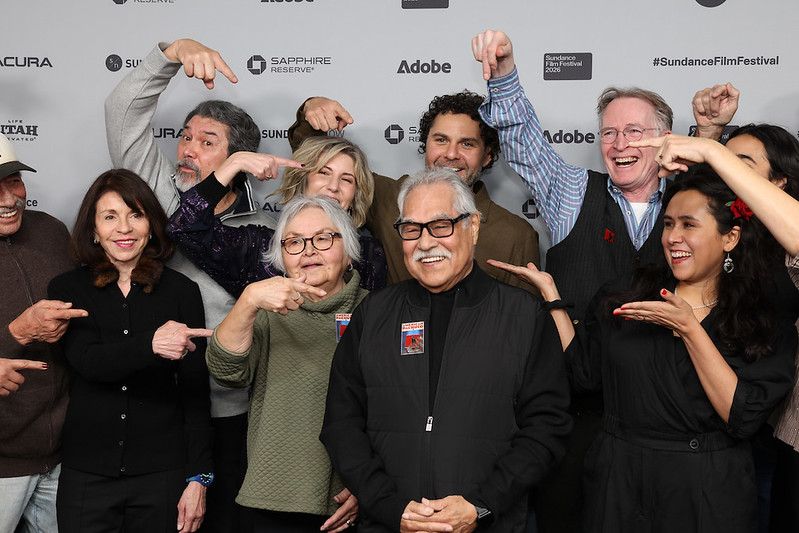
Luis Valdez grew up in the migrant labor camps of California, where, he tells us, he and his older brother Frank were the only Mexican kids in their school. The relationship between Luis and Frank forms one of the major thematic axes of American Pachuco, as much a film about a community’s search for recognition as it is a biography and career retrospective. While both brothers did well in school and pursued higher education in math and science, Luis ultimately embraced his love of storytelling and performance, leading him to a degree in English and to experimental theater, while Frank went on to become an engineer, to marry an Anglo woman and land a job contributing to America’s burgeoning military industrial complex. The tension between the brothers over their very different attitudes toward the migrant community that raised them clearly energized much of Luis’s creative work over the years as he formulated both his aesthetic and political positions.
One of the great pleasures of American Pachuco is its wealth of archival footage documenting Valdez’s first major theater productions with El Teatro Campesino in support of Cesar Chavez’s United Farm Workers movement in the mid-1960s. The freewheeling project, which eventually expanded into multiple mediums, deployed improvisation, biting satire, and folkloric characters and themes to speak effectively and with didactic intent to its audience of migrant field hands, guiding them to a more profound understanding of the nature and significance of the union’s struggle for dignity, better wages, and humane working and living conditions. By the late 1960s El Teatro Campesino had achieved national and international renown for its uniqueness and resonance at a time when the broader culture seemed ready to at least acknowledge, if not fully embrace, Latino stories and experience as a persistent presence in American life. An encounter with director Peter Brook, we’re told, encouraged Valdez to leverage El Teatro Campesino’s critical momentum to take the company’s work to a larger, more diverse audience. The result was the 1978 stage production of Zoot Suit, a celebration of pachuco culture and a reflection on the violent response against it by Anglo servicemen, culminating in the Zoot Suit Riots in Los Angeles in 1943.
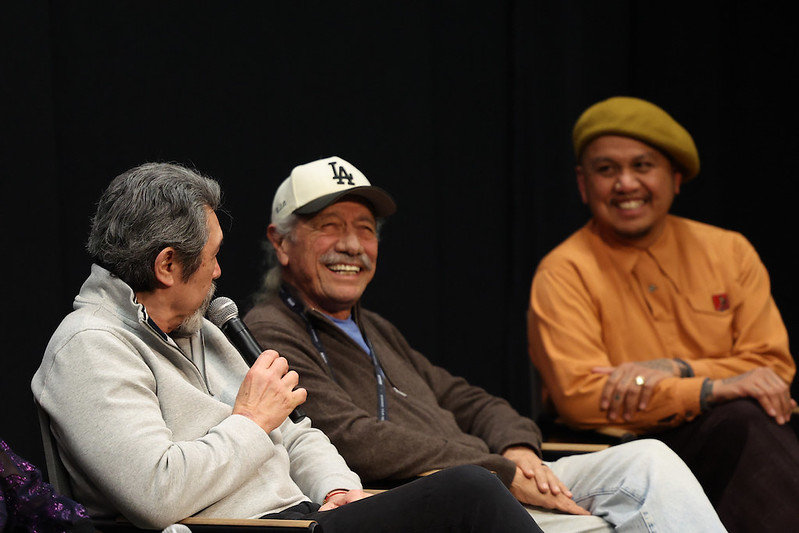
The story of Zoot Suit‘s journey from resounding success at the Mark Taper Forum in Los Angeles to the more challenging and alien world of New York City’s Broadway provides a remarkable amount of dramatic tension in American Pachuco, largely because the stakes for the show are implicitly presented as being so much grander than Valdez’s potential personal success. (Alvarado’s film never attempts to lionize Valdez as a singular heroic subject—he’s never not part of a creative community.)
Ultimately, the episode distills another thematic focus of American Pachuco: the struggle for the basic recognition of a culture’s legitimacy that must precede any earnest appreciation of its art. Zoot Suit the film only achieved middling success at the box office, perhaps, at least in part, because that audience was unprepared for it, lacking an awareness and understanding of the playful and culturally resonant methods and motives of El Teatro Campesino that produced it.
American Pachuco generously reintroduces contemporary viewers to that context, urging us to reject the residually racist judgements of the past as well as the violently regressive spirit of the present, and to take a fresh look at the argument of Valdez’s artistic legacy that America is Chicano. For those unfamiliar with Valdez’s work, as well as those prepared to re-evaluate his significance as a definitively American artist representing a definitively American community, American Pachuco provides the richly detailed basis for a much-needed and undoubtedly fruitful investigation.
Read more of our Sundance festival stories and enjoy all of our Arts and Culture coverage. And while you’re here, subscribe to our print magazine and get six copies a year of Salt Lake magazine.