On an ordinary street in Sugar House, everything feels like a typical Salt Lake neighborhood—kids riding their bikes, couples walking their dogs, passing by churches and schools. Nestled between the elementary school parking lots and neat backyards, though, is something less expected: a fully operational urban farm, chickens and all.

Locals Paula and Joseph Sargetakis had a decades-long dream to create a farm that would be both a viable business and an educational campus for the local community. For nearly 20 years, the Sargetakises learned about the best farming practices, taking college courses and visiting other farms. When a 2-acre property became available in Salt Lake City, they knew it would be the perfect fit. In 2012, Frog Bench Farms opened for business, fulfilling the first step of Sargetakis’ ambitious goal to pair sustainable agriculture with education.

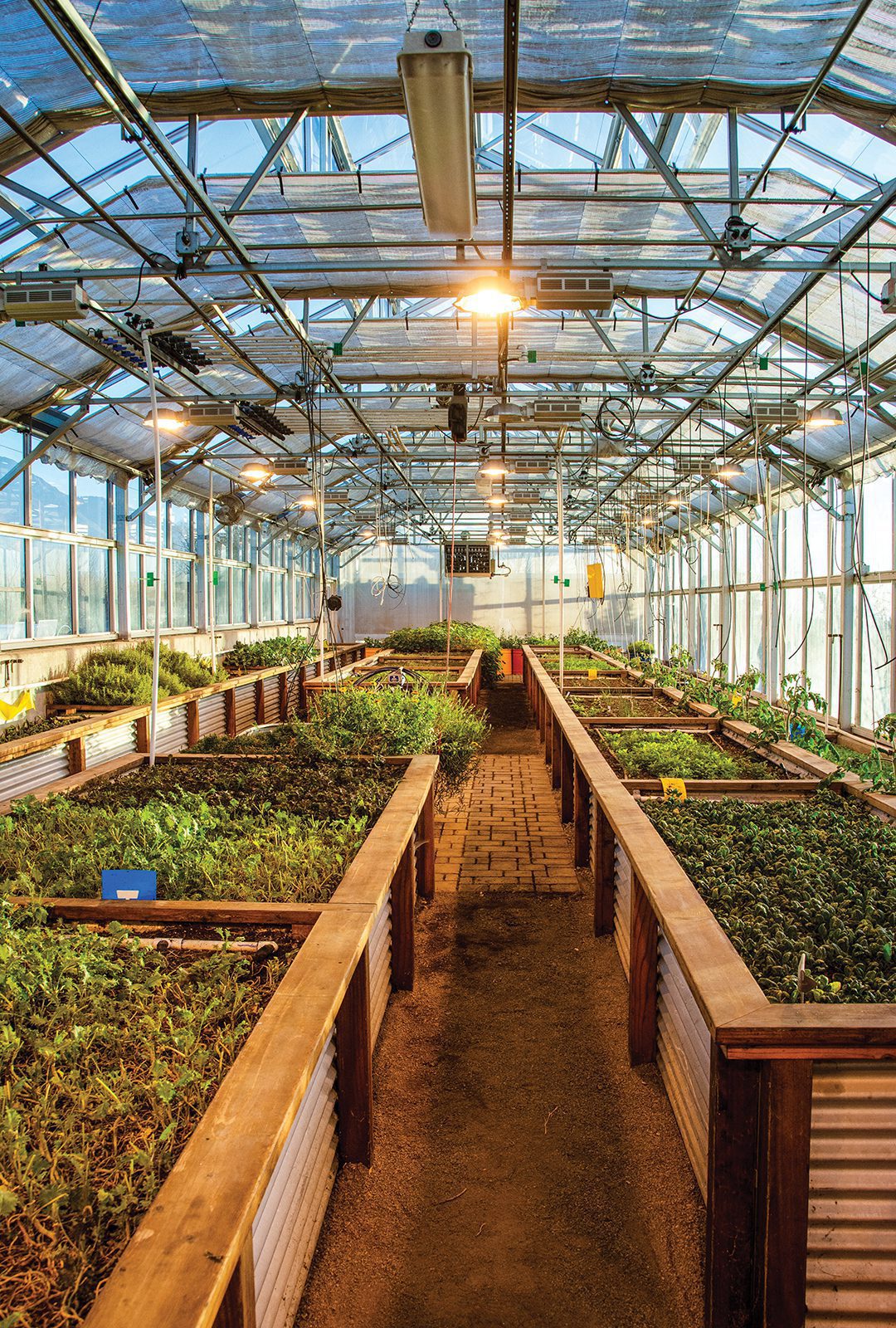
As one of the first urban farms within Salt Lake City limits, Frog Bench Farm became a trailblazer for other local farmers to push for rezoning in order to have larger greenhouses on their properties within city limits. Today, Frog Bench Farms has a 2,800 square foot glass greenhouse, hoop houses, cold frames, raised planters and row plantings that enable them to farm year-round. They grow a wide variety of produce, microgreens and flowers for the local community. Every Monday and Tuesday, residents in the surrounding neighborhoods can order and pick up produce by visiting their online store. In addition to supplying produce to locals, Frog Bench Farms regularly provides fresh, organic ingredients to 20 restaurants within a 15-mile radius of the farm, including HSL, Pago and Table X.
McKayle Law, Frog Bench Farm’s manager, encourages restaurants to use local produce because it supports local farmers and in return, the restaurants will get “super fresh, high quality, organic produce that can be delivered the day of or the next day.”

Even after almost a decade of success, there are still hurdles to overcome in running an urban farm. Law said that these challenges have included the high cost of land, city regulations, restoring poor soil and water quality, dealing with a variety of pests, and of course, fighting through COVID setbacks. Yet, Law says that Frog Bench Farms has persevered because they are passionate about making “good, wholesome, healthy food available to everyone” and helping the local community.
Law describes Frog Bench Farms as a “small but mighty plot” that optimizes every part of their property, but they can’t feed everyone. The Sargetakises continue to set an example for new and aspiring urban farmers. And, where it’s not possible for wanna-be farmers to start a farm on their own, they have other suggestions, including volunteering at public community gardens like Wasatch Community Gardens, shopping locally, lobbying for community urban farms and living more sustainably in everyday ways, like growing herbs and recycling.
“The more farmers, the better,” Law says.

Pago restaurant is fueled by this local farm. Read more about them here.