It’s the disposable diapers that keep her up at night. Stay-at-home mom Crystal Bruner Harris has achieved Salt Lake City’s Master Recycler status and hosts an Instagram feed called “wearegreenertogether” with weekly sustainable living challenges and advice. But still, her 11-month-old daughter’s daily Pampers load is a tickle of guilt at the back of her mind.

Crystal Bruner Harris has achieved Salt Lake City’s Master Recycler
“In so many ways, I’ve been able to give up convenience for the good of the Earth,” Harris says. She uses quart-sized yogurt containers instead of Rubbermaid. Chops up clothing for rags. Covers her microwaveables with a glass dome or silicone splatter guard. Ordered a custom-made dining table from a local woodsmith. Fills her dog beds with bits of denim and cloth. Posted her garden plant tubs on KSL Classifieds as “free for the taking” and some anonymous taker took them. She’s researching how to dispose of the polyethylene foam blobs that came as packing material for some mail-order bike parts a few weeks ago because she still refuses to just put them in the garbage.
And yet—the diapers. (It’s a true dilemma—most research indicates both cloth and disposable diapers have equally negative environmental impact.)
Part of what torments Harris is the aspirational concept of “zero waste.” Facebook and Instagram are filled with guilt-inducing feeds like Living Zero Waste in a Non Zero Waste Home, Zero-Waste Student Living, Going Zero Waste, Zero Waste Home and Zero Waste Nerd. These feeds are followed by thousands of aspiring waste-not-want-nots. The Washington Post story featuring an aluminum trash can the size of a Mason jar is posted on Salt Lake City’s recycling website. It’s meant to inspire but is sort of, like, hey, more of a guilt trip.
Jennifer Farrell, director of education and outreach for Salt Lake City’s Waste and Recycling Division, knows the pressure of the “zero waste” obsession that can drive a well-intentioned citizen to lose enthusiasm.
Is Recycling Ruined?
What happens when a greasy pizza box gets put in a blue bin? Is that whole load of recycling just waste? Yep. To try and mitigate inevitable human error (first, blame the teenagers) SLC runs a recycling education team to spot check blue bins for errant pizza boxes and other straight up garbage. But with 40,000 blue bins in SLC the team is only able to tag about 150 cans a week. So they’re also asking residents to educate themselves. But still it’s confusing, right? So we asked Allen Lance from Salt Lake City’s Waste and Recycling Division a few of our burning questions:
Plastics? Does the # really matter? Resin codes (#1 – #7) are used to identify the type of resin used in making the product, not necessarily whether the product is recyclable or not. A better qualifier is just that the product is made from plastic. Any containers with a screw on top, typically used for soap, beverages, etc. are recyclable in any program.
Are beer and soda cans recyclable? Yes! Aluminum is one of the most recyclable materials on the market today. Nearly 75 percent of all aluminum produced in the U.S. is still in use today.
What about glass? The city has an agreement with Momentum Recycling to collect glass curbside ($9 a month) or at drop off locations. The glass is used for insulation by Owens Corning in Nephi, filtration systems, aggregate in concrete, road base and counter tops and industrial abrasives right here in Utah.
Where does it all actually go? Waste Management in West Jordan processes SLC’s single stream material (stuff in the blue bins). The company is building a new $16 million materials recovery facility (MRF) in SLC. An MRF separates the various commodities into marketable grades. Typically: Aluminum stays in the U.S. to make new aluminum cans; steel (i.e. tin cans) is sold locally to Metro Steel; plastic containers stay in the U.S. and various resins are used for new containers, carpet, carpet pads, etc.; paper stays in the U.S. depending on the grade and some goes to foreign buyers to make tissue paper, paper towels, etc; cardboard mainly stays in the U.S. and used for new cardboard or fiber board.
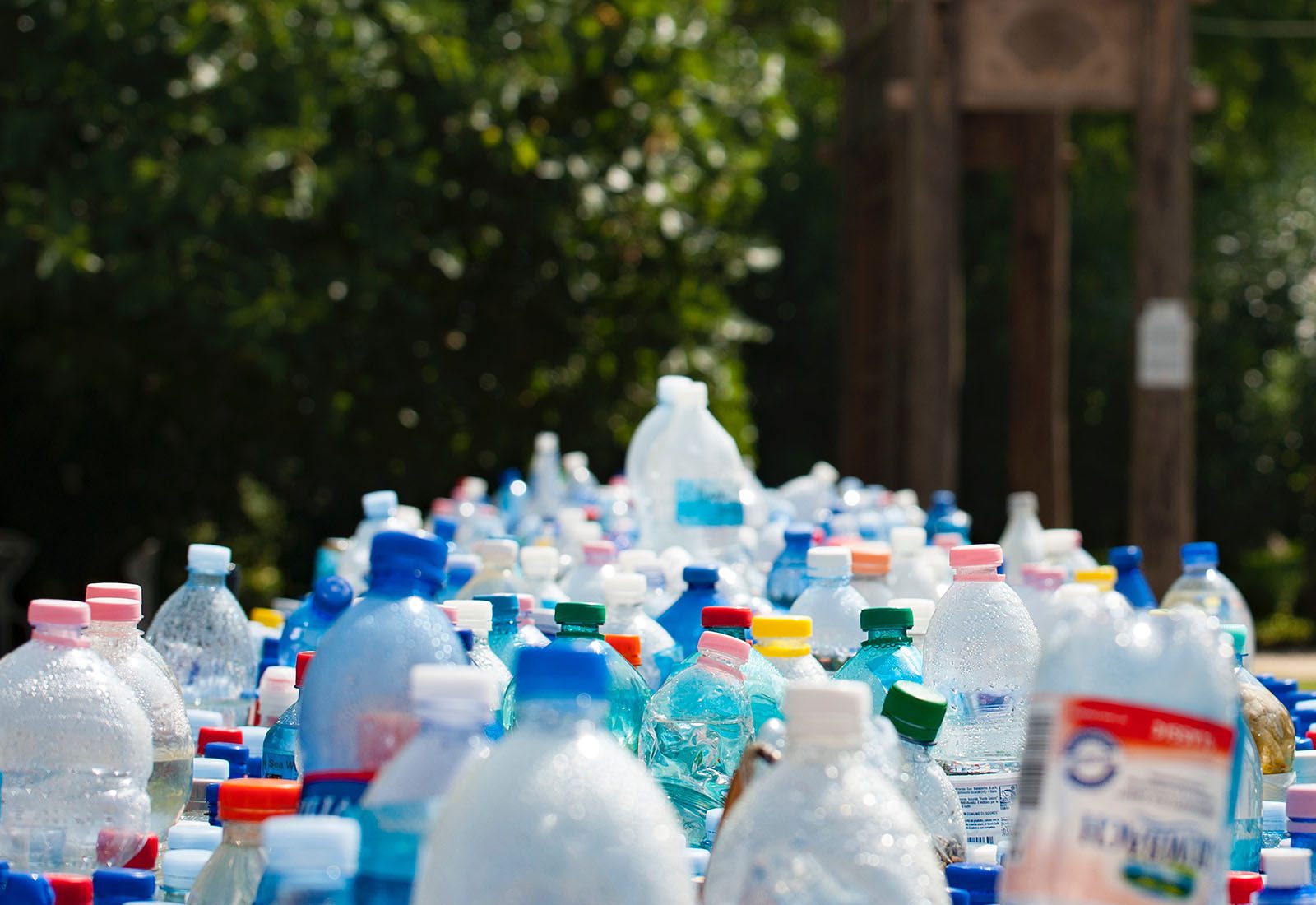
And there are growing rationalizations for slowing our culture’s nascent green habit. New reports that say 91 percent of the world’s plastic isn’t being recycled anyway. There are giant floating islands of plastic garbage circling the oceans and plastic microparticles suffocating whales. And what’s this? Chinese waste management companies are starting to refuse America’s plastic, cardboard and electronic waste?
It’s a bummer. For years our communities have gotten savvier about recycling. We’ve all dutifully filled our blue bins with everything we figure could be recycled, which it turns out, often can’t be. Paper towels and plastic grocery bags aren’t recyclable, used pizza boxes and un-rinsed milk bottles aren’t recyclable, cloth and styrofoam clamshells aren’t recyclable.
Everything in your blue bin ends up at waste management companies where workers use magnets, screens, gravity and optical sorters to separate streams of recyclables which are packed into bales and sold to whatever buyer can be found, which is getting harder.
“People are getting discouraged,” Farrell says. “We need to think further upstream.”
Farrell says the renewed priority list for environmental stewardship starts with reducing and reusing plastic packaging and non-recyclables and, adding one new “R” word to that trope: “Refuse.” Don’t take plastic lids. Ask your server not to bring you a straw when you order. Refuse plastic forks and spoons when you order take out. Don’t buy bottled water (like really, ever) and so on and so on. After that, way down the line, priority wise, comes recycling.
And it doesn’t have to be nuts. Do just one new thing, take baby steps, be practical. No need to cut up children’s pajamas to make washcloths, or swear off that new outfit. Wear out or repair what you have. Find places to donate. Complete the green commerce circle by buying local and shopping for vintage items.

Jamaica Trinnaman, owner of HelloBulk Markets
“Zero waste can be very intimidating,” says Jamaica Trinnaman, owner of HelloBulk Markets, a one-year-old bulk food store recently relocated from Square Kitchen’s incubator warehouse to a new store right by the Union Pacific tracks at 355 N. 500 West.
“We’re always pushing progress over perfection. It’s really just about finding a couple of changes.”
To that end, Trinnaman encourages her customers to re-use the packaging they already have—brown sugar ziplock bags, mayonnaise and jam jars, shampoo bottles, bread bags—to pack up the beans, nuts, detergent and other bulk items she sells at HelloBulk.
“We’ve all been forced to buy excess packaging,” she says. “You can bring all of that. Just use it up until it’s dead.”
Mom Harris compensates for her disposable diaper guilt by using a spray bottle and toilet paper on her toddler’s bottom, cutting up avocados and sweet potatoes instead of buying baby food in jars, and using bar soap instead of pump bottles. She and her husband Josh installed solar panels on their mid-century Holladay home and just bought a Nissan Leaf. She stores foil and paper bags in a big kitchen drawer until they can be used. There isn’t a paper towel or ziplock baggie to be found in her house.
See all of our community coverage here.