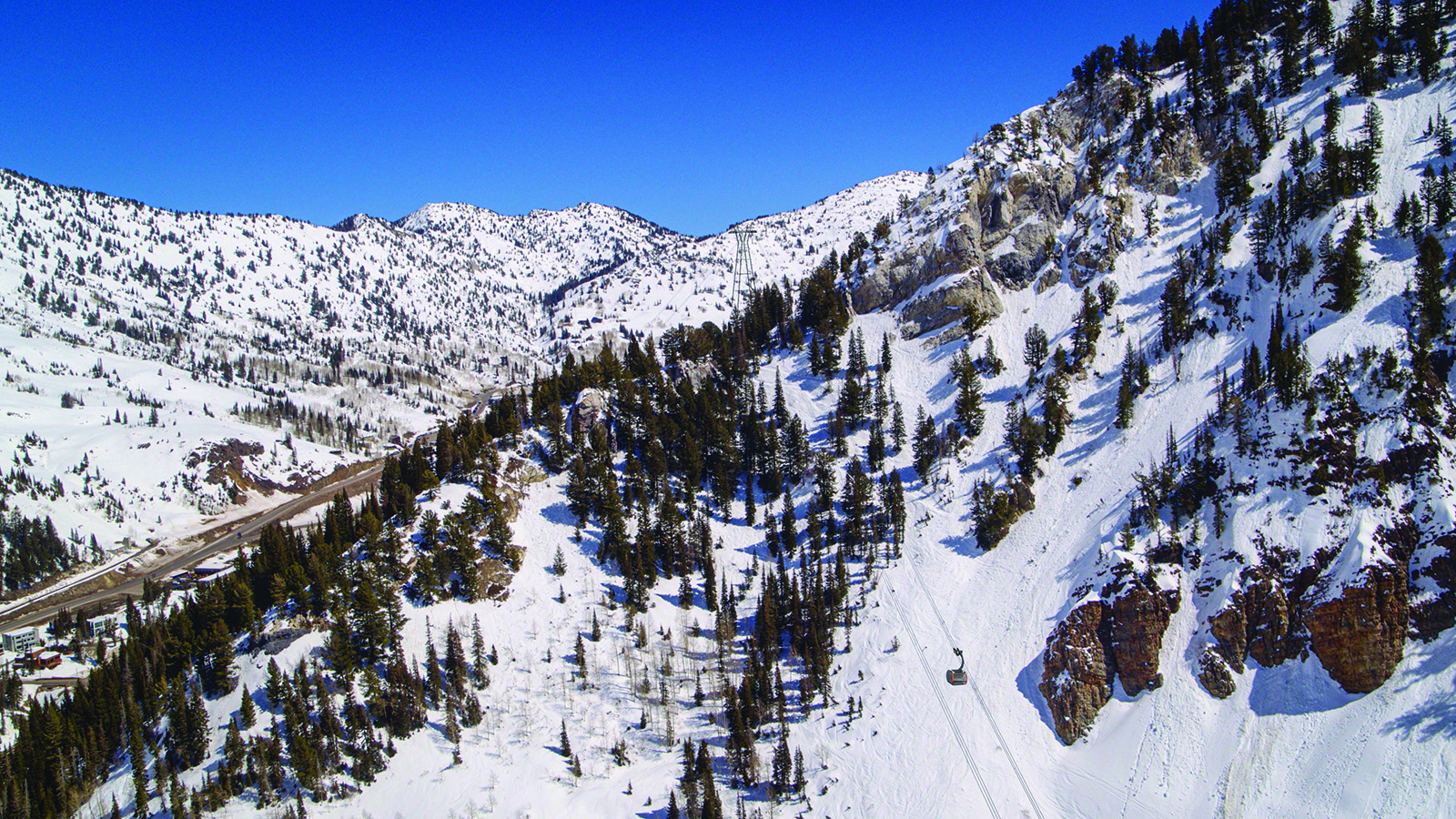
Look up in the sky. It’s no bird. It’s no plane. It’s a gondola towering over the road in Little Cottonwood Canyon. The Utah Department of Transportation (UDOT) has announced its long-awaited traffic mitigation decision regarding the future of the famed powder highway, SR-210 up to Alta and Snowbird. The gondola. Skier traffic issues have become increasingly acute in recent winters, and contentious debate surrounding the potential solutions has been ongoing. Ultimately, the $550 million gondola proposal won out over alternative bus-based transit solutions.
The gondola will run from the La Caille Station at the base of Little Cottonwood Canyon (LCC) with stops at Snowbird and Alta. The eight-mile gondola ride will be the longest in the world, whisking skiers and snowboarders from the valley straight to The Greatest Snow On Earth™. Sounds peachy, but the ethics and efficacy aren’t as clear as they may sound, and the 45-day public comment period following UDOT’s decision is about to get spicy.
Let’s start with the obvious ethical quandary here: taxpayer funds used to construct and operate a gondola that will benefit primarily two private entities, Snowbird and Alta. The gondola isn’t a feasible transit solution for anyone looking to access public lands in LCC from any trailheads other than those adjacent to the resort bases. That’s going to make a lot of people squeamish, especially if they’re forced to pay a vehicle toll to subsidize the project. That sentiment had been echoed by prominent opponents of the gondola, including Salt Lake County Mayor Jenny Wilson and Sandy Mayor Monica Zoltanski.
Other concerns surround questions of whether the gondola will effectively mitigate traffic. Gondola riders would still have to drive to the base of the LCC where congestion, especially when coupled with that in neighboring Big Cottonwood Canyon, can already slow drivers to a standstill. A public-transit solution with hubs throughout the Salt Lake Valley would have done far more to reduce traffic volume in the neighborhoods near the base of the canyons. Further, it’s yet to be shown there will be sufficient parking for the numbers of skiers and snowboarders vying to get on the gondola in the first place.
UDOT will now conduct a 45-day public comment period, running through Oct. 17 before finalizing its decision this coming winter. At that point, the project’s ultimate fate will be up to the Utah Legislature, which will need to approve funding for the project. Exactly where they’ll piece together the more than half a billion dollars for the projects remains to be seen, but a substantial amount of public funding is all but assured. In the meantime UDOT will be undertaking some efforts to support the gondola and mitigate traffic, including building mobility hubs, improving bus service and building snow sheds.
Despite environmental and ethical concerns, in the end, it was always seemed like it was going to be the gondola. Carl Fisher of Save Our Canyons suggested as much when we previously reported on the issue, saying last fall, “The bus alternative as proposed seems like it’s just there to run interference and clear the way for the gondola. Gondola proposals have been very politically popular, and that influences the way UDOT approaches the issue.” Looks like he was right.
While you’re here, subscribe and get six issues of Salt Lake magazine, your guide to the best of life in Utah.