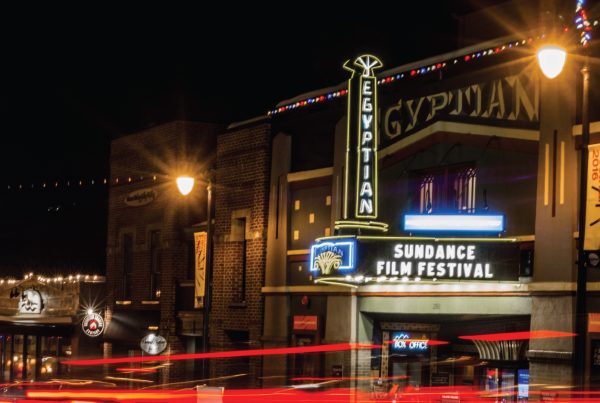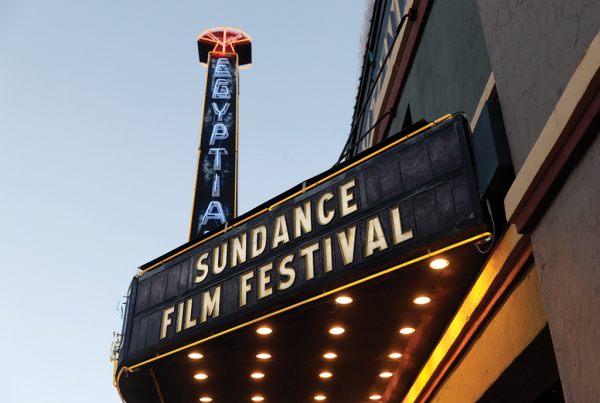

After the 2026 Sundance Film Festival, the sun will set on its run in Utah as it heads to Boulder, Colorado. Take a look back at the event’s history, from the late Robert Redford’s purchase of the land that became Sundance Mountain Resort to the festival’s decision to move away.
1969: Redford Purchases Land in Provo Canyon
Redford purchases 5,000 acres in Provo Canyon. With a name inspired by Butch Cassidy and the Sundance Kid, he opened Sundance Mountain Resort. Skiing wasn’t new to the site, it had been happening since at least 1944. Prior to Redford’s purchase, the site was known as Timp Haven.
Redford was inspired to purchase the land in 1961 when he arrived during a cross-country motorcycle trip.
1978: The First Utah/US Film Festival is Held in Salt Lake
| The first of what would become the Sundance Film Festival opens in Salt Lake City, then known as the Utah/US Film Festival, co-founded by John Earle, Cirina Hampton-Catania and Sterling Van Wagenen. Although he’s not credited with founding the festival, Redford was involved in the festival’s planning and served as its first board chairman. In 2006, Redford told TIME magazine that he’d reached a place in his career where he “decided to stop and put something back and I had the idea of creating a place for more independent type artist to come and work and have a place to develop.” During the inaugural event, 65 films were shown—eight of which were independent feature films being shown in competition. A selection of classic American Westerns were also shown. |
1979: The Festival Screens 60 Films, Hosts Panels
The festival screens more than 60 films, hosts panels with Hollywood filmmakers and awards the first Frank Capra Award to actor Jimmy Stewart.
Frank Capra was an Italian-American director, producer and screenwriter who reshaped cinema in the U.S. through human-centered storytelling, pioneering screwball comedy and feel-good drama and making innovations in documentary filmmaking during World War 2.
The award was established to recognize filmmakers who worked outside the Hollywood mainstream system.
1981: Utah/U.S. Film Festival Becomes the U.S. Film and Video Festival
The festival moves to Park City, Utah, is renamed the US Film and Video Festival and is held in January for the first time, in an attempt to lure the Hollywood crowd to the slopes.
The Sundance Institute holds its first official lab at Sundance Resort hosting 17 independent filmmakers. Director Sydney Pollack and screenwriter Waldo Salt act as advisors. Institute alumni include Paul Thomas Anderson, Ryan Coogler, Darren Aronofsky, Wes Anderson and many more big Hollywood names.
1984: The Sundance Institute Takes Control of the Festival
Redford founded the institute in 1980 with the goal of fostering independent, creative filmmaking and uplifting new voices in American films. He met with friends and colleagues at Sundance to examine the opportunity.
1989: Sex, Lies and Videotape Signals Shifts
The Steven Soderbergh film Sex, Lies, and Videotape wins the Dramatic Audience Award at the festival. The success of the film signals a shift in the independent film landscape. The festival begins to cement its reputation as a cultivator of spectacular emerging talent. Miramax acquires Sex, Lies, and Videotape, marking the beginning of the “Miramax era” at Sundance—a longtime symbiotic relationship between the festival and the production company owned by the now criminally infamous Weinstein brothers.
1990: Slacker Premieres, Inspires an Entire Genre
Jennie Livingston’s foundational NYC drag queen documentary, Paris is Burning, appears at the festival to critical acclaim, winning the grand jury prize for documentary.
Richard Linklater screens Slacker at the festival, inspiring an entire genre of future independent film. Slacker is produced on a shoestring budget of $23,000 and later grosses more than $1.25 million and launching Linklater’s career as an auteur.
1991: Sundance Becomes Sundance
The festival receives its new name for the final time: The Sundance Film Festival.
The festival introduces the Midnight category for films, genre films and genre-defying films.
1992: Reservoir Dogs Debuts
Quentin Tarantino debuts his film Reservoir Dogs after workshopping it in the Sundance Institute’s Director Lab. The film marked Tarantino’s directorial debut and was the very first production he ever wrote and directed.
The same year, Robert Rodriguez debuts El Mariachi.
1994: Four Weddings and a Funeral Premieres, Stirs Up Controversy
1994: Four Weddings and a Funeral Opens, Causes Controversy
Four Weddings and a Funeral opens at Sundance. Directed by Mike Newell, written by Richard Curtis and starring Hugh Grant, the film earns Academy Award nominations for Best Picture and Best Original Screenplay. According to popular legend, the U.S. distributor of the film objected to the word “fu**” in the opening scene, which is said to have caused Mormon audience members to storm out of the theater at a Salt Lake City screening. The event, which came at a time when edgy 1990s British comedy and conservative Utah culture were clashing, further solidified Sundance’s reputation as a place where independent film could provoke, criticize and challenge norms.
1998: Smoke Signals Director Makes History
Sundance Institute film Smoke Signals, directed by Chris Eyre and written by Sherman Alexie, a Native American, makes history, winning the Festival’s Dramatic Audience Award and Dramatic Filmmaker Trophy and receives a commercial release. The picture was the first feature film written, directed, and produced by Native Americans to gain major national attention, breaking long‑standing barriers in Hollywood. Its Sundance awards and commercial release proved that contemporary Native stories could succeed with both critics and mainstream audiences.
1999: Tony Bui Pioneers “Found Footage”, SLC Punk Highlights 1980s Counterculture
Three Seasons, written and directed by Tony Bui, is the first film to receive both the Grand Jury Award and Audience Award. Pioneering the “found footage” genre, The Blair Witch Project premieres at Sundance and became one of the highest-grossing independent films of all time, earning $250 million worldwide. Local filmmaker James Merendino’s semi-autobiographical SLC Punk! gets a Sundance screening this year as well, which will go on to become a cult classic.
2003: Napoleon Dynamite Premieres
Jared and Jerusha Hess debut their future cult classic comedy, Napoleon Dynamite, at Sundance. It was bought by Fox Searchlight Pictures for $4.75 million and reached widespread fame for its unique humor and relatability.
2005: Sundance Introduces New Competition
The Sundance Film Festival introduces the World Cinema Competition.
2012-2014: The Institute Pioneers Diversity Initiatives
The Institute launches three new diversity initiatives: Women at Sundance Institute, Catalyst, and the Outreach and Inclusion Initiative.
- Women at Sundance Institute focuses on elevating women filmmakers by providing mentorship, professional development, and strategic industry connections. Its goal is to counter long‑standing gender disparities and create sustained pathways for women to thrive in creative and leadership roles.
- Catalyst works to bridge the divide between independent storytellers and potential investors. By connecting underrepresented creators with new sources of financing, it helps ensure that diverse voices not only develop their projects but also secure the resources needed to bring them to audiences.
- The Outreach and Inclusion Initiative expands the Institute’s commitment to equity by engaging communities historically excluded from the film industry. Through partnerships, educational programs, and targeted support, it aims to cultivate a more inclusive pipeline of emerging artists.
2017: Jordan Peele Makes Directorial Debut
Jordan Peele’s directorial debut, the landmark horror film Get Out, premieres at Sundance. He went on to direct Us and Nope, further solidifying his success in the social thriller genre.
2021-2022: Institute Deals With a Pandemic, Films Win Academy Awards
In a dramatic shift, necessitating a logistical high-wire act, the 2021 and 2022 Sundance Film Festivals are held largely online amid the COVID-19 pandemic.
Written and directed by Sian Heder, the 2021 coming-of-age film starring actors in the deaf community, CODA, premieres at Sundance. It becomes the first Sundance film to take home the Academy Award for Best Picture.
Also in 2021, Questlove’s Sundance documentary Summer of Soul (…or, When the Revolution Could Not Be Televised) premiered, going on to win the Academy Award for Best Documentary.
2023: Sundance Returns to the Real World With First Hybrid Festival
After two years of fully online Festivals, Sundance holds its first hybrid—in-person and online— festival.
Rumors begin to circulate that the Sundance Film Festival is looking for alternative host cities to Park City.
2024: Park City Closes Main Street to Traffic for Festival
Park City announces its plan to close Main Street to cars during the 2025 Festival. However, even with this and other attempts to convince the festival to stay, Sundance announces it will move to Boulder, Colo., after its contract with Park City expires following the 2026 festival. As partial motivation for the move, some cite the Utah Legislature’s red state agenda as being at odds with Sundance’s focus on inclusion.
Sundance Institute celebrates the 40th edition of the Festival, setting a record with 17,000 film submissions from around the world.
2025: Rest in Peace, Robert.
Robert Redford passes away at 89 years old on September 16, 2025, at his home in Sundance.
Related: Where to Eat During the Sundance Film Festival
For even more of our Sundance festival stories and enjoy all of our Arts and Culture coverage. And while you’re here, subscribe to our print magazine and get six copies a year of Salt Lake magazine.