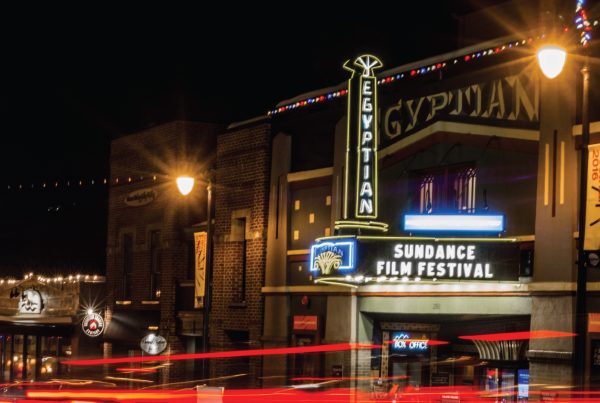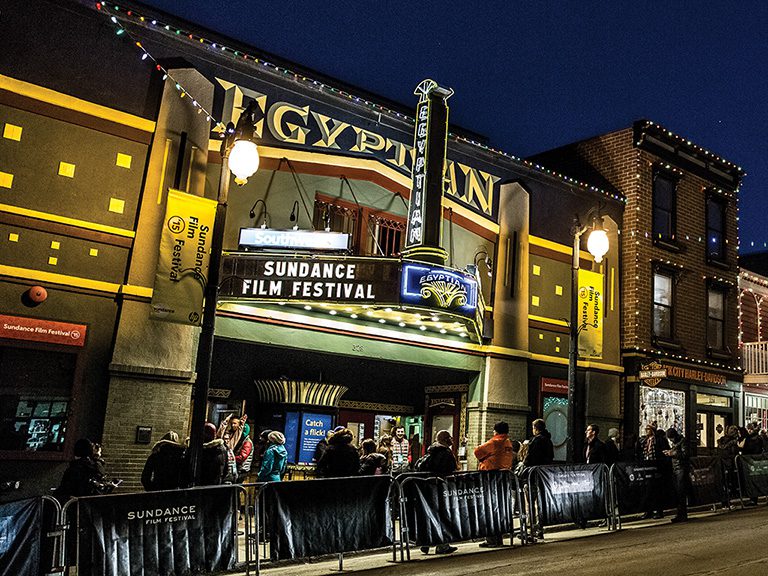

I huddled in a small white tent with dozens of other journalists, reporters, critics, photographers and puffy-coated volunteers. A gate separated the rabble from a stretch of plush blue carpet. Iced-over heaps of dirty snow walled us in on either side, forming a sallyport through which actors, directors, screenwriters and producers could be ushered through, then pause a moment for the cameras and a veritable pincushion of stick microphones. I extended my microphone as well, nearly elbowing the gorgeous face of a reporter from Brazil wedged against me. The crowd brought to mind flashes of being crushed in the pit at a punk rock show. A cameraperson from Variety screamed over our heads, “Luke! Luke! Mr. Wilson!” as the actor entered the tent. Bill Hader of SNL fame followed after, soon greeted by shouts of “Bill! Bill!”
It struck me then at just how unglamorous the tableau was. We were far from the gilded movie premieres of Hollywood—nearly 600 miles away, in fact. What it lacked in glamour, however, it compensated for with scrappiness, a true belief in the power of visual storytelling, and black wool peacoats and UGG boots.
The Skeleton Twins (2014) premiered that night at the Sundance Film Festival in Park City, and the people responsible were obliged to pay the price of admission by speaking to the clamoring press. That was my first year covering the festival as a member of the press, and I was determined to capture the secret to what made Sundance special—singular among independent film festivals as a beacon of culture, fount of artistic discovery and venue of revolutions in cinema.
The executive producer of The Skeleton Twins, Mark Duplass, along with his brother Jay, had long been a Sundance darling before I spoke with him at that premiere. He’d brought his first film to Sundance a decade before that, launching his career. If anyone knew the secret to Sundance, it would be him. He alluded to an alchemy that took the base elements of timing, location, influence and audience, and transformed them into gold.
“We’re in a small town, Park City, but since the 1980s, Redford has brought them this culture of really smart, interesting films,” said Duplass. “There’s not a more appreciative audience for strange, on-the-periphery cinema in the world.”
It never would have happened without Robert Redford’s idealism and influence, Park City’s beauty and ski town charm, and a hungry film-loving audience willing to give upstart young filmmakers a chance. And now it’s over, at least for Utah. Butch Cassidy has lost his Sundance Kid. Freeze frame. Fade to black. That’s a wrap.
Sundance Moves to Boulder
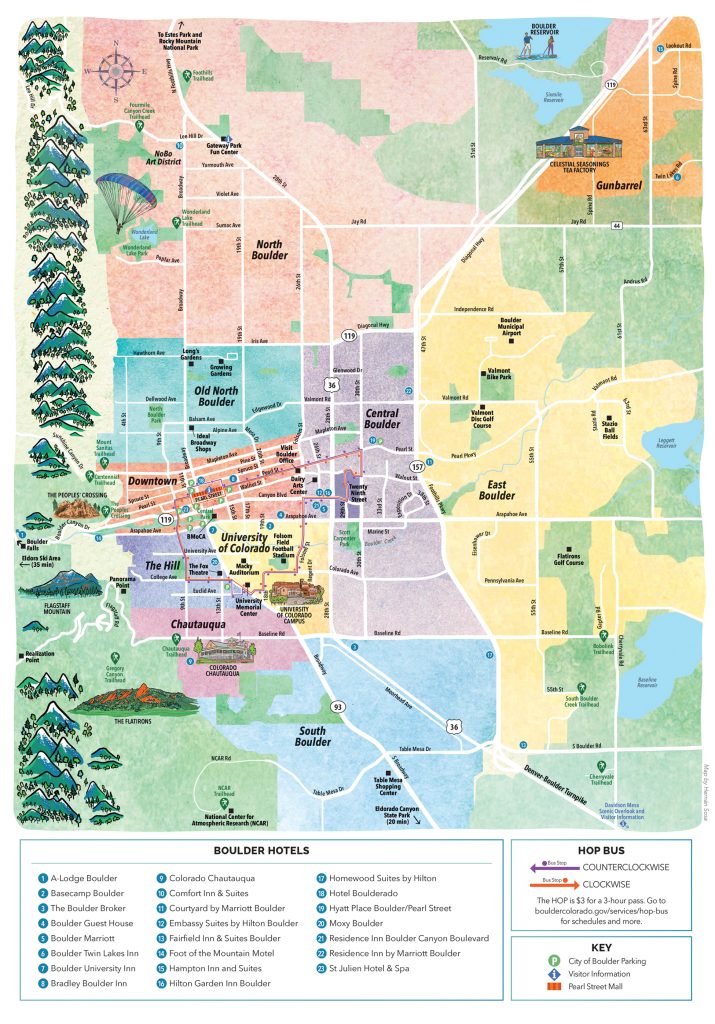
The Sundance Film Festival will hold its 2027 season (and its foreseeable future seasons) in Boulder, Colo. The decision came after months of speculation and demurring on behalf of the Sundance Institute, but they could not keep it under wraps forever. Boulder competed with Cincinnati, Ohio and Salt Lake City/Park City for the contract to host the Festival after its agreement with Park City expired at the end of 2026, and Boulder won out.
While the eschewing of glamour was intentional, a decade ago, festival co-founder Robert Redford did not portend a move out of Utah. As Redford told Salt Lake in 2010, “The festival, for my money, needs to always be in touch with where we were when we had the first festival,” he said. “It was meant to be contrary to a Hollywood festival, where you have a red carpet and limousines. It was meant to be much more grassroots.”
Then, why the move? The Sundance Institute referenced much the same alchemy that helped make Sundance special in the first place; small-town charm, an engaged community and a vibrant arts scene.
One could argue that Park City and Salt Lake City possess the same qualities. So, what does Boulder have that we don’t? The Institute flaunted its plans to build the Festival, at least in part, around Boulder’s Pearl Street Mall, a pedestrian-only street. Park City, too, had announced it would close Main Street to vehicle traffic during the festival. So, it’s a draw.
It’s rare for a film festival to change locations. (Could you imagine if Cannes moved to Versailles? Ridiculous.) But it’s not without precedent. In 1981, the film festival that would become Sundance moved from Salt Lake to Park City. Part of the allure of Park City in January was drawing the Hollywood set to the slopes. This will arguably be preserved with this new second move, but skiing is far more accessible in Park City than it is in Boulder. Point to Park City.
Before he passed away in September 2025, founder Robert Redford said of the Festival’s move, “As change is inevitable, we must always evolve and grow, which has been at the core of our survival.”
The answer may lie in that desire to grow, which Sundance Institute leadership seemed to feel was stymied in Park City. Participation had become prohibitively expensive for many. Even if one can afford to attend, they must still compete with 73,000 other attendees to secure tickets, travel and lodging in a town of just 8,000 people. Perhaps Festival organizers felt the balance between the independent creative spirit and commerce could no longer be maintained in Utah’s most expensive city.
“The quality and diversity of the independent films at the festival have gotten better each year. I’ve been very proud of its growth and what it has become. Obviously, it’s been great for the Sundance Institute, but it’s also provided tremendous dividends for independent film, as well as the state of Utah. Our biggest problem now might be trying to control it, to not let it get too elite or become self-important,” Robert Redford told Salt Lake Magazine way back in 1993.
When he spoke again to Salt Lake magazine in 2004, Redford reflected on a pivotal year for the Festival. In 1989, then-unknown director Steven Soderbergh’s Sex, Lies, and Videotape premiered at Sundance. “People started to pay attention to what we had and, once the films clicked, came the merchants; once the merchants came, then the Hollywood studios came; once the Hollywood studios came, celebrities came; once the celebrities came, fashion came; once fashion came, the paparazzi came,” recalled Redford. “All that has nothing to do with why we started the program. I don’t mind it at all, the more the merrier, if it helps—fine. But the fact is, nothing has changed from the way we first ran this festival and program.”
While the push-pull films as art and films as big business remains a point of contention, there is at least one notable change: Redford went on to say in that 1993 interview, “Anyone from Salt Lake or Park City can still walk up to a theater and buy a ticket.” Will that be attainable in Boulder?
Boulder does, however, seem to allow for the festival to grow with over 130 cultural organizations and more venues and theaters. Before Park City knew it would be losing the Festival to Boulder, the Arts Council of Park City & Summit County had identified Boulder as a benchmark city to aspire to. (How embarrassing.) In short, the report found that Boulder’s commitment to arts, culture and innovative urban planning is more effective, stating, “Through these efforts, Boulder cultivates an environment where residents and visitors alike can engage with a rich tapestry of experiences and contribute to a thriving, inclusive community.”
The fear that the Sundance Film Festival had become too expensive and “too Hollywood” does not fully undercut its significance as a discoverer of diverse voices and purveyor of challenging cinema.
As Utah filmmaker Trent Harris said to Salt Lake magazine more than 20 years ago, “A lot of them [filmmakers] look at Sundance as an audition for Hollywood, and that’s not Redford’s fault. What happens is these filmmakers try to tailor their movies to appeal to some commercial sponsor or studio. And if they win a prize, I’d say 95% of them get sucked into the Hollywood system and they’re no longer an independent filmmaker; and that’s what they want, which is OK, too; it gives people from the outside a way to get in, which didn’t exist before Sundance.”
“Irreconcilable Differences”?
What some believe ultimately drove the wedge between Utah and the Sundance Film Festival is what a divorce attorney might call “irreconcilable differences.” With the Sundance Film Festival and the Sundance Institute Labs, outsiders had a rare opportunity to become insiders and, for many, showcase work that would never have been seen by the public otherwise.
The labs have helped launch careers and develop contemporary classics, including Quentin Tarantino’s Reservoir Dogs and the landmark films Smoke Signals (1998) and Pariah (2011), which filmmaker Dee Rees premiered at the Festival, where it won the Dramatic Excellence in Cinematography Award. For her third film, Mudbound, Rees became the first African-American woman nominated for the Academy Award for Best Adapted Screenplay.
Smoke Signals had the distinction of being entirely developed and produced by Native Americans. “There’s nothing like it in the world,” Smoke Signals director Chris Eyre told Salt Lake magazine about the Sundance Labs. “To have an art organization put you up at their expense, and give you a crew, editors and mentors—well, that’s a once-in-a-lifetime experience.”
For the 2019 Festival, Kim Yutani took over as director of programming, and she doubled down on Sundance’s commitment to inclusion. That year, the Festival featured 41% of films by people of color, 17% by people who identified as LGBTQ+, and 45% by women.
Utah politicians would call this textbook “DEI initiatives.” Through pride flag bans, restrictions targeting transgender children and vilifying longstanding values of inclusion and diversity, Utah lawmakers have alienated the diverse artists, outsider filmmakers and the adventurous movie lovers that make the necessary alchemical ingredients for an independent film festival to be successful. And they’re not sorry.
As State Senator Dan McCay (R-Riverton) posted after learning the news of Sundance’s departure, “Bye Felicia…Sundance promotes porn; Sundance promotes alternative lifestyles; Sundance promotes anti-LDS themes; Sundance does not fit in Utah anymore.”
In contrast, Colorado’s equity, diversity and inclusion initiatives remain intact, and the legislature there amended its Anti-Discrimination Law in 2025 to add new protections for transgender people in the workplace and improve public accommodations for those with disabilities. Point: Boulder.
Despite their values not exactly aligning with Sundance Institute’s, some Utah politicians didn’t want to lose out on the contributions, both artistic and otherwise, the Festival brings to the state. State and local leaders, including the Governor who signed the aforementioned laws, drafted a letter to the “Sundance Community,” urging them to stay in Utah. Writing, “Robert Redford had a vision—to create a platform for independent artists to share their work with the world. At the same time, Utah was still something of the Wild West, a smaller state with a quiet reputation for the Greatest Snow on Earth. When we came together, it was clear we had something special.
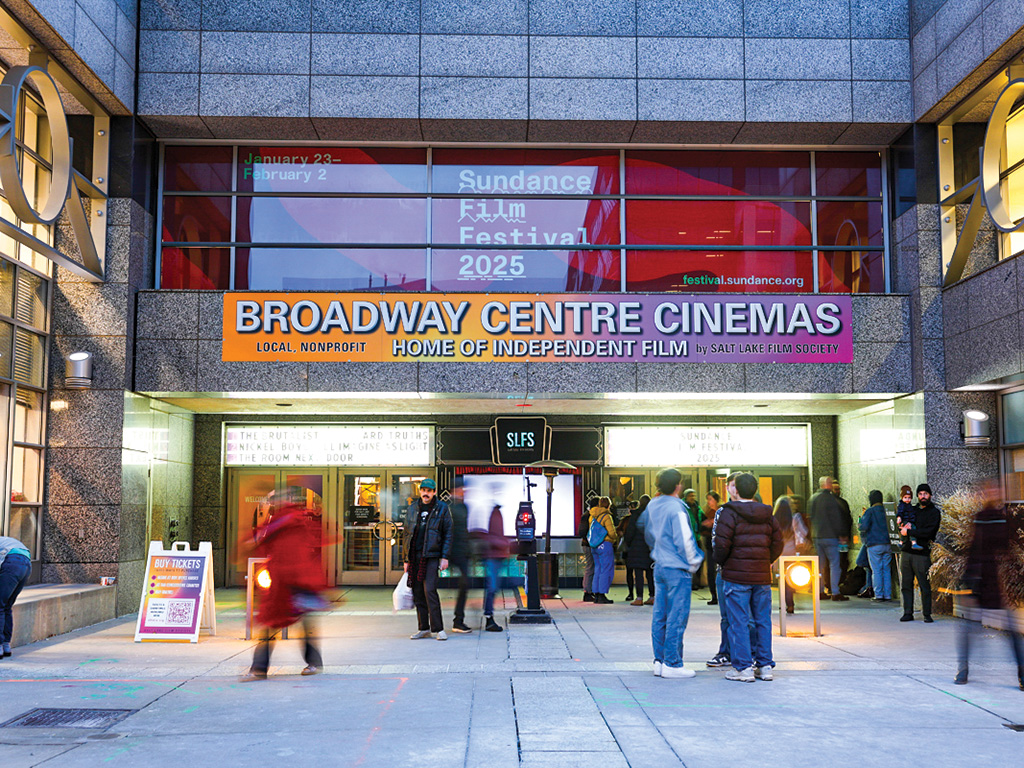
“Today, you’re an icon of artistic expression, a cradle for emerging talent and a beacon for people to feel seen through the art of storytelling. Through the Festival, Institute programming and the many artist labs, you cultivate creativity, inspire dialogue and provide a space for artistic expression…Sundance is much more than an economic impact or a bump in tourism. For us, it’s about the art of film.”
But it’s hard to separate creativity from commerce. Sundance Institute commissioned an economic impact study, finding the 2024 festival added $132 million to the Utah’s gross domestic product and $13.8 million in state and local tax revenue. That’s a lot to lose. To sweeten the pot, Utah’s sweetheart letter came with a budget allocation of $3.5 million, an offer competitive with a new Colorado tax incentive. We know how this story ends.
For 11 days every year for 40 years, Utahns engaged in a love affair with independent cinema. But Sundance broke up with the Beehive.
There’s no reason we can’t part as friends. In one of his final public statements, Redford thanked Park City, the state of Utah and the local community that helped to build Sundance. “What we’ve created is remarkably special and defining,” he said.
Utah’s final Sundance Film Festival will run January 22–February 1, 2026 and serve as a tribute to actor, director, visionary, and festival founder Robert Redford. Bob would have hated it.
Read more of our Sundance festival stories and enjoy all of our Arts and Culture coverage. And while you’re here, subscribe to our print magazine and get six copies a year of Salt Lake magazine.