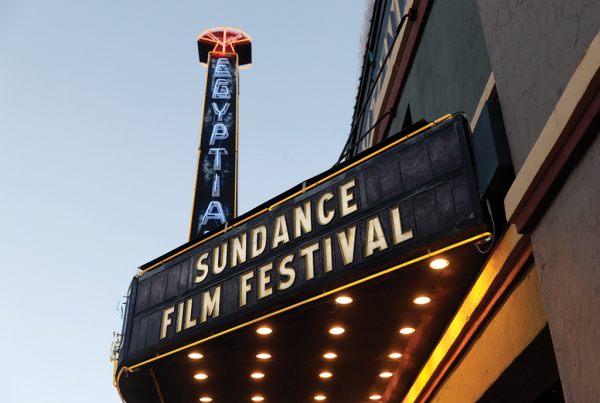

Cathy Yan’s The Gallerist tells you what it’s going to be as soon as it begins: black text on a white screen, Andy Warhol’s words big and bold—“Art is what you can get away with.” From there, Yan wastes no time testing just how far that idea can stretch before the joke withers. Premiering at this year’s Sundance Film Festival, the film is an absurdist satire that examines the modern art world’s obsession with spectacle, relevance and manufactured value—even when it risks becoming the very thing it critiques.
Natalie Portman stars as Polina Polinski, a high-strung gallery owner preparing for an Art Basel debut and clinging desperately to mass relevance. Polina allows loathed art influencer Dalton Hardberry (Zach Galifianakis) a private preview of emerging multi-media artist Stella Burgess’s (Da’Vine Joy Randolph) work, when Dalton dismisses Stella as a hack, referring to her as “practically a cave painter”, Polina’s carefully curated composure fractures—things escalate quickly. A slapstick worthy accident leaves Dalton impaled on Stella’s towering replica of a cattle-castration tool. What follows is a comic descent into moral bankruptcy, as Polina rearranges the body and passes it off as hyperrealist art.
The premise is ridiculous, and The Gallerist asks the audience to accept that impossibility upfront. Yan leans into the gimmick, amplifying the humor with flashes of macabre imagery and a camera that circles the sterile gallery like the all-seeing phone of an influencer. A literal ticking clock hangs over the film—the body will decompose within 6 hours—and the film’s pacing mirrors that urgency, becoming aggressively kinetic, sometimes to the point of sensory overload. A slick, heist-like score keeps the tone zany and dynamic, even as the humor begins to rot like a framed banana.

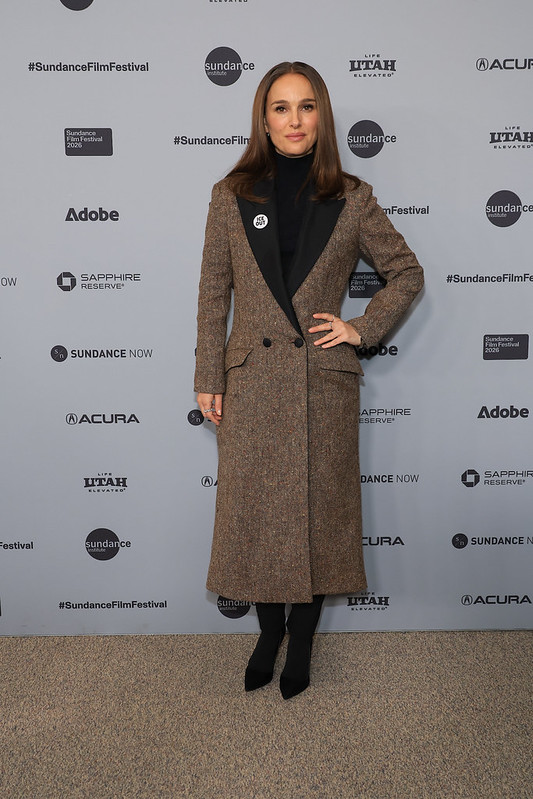
The stakes hit the ceiling when legendary art dealer Marianne Gorman (Catherine Zeta-Jones) enters the picture, eager to sell the sculpture even after learning the truth behind it. Her blunt philosophy—”Selling art isn’t selling art. It’s selling an idea”—cuts to the film’s core. Value is crowdsourced. Stella’s work is ignored until the spectacle goes viral, at which point meaning intent becomes irrelevant. The film lands its sharpest blows here, illustrating how commodification hollowly replaces creativity.
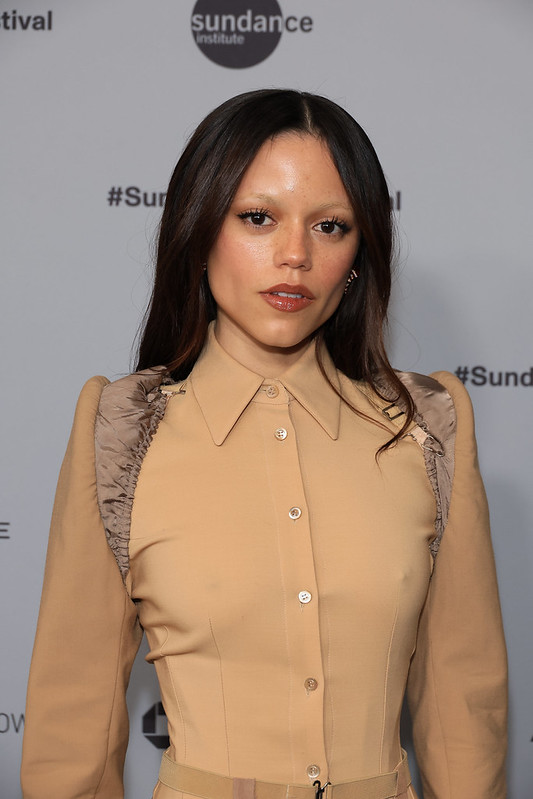
Portman’s performance oscillates between cringeworthy theatricality and fleeting moments of vulnerability that hint at something more sincere beneath Polina’s Miranda Priestly cosplay. Jenna Ortega fares better as Kiki, Polina’s frantic assistant, whose hysterics play like nervous comic relief. Da’Vine Joy Randolph plays the emotional anchor of the film beautifully, but Stella’s character is something the film never fully commits to. The theatrics start to grow tiring by the third act, so by the time Stella finally articulates the film’s quietest truth—”What you make makes its own meaning”—the moment lacks the emotional groundwork to hit as hard as it should.
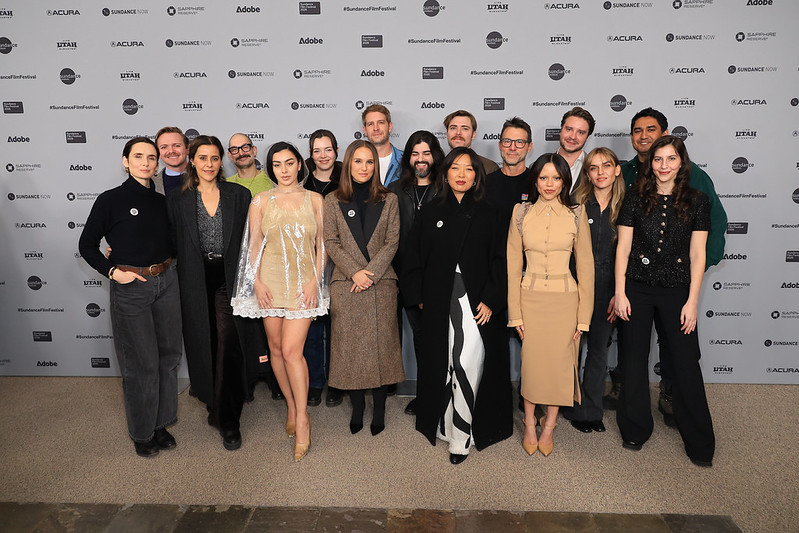
The Gallerist interrogates the commodification of creation while also examining the battle between self-worth and external validation. In a quiet exchange, a security guard asks Stella why she doesn’t simply make art for herself. Her answer: because it isn’t enough. A statement many artists can resonate with.
Yan’s film ultimately aligns with several other Sundance standouts this year—The Moment, I Want Your Sex, The Disciple—all circling the same tiring realization: once art is released into the world, its fate no longer belongs to its creator. In The Gallerist, that loss becomes grotesque, hilarious and ethically ambiguous. Art, after all, is what you can get away with—until the market decides otherwise.
Read more of our Sundance festival stories and enjoy all of our Arts and Culture coverage. And while you’re here, subscribe to our print magazine and get 6 copies of Salt Lake magazine each year.