
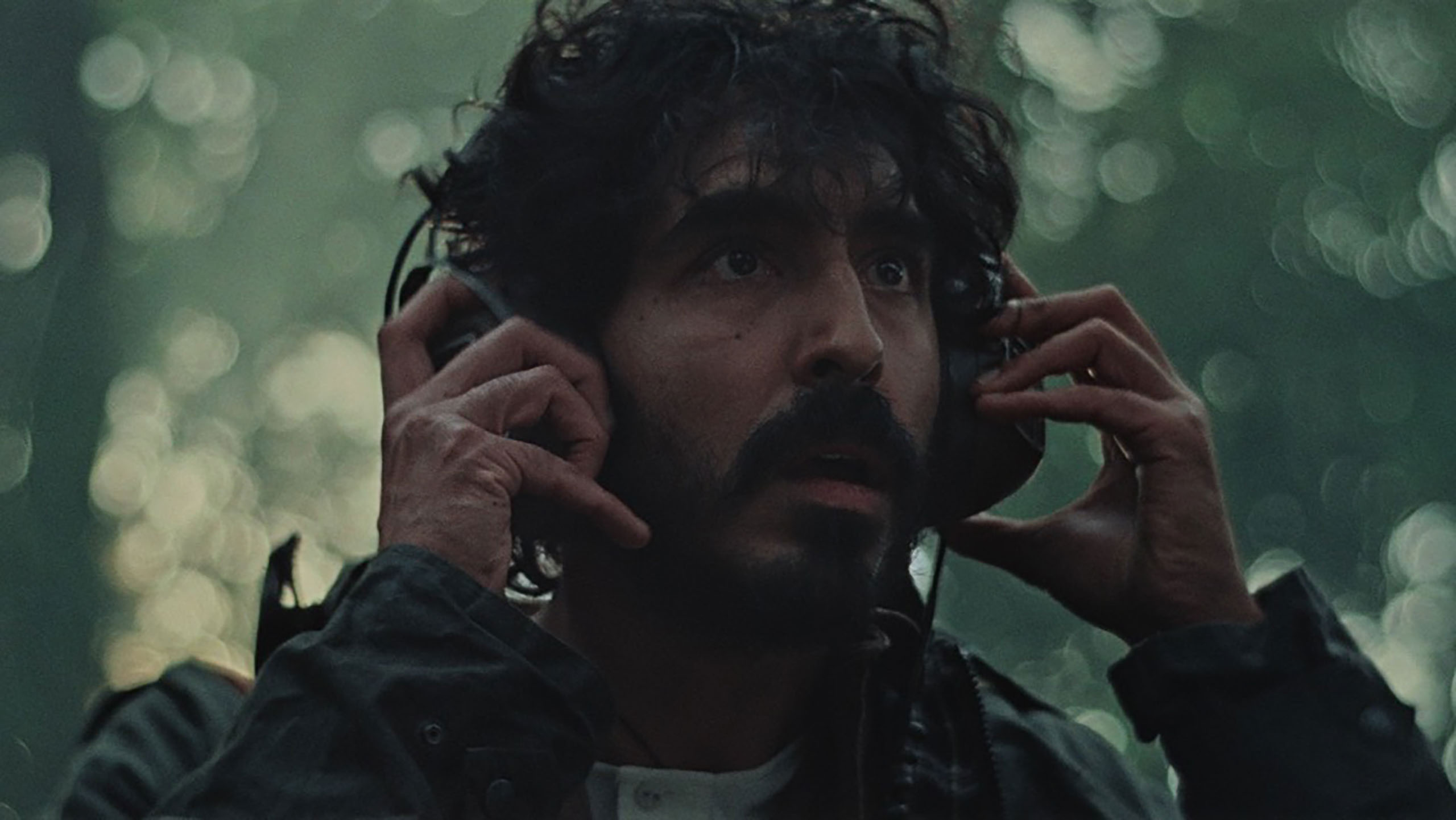
With Rabbit Trap, Dev Patel continues his reign as the most compelling and charismatic actor working today.
One of the aspects to seeing movies at Sundance is the unknown factor. As such, when you watch a film, there’s a longer period of grace you allow the movie as it develops before it’s clear what the movie is/wants to be. Once that is clear, you’re able to navigate expectations, feelings and concepts better. This grace period can cut two ways—one, you fall more in love with a movie than you might if you knew what it was going in (the surprise of discovery hits even harder) or two, if the movie struggles to come together with any sense of direction or clarity, you’re left frustrated more so than if you knew, going in, the movie wasn’t going to work.
As I sat through Rabbit Trap, I held on for a long time that what I was seeing would find its footing, communicate its tone and engage emotionally with the audience. Once it was clear that it wasn’t going to be able to do that, I felt that wash of frustration come over me.
Now, that’s not to say that Rabbit Trap was bad—there’s quite a lot working for the individual pieces. The film follows a married couple (Dev Patel and Rosy McEwan) as they’ve moved to a cottage in Wales in 1976.
Darcy (Patel) captures ambient sound from nature while Daphne (McEwan) is an experimental musician/poet who has moved away from London to capture something magical for her next record. While outside, recording any audio he can find, Darcy begins to pick up eerie and haunting noises. As he follows them into the forest, he encounters a circle of white mushrooms and enters the circle. He passes out and wakes up a time later.
When he returns home, the ambient noise that he captured intoxicates both him and Daphne, and a child appears outside their home, drawn by the music. This child (played by Jade Croot, an actress in her 20s, but this isn’t an Orphan situation) doesn’t give his name, traps rabbits (hence the title of the film), and he wants to be a part of their family. His increasing insistence on being included and being present somewhat escalates as the movie progresses. However, the film struggles to establish the child as a felt threat or menace.
The movie premiered in the Sundance Film Festival’s Midnight category—which is reserved often for horror movies, thrillers or dark comedies. It’s my favorite category because of the level of creativity, experimentation and ambition you can find there. Unfortunately, Rabbit Trap never really delivers on the scares, tension, or a mounting sense of dread.
The main characters don’t really talk to each other, and never seem to engage or question the world around them, and, as things get more claustrophobic, the threat that they’re facing never really becomes clear. Beyond “make a good album with unique and atmospheric sound” they don’t appear to have any goals or efforts they are working toward. When a child shows up who won’t leave them be, it doesn’t disrupt much of their solitary, individual lives, in a way that causes them to take much action to reorient their efforts toward achieving their goals.
The movie spends most of its time in what feels like the setup and initial tension—rather than escalating or complicating—until we shift wildly into a third act that, while I could follow easily, doesn’t feel congruous or satisfying with the rest of the film.
As a metaphor for the haunting nature of trauma—especially childhood trauma—the ideas and images are very powerful. In fact, the final scene of the whole movie is so good, that you wish it were the climax to a very different, very effective drama about a couple navigating the choking, silencing pain of childhood abuse. Unfortunately, the metaphor stands next to Darcy’s story of hidden trauma and doesn’t draw it into the overall plot.
What I was struck by and reminded of is how incredible Dev Patel is. Every scene he is in, he commands, and you can’t look away from him. His presence is never aggressive or overbearing, but his sheer watchability is undeniable. And it should come as no surprise. If you’ve ever seen him in any of his roles (notably Academy Award favorites Slumdog Millionaire or Lion), you know there is a quiet charm and intensity about his choices. The aforementioned final scene is nearly silent and yet Patel’s choices and presence and emotion on his face brought me to tears.
The sound design in the movie is incredible—though it starts off very strong and intense and fades/is forgotten as the movie goes on. The production design and cinematography similarly are also gorgeous and well-crafted. The whole movie is a vibe. Just perhaps not a complete, functioning story.
In talking to another reviewer after the film, they described it as what you find searching for “Millennial fairy cottage-core ambiance lo-fi video” on youtube, to play in the background while you study. And that’s not inaccurate.
Bolstered by an incredible lead performance, a strong metaphor about trauma, captivating sound design and aesthetically pleasing design, Rabbit Trap can’t overcome its struggles to establish tone and direction, stakes or a clear narrative.
Read more of our ongoing Sundance coverage of the festival and enjoy all of our arts and culture coverage. And while you’re here, subscribe to our print magazine and get six copies a year of Salt Lake magazine.