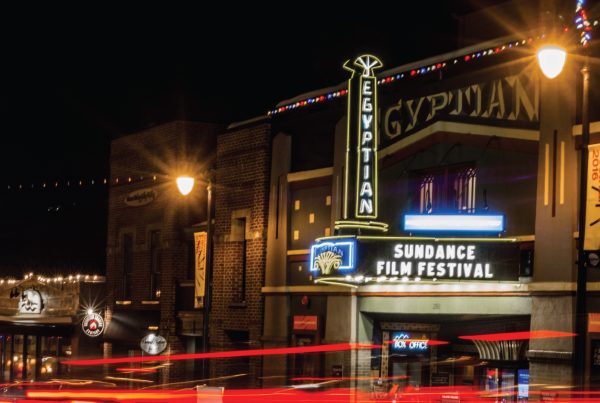
“A genuine and emotional story of a multi-generational queer family that celebrates the joy and challenges of navigating supporting the current generation growth while honoring the previous generation’s struggles,” reads the official synopsis of Jimpa, a film premiere at the 2025 Sundance Film Festival.
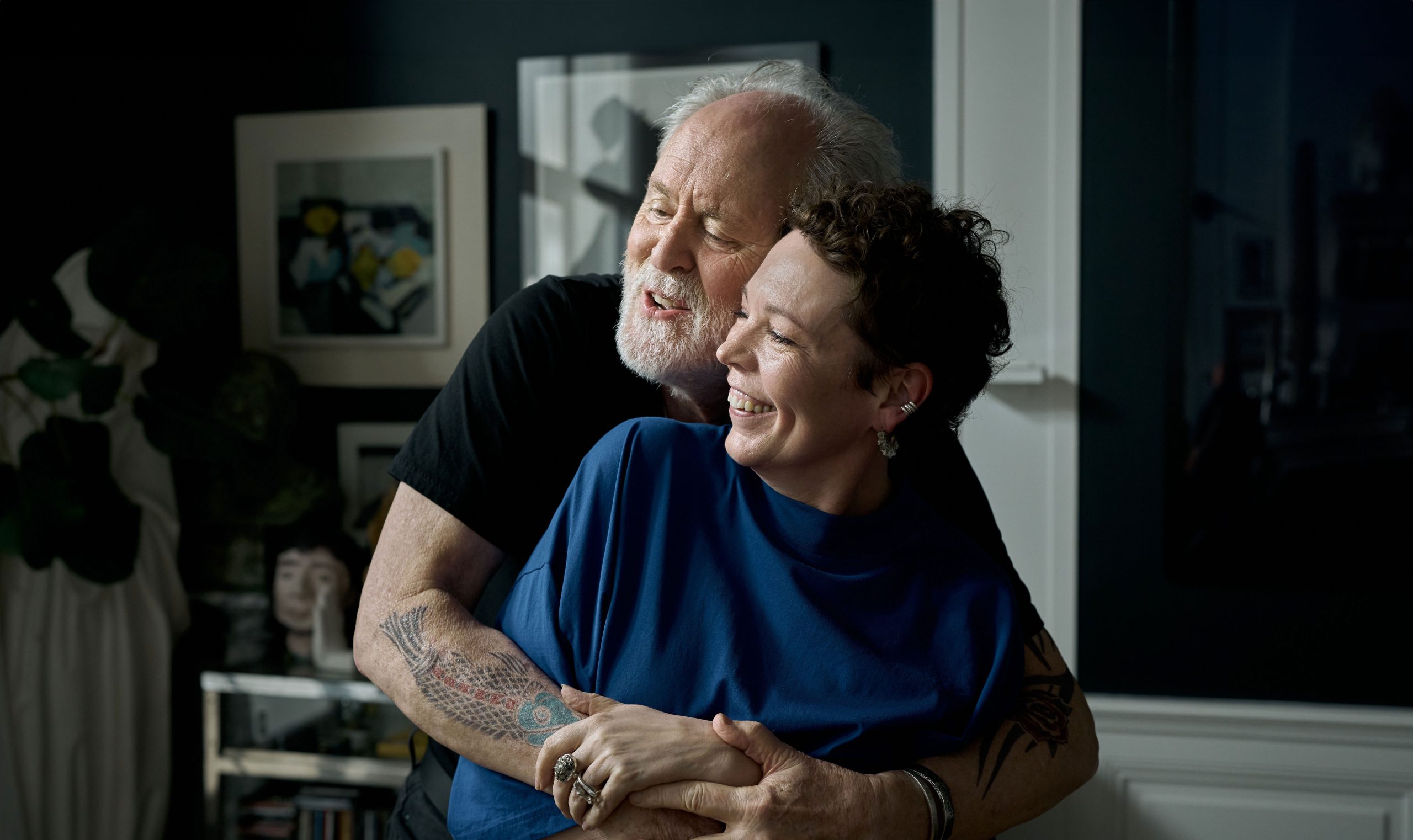
Jimpa follows Hannah (Olivia Coleman), an Australian filmmaker, who is in the process of casting a film about her father, Jim (John Lithgow), and his life’s journey as a closeted gay man who marries, has two children, comes out, lives with his wife as they navigate an open marriage and supportive co-parenting until she’s 13, when he moves to Amsterdam and lives the rest of his life. Hannah’s focus of the film is to showcase how her parents navigated their complicated situation and showed kindness over conflict. It’s a film “without conflict.”
At the same time, Hannah and her husband Harry (Daniel Henshall) are traveling to Amsterdam to visit Jim, bringing along their nonbinary child Frances (Aud Mason-Hyde). Frances loves their “Jimpa” (the name he chose for himself when Frances was born because being called “Grandpa” felt too old) and has been struggling to find community and acceptance within their small Australian town and school. Frances, who is only 16, has decided that they want to stay in Amsterdam with Jimpa and spend their last year of high school in a place that offers more adventures, excitement and acceptance. Harry doesn’t want to allow that (Frances is still a minor) and Hannah is hesitant. Jimpa, while being a dazzling force of nature, is someone who takes up all the oxygen in the room and always lets down the people around him. Hannah has been struggling with this since she was a child, though Jim is her hero and struggles to ever say anything less than praise about him.
Jim has spent his life since coming out as an LGBTQ advocate and activist. He protested, marched and litigated for equality and acceptance. He sat at the bedsides of gay men as they died of AIDS. He has spent his life living as HIV positive.
Frances is in awe of Jimpa and his group of gay friends. They offer a window into the past and a promise of a future of acceptance, love, and celebration. But as Frances spends time with them, Jimpa begins to mock their gender identity, question their sexuality and go on long rants against anyone who isn’t binary: gay or lesbian. Exhausted by having to constantly justify their existence, Frances turns to Hannah for support, who eschews taking a stand or making a choice. Hannah is nothing if not a complete people pleaser, always sacrificing her comfort and point of view to try and make others feel good and never have to face consequences for their actions.
Jimpa is a complicated and complex character. He, at once, champions the rights of marginalized groups, gives of himself to everyone around him, and radiates love while also being narrow-minded about others’ experiences that don’t mirror his own, uses people around him for his own emotional needs before moving on or casting them aside, and looks for every opportunity to loudly declare his views and how right they are under the guise of “having a debate.”
In fact, we open the movie with Hannah talking about how Jimpa got his name—choosing a new name because the one society prescribed him didn’t fit—and yet he struggles, “provocatively,” to believe others can do the same when their gender, identity or name at birth don’t fit how they feel.
As the movie goes on and background conflicts simmer and begin to boil, everytime there might be a chance to confront the issues everyone is dealing with, the movie consciously decides to pivot and avoid that confrontation. Hannah is making a movie about a story without conflict, and Jimpa attempts to tell a story that acknowledges the conflict inherent in the story without ever addressing it. The choice to do so is an authorial one and makes for an interesting experience, if somewhat frustrating as it sidesteps emotional catharsis and character change.
Jimpa is deeply personal and autobiographical. Sophie Hyde, the Director/Co-writer, based the story on her father Jim and his relationship with her and her child, Aud (who plays Frances in the film). The real Jim passed away six years ago, when Aud was just beginning to explore their identity and sexuality. So the conversations between the two, in the film, didn’t happen in real life, but by imagining what they could have been, Sophie found the story:

“My child Aud (they/them) seeks out LGBTQIA+ elders. They look up to my dad even in his death. Just at the end of my dad’s life, my child was finding ways to articulate their own experience of sexuality and gender. They came out as queer, and then nonbinary. They began to seek out others who would understand them in ways that we might try but not always fulfill on, and they started to stand up for and support others who didn’t have families that would be open to do the same.
But what they didn’t get to do, because my dad’s death at 68 made it impossible, was discuss fully with him what it means to be LGBTQIA+, what it means to put yourself on the frontline of an ideology war that is arguing about your very right to be, to self-identify, to take up space. They didn’t get to debate with him the changing language for identity or find out about the AIDS-crisis-years from his personal point of view. They didn’t get to share with him their feelings or hear about his. And so I imagined this conversation that they never had the chance to have.
And that conversation led to this film.”
The movie presents an interesting conversation with itself in context of its autobiographical nature. We’re watching Hannah as she’s presenting a fictionalized version of Sophie’s life and relationship with her father and child. And Hannah is incapable of taking a stand, of voicing an opinion, of pushing back against Jim’s hurtful behavior. I spent the movie wishing she would stand up against her father in defense of her child. And she never does. And yet, knowing this story is being told by someone who experienced some version of these events, it becomes a way in which the director is taking a stand, of voicing an opinion, of pushing back against Jim.
Olivia Coleman does a masterful job of playing a character who outwardly admits to little emotion besides smiling and trying to keep everyone happy, all while exuding this simmering rage, frustration, desperation, fear, love, and desire that lives just beneath the surface of her skin. John Lithgow perfectly encapsulates Jim—someone who is charming, warm, funny, cocky, condescending, and self-absorbed at the same time. Each person contains multitudes, and our two leads do an incredible job portraying those complex and often contradictory aspects of humanity.
Aud Mason-Hyde brings a quiet serenity to the film, doing an incredible job of showing the apathy and disaffection of Gen Z while giving us a powerful sense of the suppressed emotions they’re feeling. They’re quiet and reserved and keep things close, but have a fierceness in their eyes.
I especially want to call out the character of Harry and Daniel Henshall’s performance. Harry stands as an island in the movie—a character who knows what he wants, voices an opinion, and defends his beliefs. There are several quick, little moments in the film where Jimpa misgenders Frances and Harry, from often across the room or apartment yells out “THEY!” to remind Jimpa who his child is and that his child deserves to be respected and recognized. It’s a small moment that happens a few times, but each time it made me cry and made me wonder what it would be like to have a parent who fiercely understands and defends you.
Coming in at 130 minutes, Jimpa could use a stronger edit, tightening up the scenes and sharpening the focus between the three leads. It’s frustrating at times and even if it purposefully makes choices that mute the emotionality of the story, it’s still so personally and beautifully crafted, it left me thinking and talking about it for days.
Read more of our ongoing Sundance coverage of the festival and enjoy all of our arts and culture coverage. And while you’re here, subscribe to our print magazine and get six copies a year of Salt Lake magazine.