In her landmark 1987 book Borderlands/La Frontera: The New Mestiza, Gloria Anzaldúa wrote: “For men like my father, being ‘macho’ meant being strong enough to protect and support my mother and us, yet being able to show love…. We need a new masculinity and the new man needs a movement.”
Anzaldúa was making a distinction between what she presents as a traditional Mexican conception of masculine strength that is both confident and respectful of others, particularly women, and a more contemporary performance of masculinity, or machismo (which Anzaldúa calls an Anglo invention), that takes sadistic pleasure in oppressing others, screwing them and screwing them up, to mask the macho’s deep self-hatred and sense of shame. Anzaldúa doesn’t deny that the latter, more violent version of machismo (one that doesn’t preclude the macho imposing himself sexually on another man without raising questions about his own masculinity) is real; rather she suggests that it is inauthentic to Mexican culture, an imposition by external forces, and that another way, like her father’s, one that also values the vigorous potentialities of queerness, already exists and deserves elevation. Efraín Mojica and Rebecca Zweig’s Jaripeo, which premiered at the Sundance Film Festival on Jan. 25, guides us into one possible iteration of this already existing alternative, pulsing at the heart of what we might expect to be one of the most macho environments in Mexico: the rural rodeo.
To U.S. audiences, many elements of the Michoacán, Mexico jaripeos will be familiar: bucking bulls whipping riders seeking glory around the ring, huge belt buckles, burly cowboys chugging beer and tequila, the man in a dress with exaggerated makeup to entertain the crowd and to distract an angry animal. But, the man in a dress does more than perform as a clown in this film—he’s a beloved fixture in the community, it seems, and his embraces are acts of feminine affection every man in the crowd encourages and accepts at face value, without fear.
If there’s any secrecy around queer encounters at the jaripeo, as the rodeo descends into a bass-thumping, strobe-lit bacchanale, it resides only in the shared silence about what happens out there when men go off into the dark together to smoke or take a piss. Perhaps the silence of the next day is meant to spare those who might be scandalized by the behavior or to protect the macho veneer of the men who’ve hooked up. However, knowledge of regularly happening hookups among men seems generally known, and openly gay men report feeling supported by their families and the community. This sense of equanimity seems rather remarkable, but maybe we still wonder about the silence and what it means in a community that, despite what it knows, nevertheless projects a Catholic conservatism in its rituals and demands of boys and men to “act like a man,” particularly when positioning himself to get on that bull.
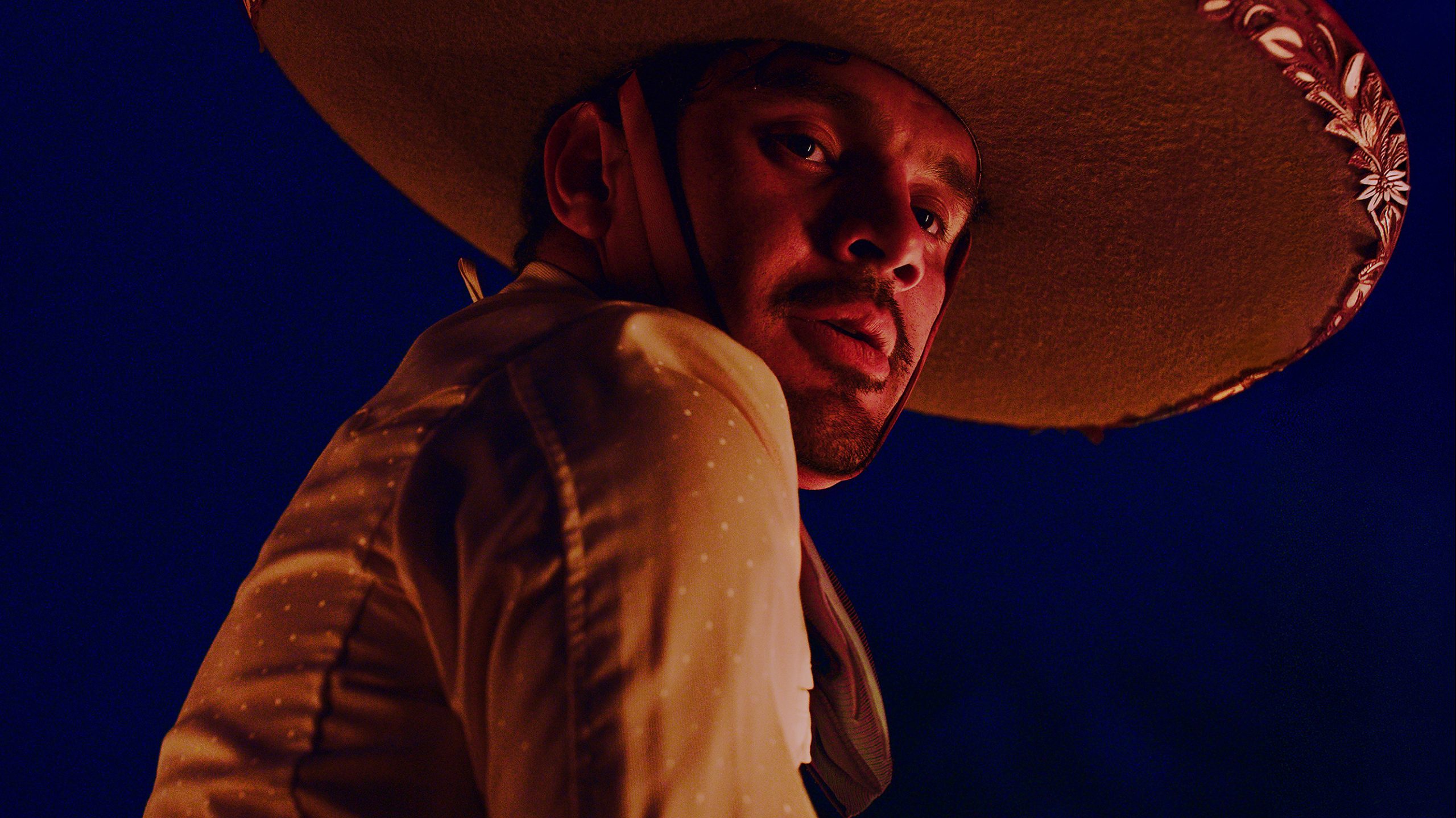
A central tension of Jaripeo lies in Mojica’s (who also serves as a guide through the viewer’s journey) concern over whether he should finally come out to his parents, which means openly acknowledging something he’s been told they’ve all already known for some time. My favorite sequence in the film concerns this and much more. Really, it’s just a conversation between Mojica and one of the film’s other principals, Noé Margarito Zaragoza, a young, macho cowboy, who says he has no friends, just acquaintances, and who’s come out to his own parents and reports that everyone accepts him, no problem—so long as they don’t discuss details. As he advises Mojica to make his own revelation, assuring him a similar reception, the two banter in the late-afternoon light about Noé’s preferences in men, the meaning of macho, and their shared past. It’s a very natural, honest, and amusing exchange, harshly provocative by turns, but also affectionate and flirtatious. It’s a testament to the trust between the two men, as well as the trust they share with Zweig, who’s standing there silently filming them the whole time. It’s a collective act of support that also reveals the scale of risk the two men share, but that seems like nothing in the moment. Maybe it’s also indicative of the kind of intimacies that are shared out there in the dark, that are understood in the broader silence, a quality of care that transcends conventional boundaries and, ultimately, makes the whole community stronger.
For all its philosophy, which is profound and thoughtful, particularly from Mojica, Jaripeo is also a sensual extravaganza, a real banger whose creative editing, mix of film stocks, and inventive lighting and audio design bring the colorful, chaotic, and deeply inebriated world of the rodeo right into the theater. It’s an experience not to be missed.
Jaripeo is screening at the Sundance Film Festival until Feb. 1.
Read more from Michael Mejia here.
Read more of our Sundance festival stories and enjoy all of our Arts and Culture coverage. And while you’re here, subscribe to our print magazine and get 6 copies of Salt Lake magazine each year.