As a registered dietician nutritionist, Katie Davis works with children and families who struggle with eating disorders, following diets and proper nutrition. As a parent, she understands the moment of bliss that comes from crafting a quick, easy, inexpensive lunch that kids will want to eat. That’s why we asked for her advice on packing lunches for the new school year. Cutting crusts is still up for debate.
To Pack or Not to Pack
When it comes to packing lunches or relying on school-provided lunches, Davis votes for whatever is easiest and financially practical for families.
“The school lunch program is a wonderful program,” she says, pointing to the fact that it provides food (often breakfast and lunch) to children who may not have access to food otherwise. Even when parents can afford to send a lunch, though, she says it’s still a good option for many families. “My kids eat school lunch, too,” she says.
On the other hand, maybe your child would prefer lunch from home, your child has an allergy or you’d like to know exactly what goes in their lunch.
“Whatever works best for families,” she says.
What to Put in Lunch
Davis follows the philosophy of dietician Ellyn Satter, who discusses the division of responsibility in feeding children. Davis says parents are responsible for what, when and where kids eat, and kids are responsible for whether and how much they eat.
When taking on your responsibility, packing the lunch, she says to consider foods your kids will want to eat that will provide them with the physical and mental energy to take on the school day. Her recommendations for packing lunches:
- Change it up now and then. “Kids, and adults too, get tired of eating the exact same thing for an entire school year,” she says.
- When packing something new, include something else that’s familiar.
- Pack enough food to actually make a whole meal.
- Include grain products; meat, meat alternatives or something else to provide protein; fruits or vegetables; and something sweet.
- If sending meals that would typically be kept refrigerated, invest in an insulated container and a freezer pack.
Making It Easy
Davis is all for prepackaged items, including sandwiches and vegetables, to make prepping a school lunch easy. “Trader Joe’s has a lot of really great options of pre-prepared little meals and wraps and things like that if it’s easier for parents,” she says.
She also suggests buying containers for soup, noodles, rice and leftovers.
Making It Cheap
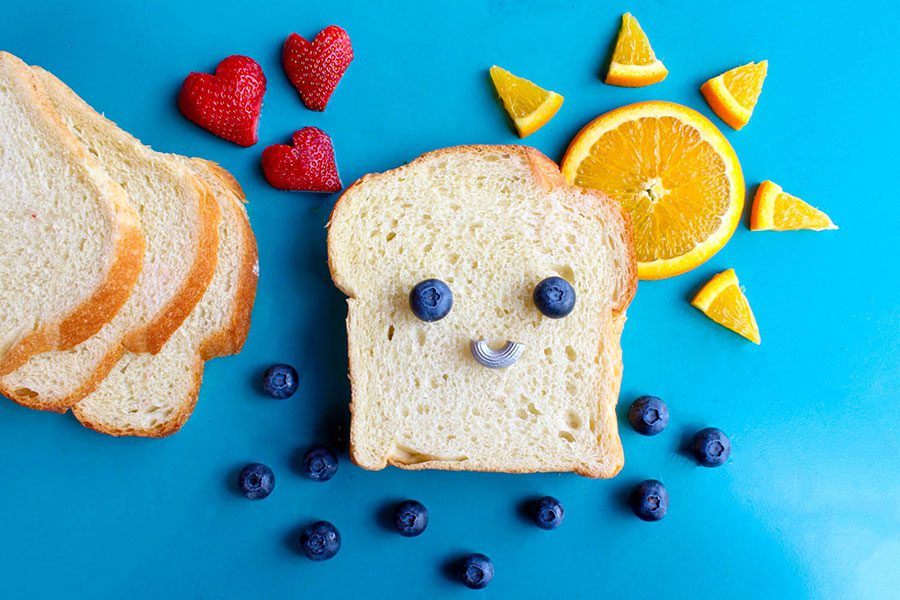
 A loaf of bread can go a long way.
Davis says parents and kids can work together to make sandwiches for an entire week of lunches, and keep them in the fridge.
Likewise, she says parents can save money while packing lunches by buying cans of soup and vegetables and setting aside a portion for each day of the week. Buying a gallon of milk or chocolate milk, and offering a portion each day, can also be a lot cheaper than buying individual bottles.
What’s Not Allowed?
Davis doesn’t single out any particular food to always include or always avoid.
She says parents may be able to control what foods are “forbidden” when kids are young, but eventually they’ll be able to go out and buy any food they want.
Instead she says to focus on having a variety of foods that offer carbohydrates, proteins and fat, and to base it on what kids like to eat.
Should Your Kid Diet?
 “Children should just be allowed to grow up in the bodies that they have,” Davis says. “Any type of dieting or restrictive-type behaviors are a huge, huge risk factor for eating disorders; and I’ve seen that over and over again in my practice.”
Davis follows the Health at Every Size philosophy, which states you can’t judge a person’s health based on the size of their body.
“There is so much weight stigmatization, especially for people who are in larger bodies,” she says. “Terms like ‘War on Childhood Obesity,’ make it sound like the child has done something wrong, and they haven’t.”
When a parent has weight or nutrition concerns regarding their children, she says dietitians like her can offer tips for helping without hurting.
Free Will
Davis believes kids are born with the innate ability to know when to eat, and when to stop. “As we get older, we kind of get taken away from that ability,” she says.
That’s why she supports allowing children to have a say in how much and whether they eat. “Never try to force a child to eat a certain number of bites, or eat a certain food,” she says. “That kind of takes them away from that innate ability to self-regulate and teaches kids they can’t be trusted to know what their body needs.”
Katie Davis is a registered dietician nutritionist who works for Positive Nutrition.
Read more of our family content in our Kid-friendly blog roll.