
I have a little confession. I love looking in other people’s fridges. Not in a judgmental, side-eyeing way. There’s no silent tallying of expired condiments or half-used products. I just like looking in a deeply curious, food-geekery kind of way.
A fridge can tell you so much. It’s a snapshot of how someone lives and eats. If you were to look in my fridge, for example, you would always find at least one perfect lemon and a series of desiccated limes. And you would find 15 bottles of hot sauce because I can’t seem to resist buying new ones when I travel.
When I look in someone else’s fridge, what I’m really searching for is insight. What are they keeping on hand that I’m not? What is their back-pocket ingredient, the thing that quietly elevates everything else? If there’s one group of people who have cracked the code on stocking a fridge, it’s chefs — the people who think in flavor, build meals from instinct, and know that the difference between good and great is often a splash of cream or a dash of fish sauce.
So this isn’t “Rate My Fridge” in the internet sense. There’s no scoring, no shaming, and no gold stars for color-coded drawers and perfect labels. This is a peek behind the curtain at some of our local culinary stars. A chance to open the door, take a little inventory, and borrow from their culinary brilliance. Because if a restaurateur never runs out of an ingredient, there’s probably a reason — and I want it in my fridge, too.
These Restaurant Owners’ Home Fridge Is a Little Bare … Until You Look Deeper
Angie and Andrew Fuller, Oquirrh
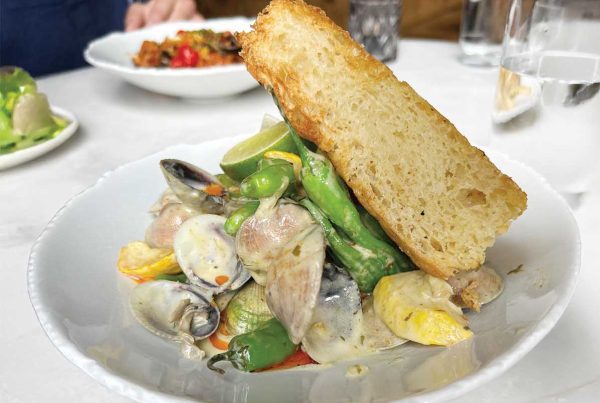
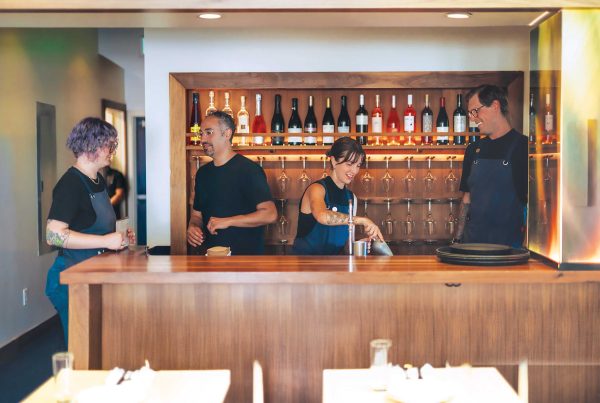
There’s something wonderfully human about opening a chef’s fridge and realizing that it looks nothing like you expected. No rows of labeled containers, no perfectly prepped mise en place, no culinary perfection. While the walk-in cooler at Oquirrh — one of Salt Lake City’s award-winning culinary gems — is pristine, owners Angie and Andrew’s home fridge feels like it supports a life built almost entirely elsewhere. When you live at your restaurant, your fridge at home is practical and utilitarian.
“There’s no structure,” Angie says without hesitation. Andrew shrugs it off just as easily. “I don’t keep enough stuff in there to really worry about organizing it. I can always see what’s there.”
The Fullers’ restaurant is within walking distance, and as they spend their days cooking professionally, their home fridge isn’t quite the center of their food world. It becomes peripheral. It’s functional, occasionally useful, and stocked with the quick accoutrements of quick meals that the couple may or may not eat standing up.

“I don’t have anything weird in my fridge at home because I just come down to the restaurant,” Andrew explains. The proximity makes a difference. It means fewer groceries, ingredients, and moments spent standing in the refrigerator doorway, wondering what to make. If Angie and Andrew want to cook seriously, they go to the restaurant. If they want good food, they already know where it is. They share stories of late-night steaks and movies on days the restaurant is closed, the two of them cozy in their home away from home.
Still, small, telling details reveal how they actually eat. And surprise, surprise — they are dead opposites.
For Andrew, the one thing that is never missing from the home fridge is Sanpellegrino. “That’s my after-work beer, I suppose, because I don’t drink,” he says. Perhaps it’s less about hydration and more about ritual, a reset after a long, hot day in the kitchen.
Andrew is all about ease. “I need something I like that I don’t have to think about,” he says. “I just put it in a pan, throw it in the oven, and it’s ready to go.” He uses all his creative energy at work, and at home, that means frozen lasagna, chicken fingers, and pizza.
Angie’s approach leans fresher but no less practical. “I always have salad in there,” she says. “Yogurt and fresh fruit.” Her go-to solution? “Marinated chicken from Harman’s ready to be baked and layered into whatever else is on hand.” Again, the “I don’t have to think about it” factor is strong.
Even the Fullers’ flavor profiles and philosophies are stripped down to the essentials. Andrew doesn’t hesitate: “I always have ranch, Tabasco, and ketchup on hand.” No hierarchy, no fuss. Angie keeps olive oil, balsamic vinegar, and salt and pepper handy. She admits, “I’m not a huge condiment person because I feel like food has its flavor and that flavor should show through.” She notes one exception: “Soy sauce. That’s my condiment.”
Tidbits of nostalgia are tucked into the edges of the fridge and freezer. Andrew is famous for his pot pie at Oquirrh, inspired by childhood memories. You know the ones: frozen and ready to be reheated, a staple of his youth. Andrew wanted to make a version for the restaurant that felt like a pot pie was always meant to be.
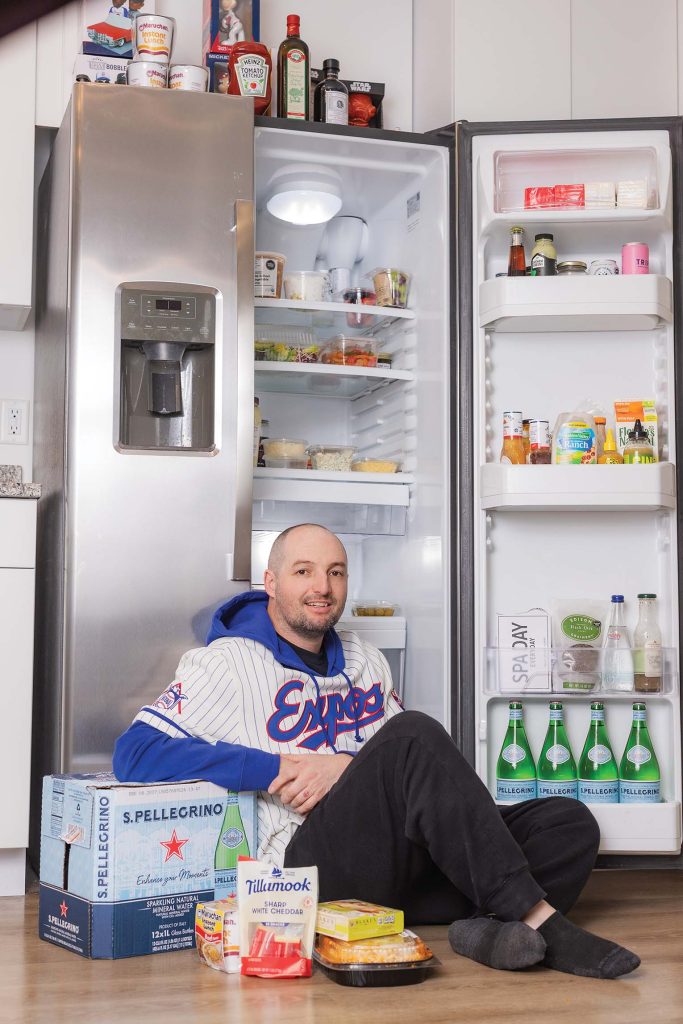
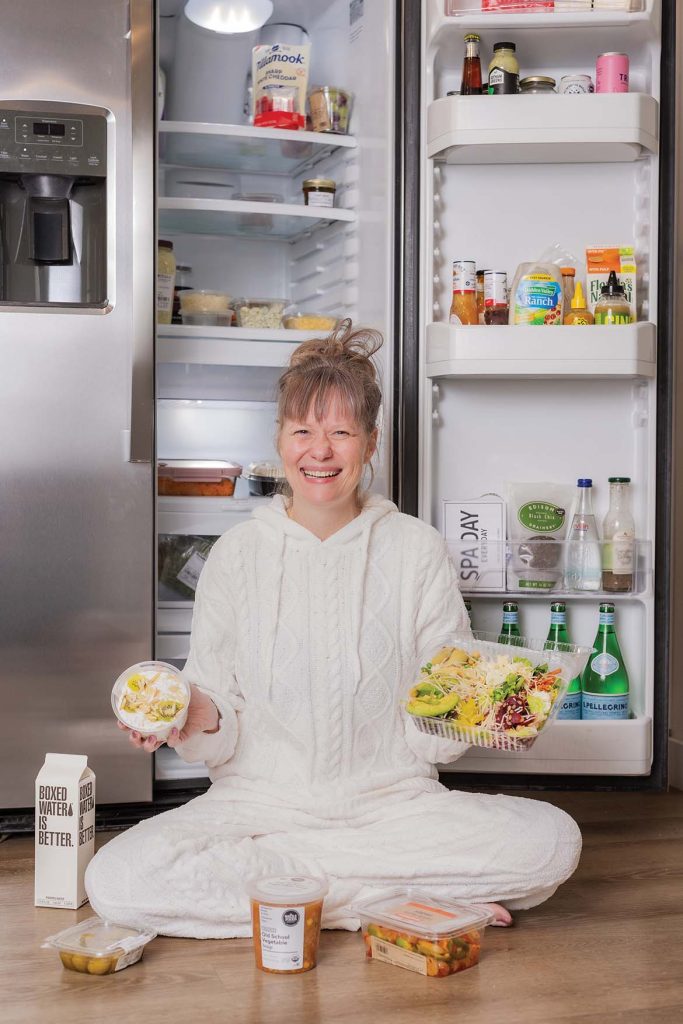
and minimal prep requirements. Photo by Melissa Majchrzak Photography.
In the restaurant, you might see the Fullers snacking on Cup Noodles, eaten unironically. Andrew’s will include a mound of cheddar cheese. “We’ve had guests see us eat a cup of noodles … and they’ll be like, you’re eating a cup of noodles?” Angie says, “And I’m like, ‘Yeah, we’re human.’”
Then there’s the reality of the space. The couple’s home kitchen simply isn’t built for professional cooking. “If you’re just getting a good sear on a steak, the fire alarm is going off, no questions asked,” Andrew says.
So, as any good restaurateur would, they adapt. They keep things simple. They don’t force it. And when they want something special, they decide in the moment: crab, lobster, a thick ribeye, blue cheese, a pan sauce made on instinct.
I ask them what they would do if someone were to show up at their home unannounced, expecting a meal.
“I’d have to go to the grocery store,” Angie laughs.
I love them for their honesty. For people who cook and run a restaurant for a living, the home fridge doesn’t need to prove anything. It doesn’t need to impress; it just needs to exist.
This brings us to our final question: the rating.
“4,” Andrew says. “4.4,” Angie adds — the perfect rating for a fridge that does exactly what it needs to, nothing more.
Visit Oquirrh:
368 E. 100 South, SLC
oquirrhslc.com
Find more of our lifestyle coverage. And while you’re here, subscribe to Salt Lake magazine to receive six beautiful print issues a year!