
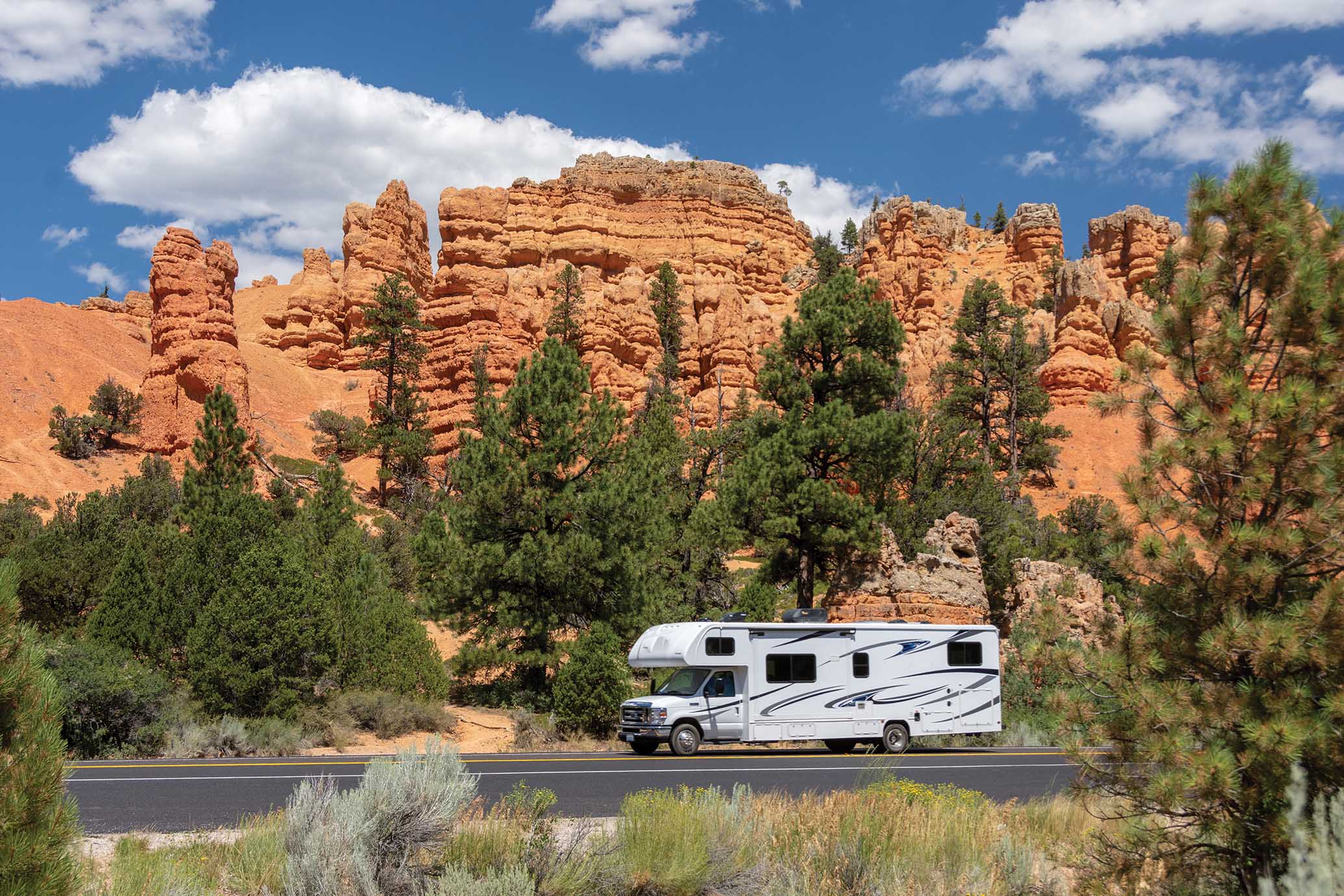
Summer road trips to Southern Utah have long come with a rite of passage: inching an RV through the cool darkness of the Zion-Mount Carmel Tunnel, white knuckles on the wheel, sandstone glowing at the exit. This year, that ritual has come to an end.
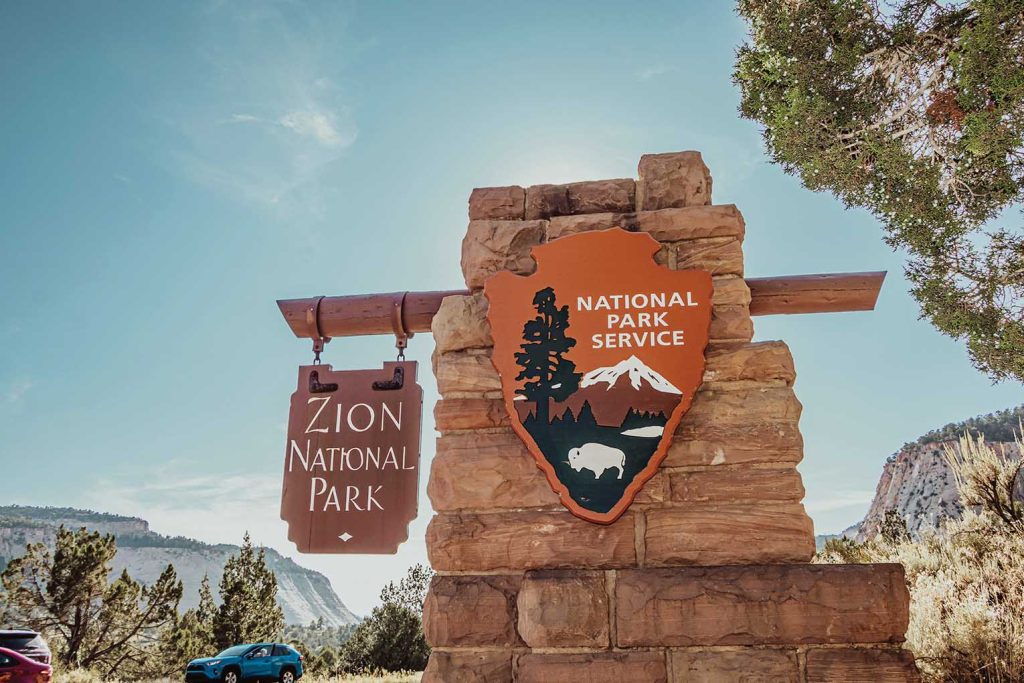
In June, Zion, the nation’s second-most popular national park, began enforcing strict size and weight limits on the Zion-Mount Carmel Highway — effectively banning many large RVs, trailers, and tour buses from one of the park’s most iconic routes.
“As locals, we have known these changes would be coming and can see the need,” says Andrea Goulding, front desk manager at Zion Ponderosa Ranch Resort near the park’s east entrance. “Personally, I avoid driving through the park because of the backup at the tunnel.”
While many applaud the change, for Utah’s tourism economy — and for the road-tripping culture that defines a Western summer — the shift is more than a policy tweak; it’s a rerouting of expectations for guests.
A Scenic Drive Meets Modern Reality
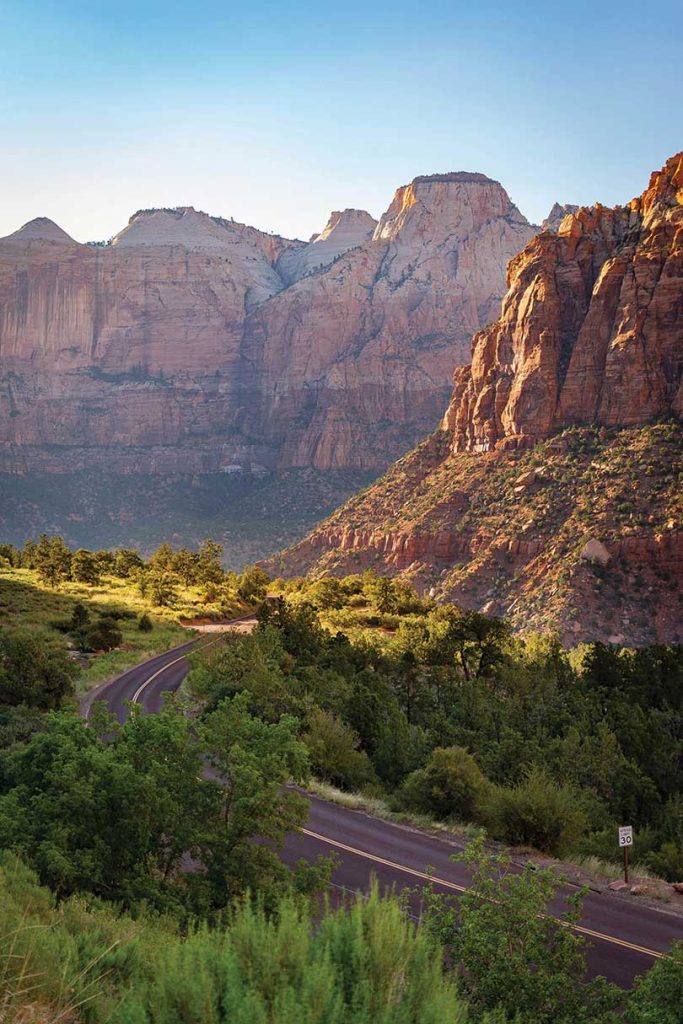
Completed in 1930, the Zion-Mount Carmel Highway was carved through sandstone for a different kind of traveler. Cars were smaller, lighter, and far less common. Today’s RVs, often exceeding 35 feet and topped with gear, strain the limits of tight switchbacks and the narrow tunnel passage.
The new rules prohibit any vehicle exceeding 35 feet and 9 inches in length, 7 feet and 10 inches in width, 11 feet and 4 inches in height, or 50,000 pounds from traveling between Canyon Junction and the park’s east entrance. While many Sprinter-style vans still qualify, a sizable portion of RVs and commercial tour buses does not.
Previously, oversize vehicles could pass through the tunnel with a paid permit and ranger-controlled one-way traffic — a system familiar to generations of Utah families and out-of-state visitors. That workaround is now gone.
The RV Detour Era Begins
The change immediately affects travelers moving between Bryce Canyon National Park, the Grand Staircase region, and Zion. Oversize vehicles can no longer take the direct, scenic route through the park. Instead, drivers must loop around Zion’s perimeter, adding 30 to 90 minutes, depending on traffic and route.
For some, it’s a minor inconvenience. For others, it reshapes an entire itinerary.
Gateway communities are watching closely. Springdale, which sits just outside of Zion’s south entrance, has long benefited from travelers passing through the park en route to other destinations. While RVs can still enter from the south, they can no longer cross the park east to west, potentially reducing spontaneous stops for meals, fuel, and overnight stays.
“It will probably affect our numbers,” says Shaun Sampson, director of operations at Zion Canyon Campground in Springdale. “But I could argue both sides. Given the demands on the park, it’s probably necessary.” He adds a note of caution: “My biggest worry is that the road restriction, combined with new fees for international visitors, may be the tipping point for people deciding whether to plan a trip to Zion.”
Tour operators are certainly recalibrating. Long-standing routes that once flowed seamlessly between parks now require careful reworking. Cedar City-based Southwest Adventure Tours, for example, has rethought the logistics of its popular Grand Circle itineraries.
“The question was how to get them there without blowing up the schedule,” the company wrote in a recent online update. Their solution: coordinating shuttle transfers through the park while tour buses drive around to meet guests on the other side. The adjustment adds cost but also reveals an unexpected upside.
“Smaller vehicles often make for a better ride through Zion,” the company noted. “Guests have clearer views, guides can point out landmarks more easily, and stops feel less rushed.”
Zion Ponderosa Ranch views the change as an opportunity. Though fewer RVs may pass through their town of Orderville after a drive through Zion, managers hope to shift the perception of the resort from a waypoint to a destination. Expanded RV services, cabins, and on-site activities are part of that strategy.
“Our resort has so many activities that you can plan for a full day just here,” Goulding says. “We’re also just an hour and a half from Bryce Canyon, so guests can stay here and split their time.”
A Cultural Shift on Wheels
For Utahns, the change underscores a familiar tension between access and preservation. Zion is more than a destination — it’s a shared backdrop for family trips, youth outings, and cross-country adventures. But as it faces long-standing safety concerns, severe congestion, and narrow tunnels that require an escort service for oversize vehicles, it’s clear Zion has outgrown its road.
Now, the experience will look different. Smaller vehicles will move more freely, and congestion may ease. But the image of oversize RVs threading the canyon — equal parts daring and delaying — will begin to fade.
The road remains etched into sandstone as it has been for nearly a century. But the way visitors travel it — especially on four wheels and a full tank — has entered a new chapter.
Paying the Price of Popularity
At 11 U.S. national parks, including Zion National Park and Bryce Canyon National Park, international visitors (16+) now face a $100 per-person surcharge on top of standard $20-$35 entry fees. Set by the National Park Service, the move aims to offset crowding and rising maintenance costs at two of Utah’s busiest parks.
Zion-Mount Carmel Highway: New Limits
On the Zion-Mount Carmel Highway, oversize vehicles will no longer be allowed:
- Max length: 35 feet, 9 inches
- Max width: 7 feet, 10 inches
- Max height: 11 feet, 4 inches
Over the limit? No access — escort permits eliminated under National Park Service rules.
Discover more Outdoor inspiration and find all our Adventure coverage. And while you’re here, why not subscribe and get six annual issues of Salt Lake magazine’s curated guide to the best of life in Utah?