Utah’s primary elections are here — and election officials are urging Utahns to be aware of important information before they cast their ballots, whether they plan to do so in person at a polling place or with a by-mail ballot.
If you want to vote in person, polls are open from 7 a.m. to 8 p.m., and if you’re not handing in a by-mail ballot, you’ll need to bring a valid form of identification, like a state ID or driver license, to cast your vote.
If you’re not already registered to vote, you can still cast a provisional ballot — but you’ll need to show two acceptable forms of ID: one that verifies your identity and one that shows proof of residence. Here’s a list of acceptable forms of ID.
If you plan to use a by-mail ballot that you received in the mail because you’re already a registered voter, you don’t need to bring an ID. But you do need to make sure you write the last four digits of your Social Security number, driver’s license or state ID on your ballot, as required under a law the Utah Legislature passed last year.
As of Monday, the statewide turnout for the primaries sat at about 19.4%, according to state Director of Elections Ryan Cowley, which he described as “pretty light” turnout compared to other elections, “but then we typically do get a majority of ballots the day before and the day of Election Day.”
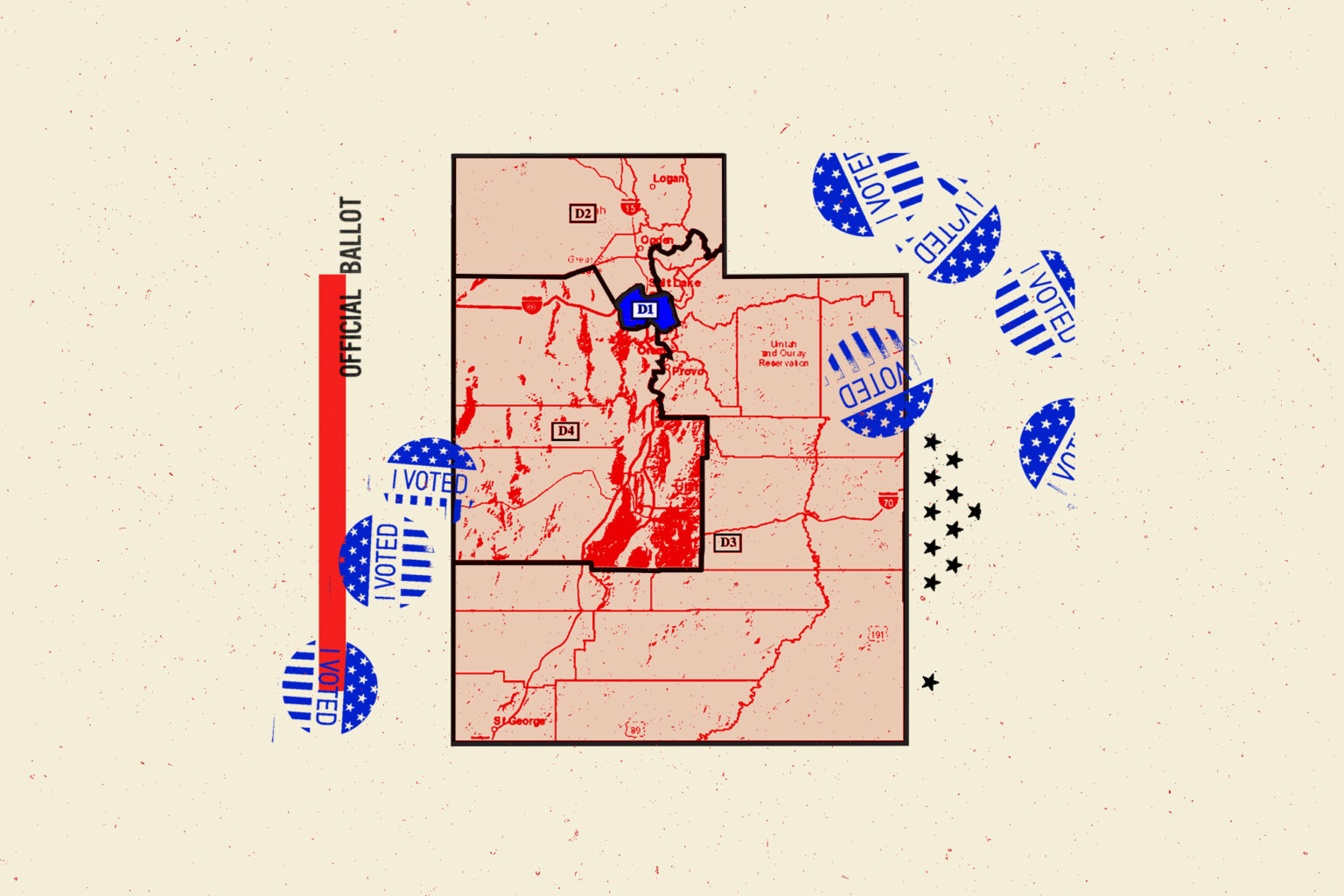
Primary elections usually have lower turnouts compared to November general elections, especially in presidential election years. However, Salt Lake County Clerk Lannie Chapman said turnout there — where a high-interest congressional primary will decide which Democrat will advance to the general election for the new majority-blue 1st Congressional District — is higher.
As of Monday, Chapman said turnout in Salt Lake County was at about 26%, which she said is trending up compared to the 2024 primary. Chapman said interest in the Democratic congressional primary is likely driving much of that interest.
“This is the first time historically … that we’ve had one congressional district race totally within Salt Lake County,” she said. “There’s a lot of interest, and I’m seeing a lot of participation, and we love it. We love making sure that people have a meaningful opportunity to have their voices heard.”
Aside from educating yourself on the primary races before casting your vote (Utah News Dispatch has a handy voter guide to help inform your choices), here’s the important information you need to know:
1. It’s too late to put your ballot in the mail
If you plan to use a by-mail ballot, state and local election officials are warning Utahns it’s too late to send your ballot back in the mail under a new law that now requires ballots to be in the hands of clerks by 8 p.m. on Election Day.
“Most important and new to many of our voters is the change in when those ballots need to be received by,” Chapman said Monday.
Chapman noted the omnibus election law passed by the Legislature last year also changed Utah “from a postmark state to a ballot-in-hand state,” meaning regardless of when a ballot was mailed and postmarked, if it’s not received by county election officials by 8 p.m. on Election Day, it’s too late and will be invalid.
Previously, Utah law allowed by-mail ballots postmarked on or before Election Day to be counted, even if they were received by county clerks after the election.
To make sure your vote counts, Chapman said to make sure to either hand in your ballot at a polling place in person, or drop your ballot in a designated voter drop box.
“So as long as they’re turned in by 8 p.m. tomorrow, we’ll be able to continue to process those,” Chapman said.
2. How to find a polling place or drop box
The best way to find a polling place or ballot drop box is by visiting the state’s election website, vote.utah.gov, or by visiting your respective county clerk’s office website.
Salt Lake County, for example, will have 19 vote centers open throughout the day on Tuesday, until 8 p.m. Here’s a list of all their locations, according to the county clerk’s website. And here’s a list of all 29 of the by-mail ballot drop box locations scattered across the county.
The state’s election website, vote.utah.gov, also has other voter resources, including candidate bios, a way to look up your voter registration status and what party you’re affiliated with, and more, Cowley said.
3. It’s not too late to vote in the open Democratic primary
The rules around what primary elections you can weigh in on Utah depends on your voter affiliation and what parties do or don’t allow.
The Utah Democratic Party, for example, allows open primaries — meaning any registered voter, regardless of party affiliation, can request a Democratic ballot to vote in the party’s primaries.
The Utah Republican Party, however, holds a closed primary — meaning only registered Republicans can participate. If you’re already affiliated with a different party, it’s too late to register as a Republican (that deadline came and went April 1). However, if you’re unaffiliated, you can register as a Republican in person at a polling place on Election Day and get a ballot.
As for the Democratic primary, it’s also too late to request a by-mail ballot — however, you can still request a Democratic ballot if you vote in-person at a vote center, regardless of your party affiliation.
With the high-profile Democratic congressional primary likely driving interest, thousands of people in Salt Lake County have taken advantage of the Democratic Party’s open primary.
As of Monday, about 7,500 Utahns had requested Democratic ballots across Salt Lake County ahead of Tuesday’s primary, Chapman said. That’s compared to about 103,488 ballots that were sent to registered Democrats eligible to vote in the 1st Congressional District race.
“It’s huge compared to 2022 numbers,” she said. That year, the county only received about 1,300 requests for a Democratic ballot.
Chapman emphasized that voters only get “one bite at the apple.” If you’ve already cast a ballot in the Republican primary, for example, you won’t be allowed to participate in the Democratic party.
“You can’t vote two different ballots in the same election,” she said.
4. How to make sure your vote gets counted
After they cast their votes, Utahns can sign up to keep tabs on their ballot status at trackmyballot.utah.gov. There, voters can sign up to receive notifications when their mail-in ballot is sent and counted.
If voters suspect an issue or have a question about the status of their ballots, clerks also say not to hesitate to call their offices.
“If people have questions, feel free to give my office a call,” Chapman said. “We have a ton of staff here that are busy answering emails and phone calls. We’re always happy to help.”
If election staff do run into issues verifying ballot signatures, Chapman said they will send out notifications to voters to urge them to help cure their ballot so they can be counted.
“You would definitely hear from us if we were not able to count your ballot, if there was something wrong with that,” she said.
5. Where preliminary results will be posted?
Unofficial election night results will be posted on vote.utah.gov and on county clerks websites.
Keep in mind, however, that results won’t be official until after the canvass period, when election officials work to verify results before they’re finalized. Counties have until 14 days after the election to canvass. The statewide canvass deadline is July 20.
This article was originally published by Utah News Dispatch. Read the entire story here.
See more stories like this and all of our City Watch coverage. And while you’re here, why not subscribe and get six annual issues of Salt Lake magazine’s curated guide to the best of life in Utah?