

Why does he want us to be lazy? My husband and I were diving into the same argument we’d had every Saturday afternoon for the last few weeks. He says: “You need to take a break! You work 40-plus hours during the week and then you come home and work these other jobs in the evenings and on the weekend.”
I say: “Well. I need to. I can’t be lazy.” My husband is in school full-time and my one full-time job wasn’t paying enough for me to feel okay about unwinding on the weekends. I had fallen into the attractive clutches of the “gig economy.” The promise is “if you just work a little more, you can have the money you need to feel secure.” With all of the companies today that need a part-time, build-your-own-schedule labor force, the options to bring in a little extra income are seemingly limitless. With little effort, I found myself with a full-time writing job and hours scheduled as a worker on DoorDash, Shipt, Instacart, Upwork and Rev Transcription.
My situation is hardly uncommon. For Utahns across the state, side hustles and “gigs” are becoming a new norm. It seems few people have just one full-time job anymore. What is going on? And how did conversations about work/life balance turn into a never-ending mobius strip?
The Side Hustle
The gig economy has always existed but in the past decade the recently coined phrase for what used to be called freelance work has gained a new status. And stigma.
Adding to the traditional mix of seasonal workers, independent contractors, temps and firms that provide services to other firms, disruptive enterprises like Uber and Lyft and the increasing use of independent contractors in Web development and digital startups have created a way of working that’s significantly different from your typical 9-to-5, W-2 standard-withholding experience. The new 1099 lifestyle means you get to set your own hours, work wherever and however you please and put together a mix of income streams. It seems perfect for the stereotypical, don’t-box-me-in mentality of the millennial generation whom we all imagine working in their pajamas.

But it’s not all free-wheeling make-it-up as you go along, describing your work with hyphenated vocabulary and nouns that used to be verbs. You are also responsible for negotiating your own terms, managing your own contracts, sending out your own invoices and withholding your own taxes. Not to mention maintaining your own computer, printer, phone system and coffee-maker.
For some, particularly students, the life less-scheduled works well. Derek Jennings is a full-time bank employee who attends Weber State University full-time while working as a delivery driver for Postmates, a popular food delivery app. “I really enjoy the convenience of the hours,” says Jennings. “I complete a lot of my deliveries while traveling home from school.” But for those who are trying to make a full-time job out of gigs, things can get tricky.
The 1099 Gap
The agencies that study, control and keep tabs on American workers still don’t know that much about our burgeoning gig economy. In 2017, Lawrence Katz of Harvard and Alan Krueger of Princeton estimated that the share of U.S. workers in “alternative work arrangements” rose from 10.7 percent of total employment in 2005 to 15.8 percent in 2015. But the Bureau of Labor Statistics (BLS) found that these workers made up just 10.1 percent of total employment, almost exactly what it was in 2005 (10.7 percent). Meanwhile, a 2016 Pew Research Center survey found that 1 in 4 Americans now earn money from a side hustle.
And though we may think of gigs as a young person’s solution, a Salt Lake Tribune article quoted Steve King, a partner at Emergent Research, a California-based organization that studies the future of work, to the contrary. According to King, many gig workers are Americans 55 and up, an age group that is growing “quite rapidly” as those people go into retirement “ill-prepared financially,” he said. People of color are also more likely to participate in the side-gig economy, King said.
Actually, the BLS doesn’t even have a precise definition for a gig worker, or a way of tracking them. Elisabeth Buchwald, a reporter for MarketWatch, concluded that “gig workers are essentially invisible to the government. Though the agency is a key source of information about the labor market, it doesn’t keep tabs on how much people make in what the government calls “non-primary work.” Not only does the BLS lack an explicit definition, it has no formal way of tracking gig workers. It comes closest in a survey called the Contingent Worker Supplement, which studies “contingent workers” in temporary working arrangements that they don’t expect to last more than a year.
GREENbike’s Executive Director Ben Bolte doesn’t think much of the gig economy. He works out of the Impact Hub, an established co-working space that serves as, well, a hub for full-time independent contractors, entrepreneurs building businesses and non-profits, like GREENbike. Bolte has deliberately built the 501(c)(3) Bike Share program to offer full time, w-2 employment with benefits to keep the GREENBike program and, literally, the bikes on the road.

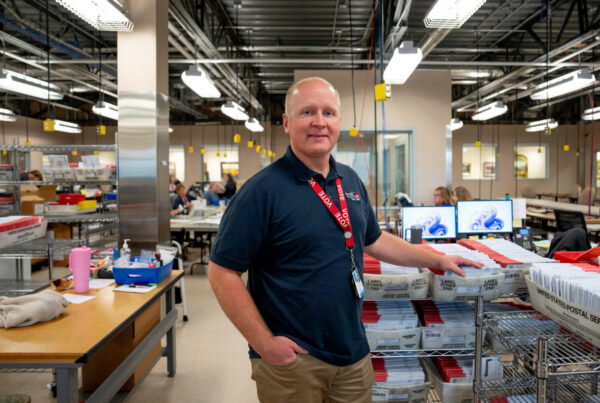
SLC GREENBike Director Ben Bolte says the gig economy is bad for workers, especially in the transportation sector.
“Every study I read says over and over again that the gig economy is great for companies and bad for workers,” Bolte says. “Most people that work in the gig economy have other jobs. I think it’s a bad sign when people need to work multiple jobs just to make ends meet.”
GREENbike’s non-profit model means that he doesn’t have to please VC investors or focus on the market. The goal is reliability, customer safety and longevity, not showing maximum profit for investors. If he can provide a decent wage and stability for employees, that helps the community too.
“I work in transportation,” Bolte says. “And unfortunately, nearly all of the for-profit transit sharing services (Uber, Lyft and scooter companies) use the gig economy for their workforce. In transportation, these people aren’t saving for retirement, they’re trying to pay their bills. They don’t get healthcare, a 401k, paid time off or sick leave. Massive companies are more than happy to not pay benefits to employees.”
Bolte is right, many 1099 workers fall between the cracks. With few exceptions, they do not receive any kind of medical or life insurance benefits. In fact, many are not even protected or eligible for worker’s compensation if they are injured or assaulted on the job—a very real risk for Uber or Lyft drivers. And many gig workers find themselves doing nothing but work—slaves to their own freedom.
“Being a better employer and building a model that includes worker benefits is about long-term thinking, not quarterly returns,” Bolte says. “Most of our employees have been with us since we started back in 2013. Doing the right thing increases retention which increases productivity.”

Lest you think, however, that 1099 jobs are limited to driving drunks around after last call or picking up someone’s take out, you’re wrong. Lots of jobs are adaptable to working at out-of-home offices, or posted up at the Coffee Garden poaching wi-fi or co-working at for-rent office spaces (see below) designed for high-level giggers, who move from project to project.
Salt Laker Jennifer Bigler, for example, hasn’t received more than a few W-2s for over a decade. She got her start producing automotive events in California and then moved to New York where she started getting gigs in event production. These events aren’t weddings or kid birthday parties, they’re massive multi-million dollar sales and marketing events—like national sales meetings for InBev (Heineken), shareholder meetings for Wal-Mart, the Google Next conference or film launch parties at Sundance.

Jennifer Bigler is a freelance event producer who works full time in the gig economy.
“When I say I work in events, people always ask me if I know any caterers,” Bigler says. “If you’ve hired me to coordinate catering, you’re paying way too much.”
Not being tied to an office meant she could cut her expenses with a move to Utah and still work all over the world, taking client calls in her pajamas from her home office. And there’s plenty of work for a qualified producer like Bigler—agencies on both coasts land events and then staff up with contractors for design, content (we used to call that writing but it also includes video and graphics these days), technical direction, sound, lights and everything it takes (yes, caterers too).
And none of this even mentions the lingering social stigma of being a full-time freelancer. Bigler’s parents still ask her when she’s going to get a job.
“I’m like, ‘Mom, I have dozens of jobs. Sheesh.’”
Workspace For Rent
Work Hive was the first of its kind in Utah, opening its doors six years ago—it’s 100 percent locally owned. According to one of its founders, Mark Morris, who was a landscape architect, saw the growing need and benefits for himself and others that can be gained through a shared, open co-working space. Since then, dozens of co-working spaces have opened, many catering to special fields or professions. For example, 8 x 8 is great but what if you need something larger?
Appealing to the artsy crowd—what we now call “creatives”—Impact Hub offers affordable and rent-by-the-hour live performance space, and it’s all hip with state-of-the-art sound equipment. Other spaces are set up to help culinarians develop recipes or food business ideas. But the behemoth of all workspaces is probably WeWork.
“Typically when WeWork enters a new market, we start with one or two locations to build the foundation and then scale it up,” said Nathan Lenahan, WeWork VP and General Manager for the Mountain West and Texas. “When it came to Utah, however, we saw an epicenter of growth and innovation and knew we had to enter in a big way.”

Jace Welk, VP of Sales for Venture X Utah
Lenahan isn’t kidding. WeWork is not only the current leader of the shared workspace movement but is also crafting what they call “The Future of Work” where workers meld these two pieces of their life until they are seemingly indistinguishable. (Everyone has read The Circle, right? That dystopia sounds like it’s coming next week.)
And WeWork isn’t the only player getting in on the ground floor of Utah’s rentable workspace game. Farmington-based Venture X has tongues wagging with their state-of-the-art rentable offices and desks located in Station Park.
“We don’t do contracts,” says Jace Welk, VP of Sales for Venture X Utah. “It’s all month to month and you get everything included.”
What does everything mean? 24/7 access to the building which comes complete with high-end furnishings, conference rooms teched out to the hilt with televisions and tables with built-in microphones and floor to ceiling windows throughout that point right at the picturesque Wasatch mountains all by design.
“The number one thing requested by employees according to Harvard Business Review is natural light,” Welk says. “And that’s one of the bright spots of our location here. This building gives so much natural light and really showcases the mountains.”
One of my central questions when talking to Welk was why a freelancer or small business owner would shell out hundreds to thousands of dollars a month on a rented office space when they could just as easily work from their home or the local coffee shop. His answer: credibility.
“We have virtual offices available. This way, someone working out of their home can use our address for their business address to appear more professional. They can call us their office, and we’ll hold and organize their mail.”
For those who want a physical office space of their own, be prepared to shell out a whopping $850/month or more in rent. The sticker shock is fairly palpable, says Welk, but once you look at the true all-inclusivity of Venture X’s location, it seems much more reasonable. Your membership comes with reception services, full kitchen access, complimentary coffee and sparkling water, printing services, internet access, patio access, a covered bike rack, and even showers—yes, showers.
“We even have an IT support team on staff in case you have any problems. You have them on call to help, even if it’s with your personal computer,” Welk says.
But before you go thinking you can just work there and go home, these workspaces for rent have some big plans—particularly WeWork: “Expectations from both employers and employees have changed with regard to the workplace experience. WeWork builds an environment that empowers workers to bring their whole selves to work. Purpose is as important as a paycheck.”
For WeWork, this means branching out to create WeGrow schools for member’s children, WeLive apartments above the communal rented workspaces, and complete WeEcosystems for a future that looks much more vertical and integrated than we are accustomed to today. We work to live but maybe in a few years work will be life.
Grind Culture
The work/life balance of our parents is no longer a viable option for those with even the most traditional means of employment. WeWork has an excellent point that technological innovations have made work a more constant presence in our lives than in years past.
“The future of work means, in many ways, a blurring of personal and professional life to a scale never seen before. We text our bosses back at 10 p.m. at night while brushing our teeth; we’re ordering socks from Amazon at 10 a.m. from our desks at work,” says WeWork.

Our work emails come right to our personal phones and our phones are always with us, we respond to those emails or text messages at any time of the day or night. This constant connectedness and work before and after work hours has become pervasive enough to warrant its own name: grind culture. The idea that the harder and more frequently you grind the more successful you become is so deeply American it should appear in the Constitution.
In 2017, France passed legislation that required companies with more than 50 employees to establish hours when staff are not allowed to send or answer work emails, texts or calls. The goal is to push back against the rise of grind culture—making sure employees are fairly compensated for any time they are doing work and attempting to prevent the inevitable burnout of the grind by protecting private time; essentially, requiring a work/life balance by law.
And it’s not a difficult leap to understand how grind culture gets facilitated by a lot of the perks offered by workspaces for rent like WeWork and Venture X. WeWork actually leans into the grind culture in their own on-site atmospheres. One image included in a WeWork profile done by The New York Times featured phrases around their office like “Hustle Harder,” “T.G.I.M. (Thank God It’s Monday),” and “Don’t stop when you’re tired. Stop when you are done;” all mantras of grind culture arguing true success can only be achieved when you work harder—and more often—than anyone else. Venture X, like WeWork, offers perks that allow workers to grind all day and all night: 24/7 building access, meditation rooms for naps or rejuvenation time, kitchen access and, again, showers. It’s unnecessary to even leave work; everything is already there.
Meanwhile, there is something deeply inspirational about being immersed in a culture that encourages you to love your work so much you don’t want to leave it. Grind culture is mostly facilitated by a deep desire for individuals to connect to their work on a personal level. Their work is the defining factor in their identity. And it’s going over well, at least for WeWork, which has become a global company with more than 400,000 members in 27 countries across the world.
But while these workspace for rent communities offer everything you need to work impossibly long, life-consuming hours, they also understand that the choice to work the grind culture lifestyle is ultimately up to their members.
“[The space] is available if someone wants it. It’s up to our members to decide how much they want to grind,” says Welk. “We’re gonna give you the proper things to make your business successful and give you the tools necessary to grow. But how you use them is your choice.”
He’s absolutely right. The choice is up to the worker. For better or for worse it’s all on you.
YOUR OWN PRIVATE 8X8

Photo provided by We Work.
WeWork – And yes, they do. WeWork supplies individual desks, offices and space for the entire HQ and a color printer—you really can have it all. But maybe what’s most impressive is their beverage selection: craft on draft, micro-roasted coffee and fresh fruit water. With 24/7 access—why would you ever leave? 90 S. 400 West, (and two other locations), 646-491-9060, wework.com
Impact Hub – An office space is cool, but what if you need something larger? How about enough room to host an event? Appealing to a more sustainable crowd, Impact Hub offers affordable and rent-by-the-hour live performance space, it’s hip with state of the art sound equipment. Director Heidi Gress explained that Impact Hub offers both open co-working and private office spaces, and extends discounts to 501(c)3 non-profits as well. As part of a global network, your membership opens you up to access to over 100+ Impact Hubs around the world. 150 State St #1, SLC, 385-202-6008, hubsaltlake.com

Photo provided by Church and State.
Church and State – Separate but not divided. What wasn’t included in the Constitution is that both would come together in a renovated downtown church building. It’s a non-profit with a clever name, their academy and mentorship program is also clever and, it’s all in a chapel—beat that. Pray for success. 370 S. 300 East, SLC, 801-901-0459, cs1893.com
VentureX – If your venture is north of SLC, this open office space in Farmington provides tons of natural light (it sure beats an office cube). To keep it cheap you can share a desk, and no-worries, pay is month-to-month. Beyond free coffee, tea or filtered water, VentureX is one-upping by offering a weekly power-networking breakfast/lunch—or what we term, “brunch.” 262 N. University Avenue Drive, Farmington, 385-209-0227, venturex.com
Spice Kitchen Incubator – The way for our newest Americans to pursue an entrepreneurial food venture as well. The Spice Kitchen Incubator has a proven track record for offering clients with the support, kitchen space and marketing resources needed for success. With its impact, several small businesses have sprung up from this bustling and creative workspace. 751 W. 800 South, SLC, 385-229-4484, spicekitchenincubator.org
Work Hive – In the heart of downtown SLC, Work Hive offers loads of open and beautiful office space, coffee and— shut up!—they’ve got showers. For those hosting clients, parking space is available and free for an hour. Only need a desk for a day? Plunk down a Jackson ($20) for a day-pass, and it’s yours. 307 W. 200 South #5002, 801-923-4589, workhiveslc.com
Square Kitchen – For businesses who cook, bake or cater, a “certified” health-inspected kitchen space is not always doable as a start-up. You’re not alone. Grease traps are expensive. On the west side of SLC, the Square Kitchen offers a top-tier culinary space and assistance for food-based entrepreneurial development. 751 W. 800 South, SLC, squarekitchenslc@gmail.com, squarekitchenslc.com
Subscribers can see more. Sign up and you’ll be included in our membership program and get access to exclusive deals, premium content and more. Get the magazine, get the deals, get the best of life in Utah!